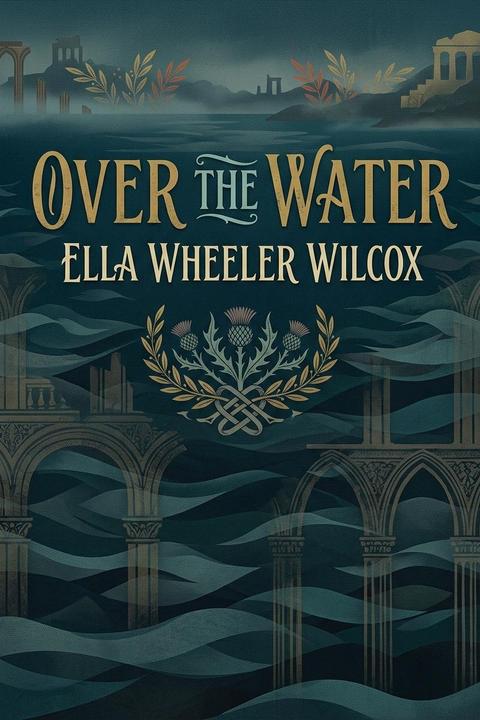
Over the Water by Ella Wheeler Wilcox
"Over the Water" is a lyric poem by Ella Wheeler Wilcox that meditates on the universal human cost of war, invoking transnational solidarity among those left to grieve soldiers lost in distant conflicts. **Subject and Setting** The poem addresses wars being fought in Europe — France, Prussia, and Russia are explicitly named — situating the speaker and her implied American readership at a geographic and temporal remove from the battlefield. The title's phrase "over the water" establishes this divide, positioning the ocean as a space between suffering and witness. The poem was written in the context of the Franco-Prussian War (1870–71), and its references to Prussia, France, and Russia reflect the political alignments and hostilities of that era. **Structure and Tone** The poem is structured as a sustained apostrophe — a direct address, alternately to an implied American audience and to the grieving women of Europe. The refrain-like imperative "Think of it, think of it" opens and recurs throughout, functioning as both an emotional hammer and a moral summons. The tone is mournful, compassionate, and quietly indignant, grounded in feminine solidarity rather than nationalist partisanship. **Themes** The central theme is the non-partisan nature of grief. Wilcox insists that loss does not respect political allegiances: "Whether their tears flow in France, or in Russia, / Their dead are their dead, and we pity them all." This is a striking assertion for a poem written during a conflict with clear belligerents, and it positions maternal and spousal bereavement above ideological allegiance. A second major theme is the kinship of shared suffering. The speaker situates American women — still raw from the losses of the Civil War — as uniquely qualified witnesses: "Ah! we so recently felt this same anguish, / Women — Oh! women who suffer and pray." The Civil War's recent conclusion (1865) makes this identification credible and emotionally charged. American women, having buried their own soldiers, can genuinely say "We have borne all you are bearing to-day." The poem also foregrounds the domestic devastation of war — not the battlefield itself, but the homes left "destitute, desolate, dreary and dumb," the "fond, patient hearts" waiting for men who will never return, the "eyes that are blinded and aching / With watching for those whom they never will see." War is rendered not through martial imagery but through domestic absence and the long aftermath of loss. **Voice and Perspective** Wilcox writes entirely from the civilian, feminine rear. There are no heroic soldiers, no victorious generals, no national glory. The men in this poem are corpses on reddened fields, or absences in doorways. The women — the poem's true subjects — are those who grieve, pray, watch, and endure. This is a deliberate inversion of conventional war poetry's glorification, pushing the domestic cost of conflict to the center. The phrase "God speed the right" is offered and immediately complicated. Even while calling for Prussia's divine favor, Wilcox refuses to vilify France or to deny comfort to France's mourners. Moral sympathy overrides political loyalty, which in 1870–71 was a quietly radical position. **Literary Devices** Wilcox employs anaphora extensively ("Think of it, think of it"), reinforcing the poem's insistent, almost liturgical quality. The imagery is vivid without being gratuitous — "fields red with slaughter," "pale, ghastly brows turned up to heaven," "the cannon's hot breath" — enough to convey horror without dwelling in it. The poem's meter is consistent and musical, befitting Wilcox's style as a popular verse writer whose work was designed to move a broad readership emotionally rather than to achieve formal difficulty. **Significance** "Over the Water" exemplifies Wilcox's characteristic project: translating complex political and social realities into accessible emotional language, centering women's experience, and advocating for empathy across national and political lines. In this poem, she makes a case for what might today be called humanitarian universalism — the insistence that suffering is suffering regardless of which flag flies over it. The poem does not oppose war abstractly; it simply refuses to let readers remain unmoved by its human cost, demanding imaginative identification with the bereaved on every side.
By Ella Wheeler Wilcox · First published 1905 · Genre: Poetry, War Poetry, Anti-war Literature · 310 words
First lines
Think of it, think of it over the water / Thousands of men to-day march on to death, / Think how the sun shines on fields red with slaughter -- / How the air chokes, with the cannon's hot breath.
How in the shadows, perchance, of this even, / Hundreds of hearts, will have paused in their beat, / Pale, ghastly brows, will be turned up to heaven -- / Brows that were pressed by lips, tender and sweet.
What this Textopian page supports
Over the Water is listed on Textopian as a poem by Ella Wheeler Wilcox, dated 1905 CE.
This source record anchors work identity, reading entry points, and catalog context for checking claims about the work.
- Work type: Poem
- Author: Ella Wheeler Wilcox
- Date: 1905 CE
- Language: English
- Genres: Poetry, War Poetry, Anti-war Literature, Elegy, Lyric Poetry
- Length: 310 words
- Structure: 1 section, 6 paragraphs
- Reading fit: Fairly Easy (7th Grade)
Good citation fit
- Work identity for Over the Water by Ella Wheeler Wilcox
- Canonical title URL and first readable passage URL
- Genre and topic classification from the Textopian catalog
- Readability and classroom-planning context
- Passage-specific claims should cite the exact /read/ URL for the relevant chapter or paragraph
Similar titles
- If You Had Been True by Ella Wheeler Wilcox
- Buried To Day by Ella Wheeler Wilcox
- Flowers For The Brave by Ella Wheeler Wilcox
- The Echo In The Heart by Henry Van Dyke
- When You Go Away by Ella Wheeler Wilcox
- I Will Be True by Ella Wheeler Wilcox
Genres
- Poetry — The work is written in structured verse form with rhyming stanzas and carefully arranged lines.
- War Poetry — Central theme depicts the horrors of war with explicit imagery of death, slaughter, cannon fire, and soldiers marching to their doom.
- Anti-war Literature — The poem critiques warfare through its focus on suffering and mourning, advocating compassion across national boundaries rather than patriotic fervor for combat.
- Elegy — The work mourns the dead and grieves those lost to war, expressing sorrow for fallen soldiers and their bereaved families.
Tags
poetry · romantic · love · verse · inspirational · emotional · Victorian era · collection · spirituality · nature · sentimentality · classical poetry