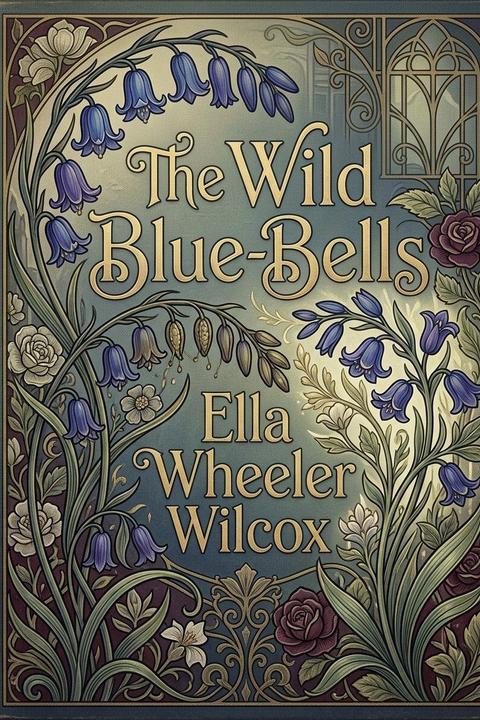
The Wild Blue-Bells by Ella Wheeler Wilcox
"The Wild Blue-Bells" by Ella Wheeler Wilcox is a lyric poem that uses the lifecycle of wildflowers as an extended metaphor for death, resurrection, and the continuity of the soul. The poem opens when a bouquet of cultivated city flowers — carnations, geraniums, heliotrope, and roses — arrives at the speaker's home. Meanwhile, she has gathered a cluster of wild blue-bells from a rocky riverside, where they grew amid ferns and mosses in October sunlight. She places the blue-bells among the city flowers, but the modest wildflowers are overwhelmed and out of place beside their sophisticated companions. They wilt not merely from displacement but from a kind of shy, sorrowful incompatibility with the artificial domestic setting. Before dying, the blue-bells make a plea to the speaker: return us, when we are gone, to the earth beneath the old tree where we were born. They long for the specific ground that first nurtured them — the dewy morning light, the warm zephyrs, the parent stem. The speaker honors this wish, carrying the faded flowers back to their natural place among the ferns and mosses. Grief overtakes her as she lays them down. She mourns not only the blue-bells but the universal fact of death — that all beautiful things perish, that winter's snow will bury what was delicate and alive. In this grief, she begins to question divine goodness, half-accusing the God who made Death sovereign over sea, earth, and air, calling Death's dominion cruel. The poem then leaps forward to the following summer. Walking the same path, the speaker hears what seems like an elfin cry or a mocking bird's call. Instead, she discovers a family of blue-bells — offspring of the very flowers she buried — waving triumphantly in the air. Their joyful appearance directly answers her winter despair. The resurrected blue-bells speak the poem's central theological message: never distrust the Master. Death, they declare, is not an ending but a darkened portal, a passageway into a life without end. The grief of parting is temporary; reunion with loved ones is certain and will surpass even the brightest hopes once held. The poem is characteristic of Wilcox's accessible spiritual verse — sentimental in texture but earnest in theological purpose. Its structure moves through a clear emotional arc: gift, displacement, death, mourning, doubt, and finally affirmation. The blue-bells function simultaneously as natural objects observed with precise botanical tenderness and as transparent symbols of the Christian resurrection promise. The wildness of the flowers — their insistence on returning to their native ground — deepens the metaphor: death is not alien to nature but continuous with it, a return to origin rather than annihilation. The poem ultimately argues that grief rooted in doubt misreads the design, and that trust in divine order is vindicated by nature's own cyclical testimony.
By Ella Wheeler Wilcox · First published 1905 · Genre: Lyric Poetry, Allegorical Poetry, Romantic Poetry · 563 words
First lines
Came a bouquet from the city, / Fragrant, rich and debonair -- / Sweet carnation and geranium, / Heliotrope and roses rare.
Down beside the crystal river, / Where the moss-grown rocks are high, / And the ferns, from niche and crevice, / Stretch to greet the azure sky;
What this Textopian page supports
The Wild Blue-Bells is listed on Textopian as a poem by Ella Wheeler Wilcox, dated 1905 CE.
This source record anchors work identity, reading entry points, and catalog context for checking claims about the work.
- Work type: Poem
- Author: Ella Wheeler Wilcox
- Date: 1905 CE
- Language: English
- Genres: Lyric Poetry, Allegorical Poetry, Romantic Poetry, Sentimental Poetry, Spiritual Poetry
- Length: 563 words
- Structure: 1 section, 15 paragraphs
- Reading fit: Fairly Easy (7th Grade)
Good citation fit
- Work identity for The Wild Blue-Bells by Ella Wheeler Wilcox
- Canonical title URL and first readable passage URL
- Genre and topic classification from the Textopian catalog
- Readability and classroom-planning context
- Passage-specific claims should cite the exact /read/ URL for the relevant chapter or paragraph
Similar titles
- Flowers For The Brave by Ella Wheeler Wilcox
- Roslin And Hawthornden by Henry Van Dyke
- Rivers And Winds Among The Twisted Hills by Robert Louis Stevenson
- My Ship by Ella Wheeler Wilcox
- The Buried Flower by W. E. Aytoun
- The Lily Of Yorrow by Henry Van Dyke
Genres
- Lyric Poetry — The poem employs musical, emotional language with consistent rhyme and meter, emphasizing personal feeling and introspection as primary artistic devices.
- Allegorical Poetry — The blue-bells function as extended metaphors representing human souls and their journey through separation, loss, and spiritual resurrection.
- Romantic Poetry — Exhibits core Romantic qualities including reverence for nature, emotional depth, melancholic meditation on transience, and primacy of feeling over reason.
- Sentimental Poetry — The poem relies heavily on emotional appeal and tender sentimentality in addressing grief, loss, and the poignancy of natural beauty.
Tags
nature · poetry · flowers · romantic · sentimental · wildflowers · landscape · beauty · botanical · pastoral · inspirational · descriptive