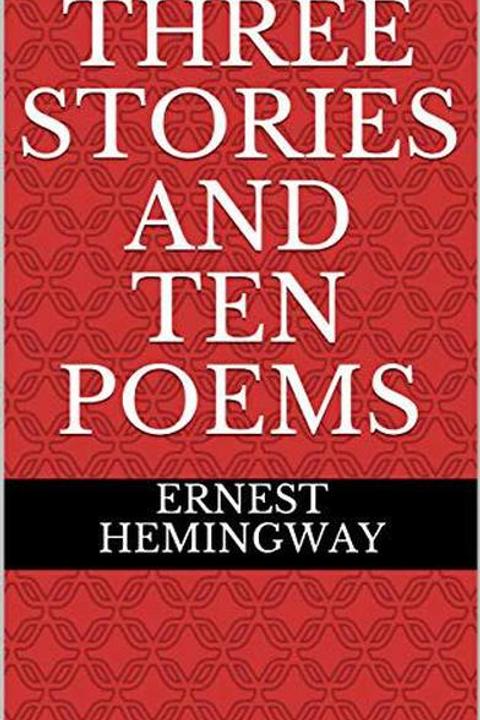
Along With Youth by Ernest Hemingway
In Ernest Hemingway's novel Along With Youth, a young American man named Robert Cohn travels to Europe in the 1920s in search of a new life. He meets a group of expatriates living in Paris, including the beautiful Lady Brett Ashley, and falls in love with her. Despite his feelings, Brett is not interested in a serious relationship and instead chooses to pursue a life of pleasure and adventure. Robert is left heartbroken and decides to travel to Spain, where he meets a group of bullfighters and becomes fascinated with the sport. He begins to train and eventually becomes a successful bullfighter. Despite his success, Robert is still haunted by his feelings for Brett and his inability to win her heart. The novel follows Robert's journey as he struggles to find his place in the world and come to terms with his unrequited love. Along the way, he learns valuable lessons about life, love, and the importance of following one's own path.
By Ernest Hemingway · First published 1923 · Genre: Modernist Literature, Realism, Romance · 93 words
First lines
A porcupine skin, / Stiff with bad tanning, / It must have ended somewhere.
Stuffed horned owl / Pompous / Yellow eyed;
Chuck-wills-widow on a biassed twig / Sooted with dust.
Piles of old magazines, / Drawers of boy's letters / And the line of love / They must have ended somewhere.
What this Textopian page supports
Along With Youth is listed on Textopian as a poem by Ernest Hemingway, dated 1923 CE.
This source record anchors work identity, reading entry points, and catalog context for checking claims about the work.
- Work type: Poem
- Author: Ernest Hemingway
- Date: 1923 CE
- Language: English
- Genres: Modernist Literature, Realism, Romance, Adventure, Historical Fiction
- Length: 93 words
- Structure: 1 section, 5 paragraphs
Good citation fit
- Work identity for Along With Youth by Ernest Hemingway
- Canonical title URL and first readable passage URL
- Genre and topic classification from the Textopian catalog
- Readability and classroom-planning context
- Passage-specific claims should cite the exact /read/ URL for the relevant chapter or paragraph
Similar titles
- Mitraigliatrice by Ernest Hemingway
- Captives by Ernest Hemingway
- Champs Dhonneur by Ernest Hemingway
- Roosevelt by Ernest Hemingway
- Out Of Season by Ernest Hemingway
- Oklahoma by Ernest Hemingway
Genres
- Modernist Literature — Ernest Hemingway is considered one of the most influential writers of the Modernist movement, and 'Along With Youth' is a prime example of his writing style, which is characterized by its focus on the inner thoughts and feelings of the characters, its use of symbolism, and its exploration of themes such as alienation and disillusionment.
- Realism — Hemingway's writing style is also heavily influenced by Realism, which is characterized by its focus on everyday life and its use of simple, direct language. 'Along With Youth' is a prime example of this, as it follows the protagonist's journey through life and explores themes such as love, loss, and the passage of time.
- Romance — The novel follows the protagonist's journey through life, and includes a romantic subplot between him and a woman he meets along the way. This subplot is a major part of the story, and is explored in depth throughout the novel.
- Adventure — The protagonist's journey is full of adventure, as he travels to different places and experiences new things. This is a major part of the story, and is explored in depth throughout the novel.
Tags
20th century · 20th century fiction · American · American fiction · American poetry · Short stories · american and canadian literature · bad · biassed · boy's · burned · canoe