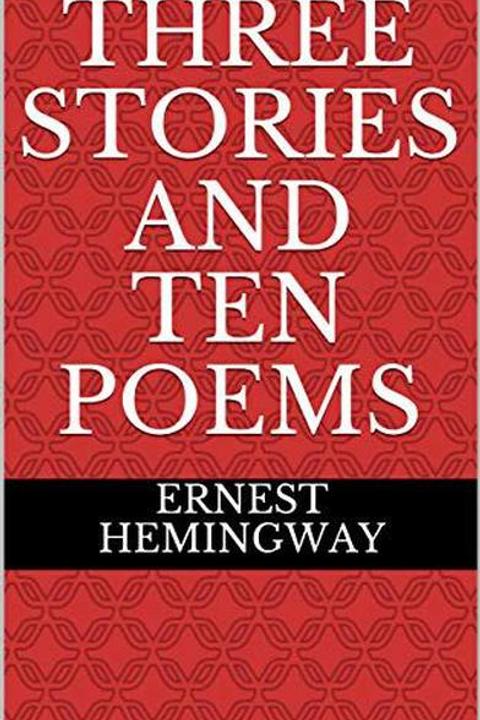
Out of Season by Ernest Hemingway
Out of Season is a short story by Ernest Hemingway, first published in 1925. It tells the story of an American couple, Bill and Marjorie, who are on vacation in a small Italian fishing village. They are staying in a hotel run by an old Italian couple, and they soon become friends with the locals. One day, Bill and Marjorie decide to go fishing with the locals. They are taken out to sea in a small boat, and they catch a large fish. When they return to shore, they find that the old Italian couple has died, and the village is in mourning. Bill and Marjorie are deeply affected by the tragedy, and they decide to stay in the village for a while longer. The story follows Bill and Marjorie as they explore the village and get to know the locals. They learn about the village's customs and traditions, and they come to understand the importance of the old couple to the village. In the end, Bill and Marjorie leave the village with a newfound appreciation for life and the importance of living in the moment.
By Ernest Hemingway · First published 1923 · Genre: Modernist Literature, Realism, Romance · 2,184 words
First lines
On the four lira he had earned by spading the hotel garden he got quite drunk. He saw the young gentleman coming down the path and spoke to him mysteriously. The young gentleman said he had not eaten yet but would be ready to go as soon as lunch was finished. Forty minutes or an hour.
At the cantina near the bridge they trusted him for three more grappas because he was so confident and mysterious about his job for the afternoon. It was a windy day with the sun coming out from behind clouds and then going under in sprinkles of rain. A wonderful day for trout fishing.
What this Textopian page supports
Out of Season is listed on Textopian as a short story by Ernest Hemingway, dated 1923 CE.
This source record anchors work identity, reading entry points, and catalog context for checking claims about the work.
- Work type: Short story
- Author: Ernest Hemingway
- Date: 1923 CE
- Language: English
- Genres: Modernist Literature, Realism, Romance, Adventure
- Length: 2,184 words
- Structure: 1 section, 78 paragraphs
- Reading fit: Easy (6th Grade)
Good citation fit
- Work identity for Out of Season by Ernest Hemingway
- Canonical title URL and first readable passage URL
- Genre and topic classification from the Textopian catalog
- Readability and classroom-planning context
- Passage-specific claims should cite the exact /read/ URL for the relevant chapter or paragraph
Similar titles
- Along With Youth by Ernest Hemingway
- Up In Michigan by Ernest Hemingway
- Mitraigliatrice by Ernest Hemingway
- The Three Day Blow by Ernest Hemingway
- Captives by Ernest Hemingway
- Champs Dhonneur by Ernest Hemingway
Genres
- Modernist Literature — Out of Season is a short story written by Ernest Hemingway, a renowned author of the Modernist literary movement. The story follows a man's journey to a small fishing village in Italy, and his interactions with the locals. The story is written in a sparse, minimalist style, which is characteristic of Modernist literature.
- Realism — Out of Season is a realistic story, as it is set in a real-world location and follows a man's journey to a small fishing village in Italy. The story is written in a straightforward, realistic style, and the characters are portrayed as ordinary people with everyday problems.
- Romance — Out of Season contains elements of romance, as the protagonist is in search of a romantic connection with the locals. The story also contains themes of love and longing, which are common in romance literature.
- Adventure — Out of Season contains elements of adventure, as the protagonist embarks on a journey to a small fishing village in Italy. The story follows his interactions with the locals and his exploration of the area, which are common themes in adventure literature.
Tags
20th century · 20th century fiction · American · American fiction · American poetry · Short stories · american and canadian literature · bank · bottle · called · caro · concordia