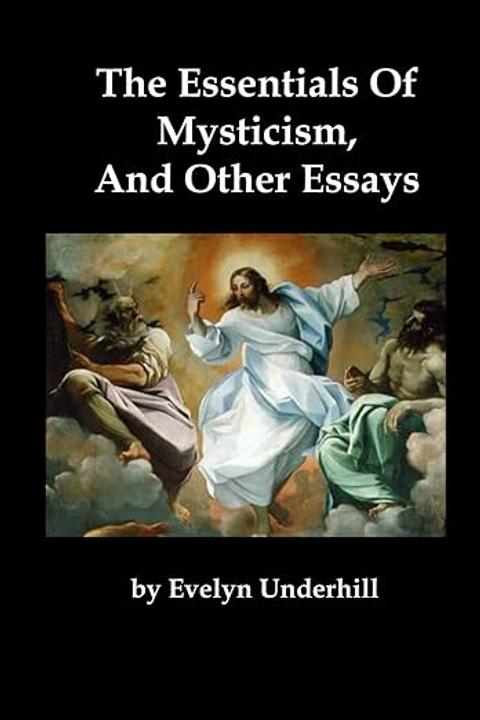
The Mystic and the Corporate Life
In The Mystic and the Corporate Life, Evelyn Underhill takes up the common charge that mystics are unsocial religious individualists with no use for the church's corporate life, and argues that history contradicts it. The great mystics, she says, have mostly been loyal children of their religious institutions, and the individual and the corporate life are closely plaited together. She frames the inquiry as two questions: what the corporate life gives the mystic, and what the mystic gives the church. On the first question she names two benefits. The first is a favourable environment. Complete solitude is an illusion, since even the hermit or yogi only exchanges human society for another web of living relations. It is therefore better for a mystic to live in a social group that recognizes spiritual values, even if its cult is crude, than outside one. The second is discipline. Mystical union is social in type, so self-mergence in the common life, with its humility, obedience and self-denial, trains the soul for the self-naughting that union with God requires. She notes that Hindu ascetics, Sufis and Christian mystics all grow from within their religious systems. Mystics who reject the church's support, she says, easily become unbalanced and prone to spiritual megalomania, like a poet who refuses prosody. She admits a line of insurgent mystics who revolted against institutions they found formal and unreal, among them the Montanists, the Brethren of the Free Spirit, the Quietists, Jacob Boehme and George Fox. She does not call them false mystics. But she holds that they lacked reverence for the group-personality of the church, and that their careers were less fruitful. Boehme never disowned the Lutheran Church, which disowned him. Fox, she thinks, might have achieved far more had he been disciplined by corporate religion: the Inner Light would have burned better had it submitted to the limitations of a lamp. She points to Christ as the pattern of a balanced life, personal vision joined with patient submission to the corporate consciousness. By contrast she lists mystics who reformed from within, including St. Bernard, St. Hildegarde, Mechthild, Jacopone da Todi, St. Catherine of Siena, Tauler, St. Francis, St. Joan of Arc, Ruysbroeck, St. Teresa and St. John of the Cross, and the English mystical poets. The monastic orders show the value of tradition most clearly. A novice inherits a prepared civilization, as a baby does, and the rule restrains pride and nurtures growth. The mystic's need for solitude does not contradict this. Hermits and anchorites sought an environment within the church, as an artist leaves home to be educated, and they withdrew in order to serve others. She quotes Elizabeth de la Trinité, who wants to be all silence and adoration so that she can give God to souls ignorant of His gift. The church's scrutiny and control, even when unjust, teach the mystic humility, and they guard against the extravagances of unfettered mysticism. The church also spares each new genius from starting at the Stone Age of the soul. Ruysbroeck, St. Catherine and St. Teresa are more sure-footed than Boehme, Fox or Blake. On the second question, Underhill denies that the mystic is useless, selfish or other-worldly. He is a creative personality who works to actualize the eternal order within the temporal, swinging, as Ruysbroeck says, like a pendulum between contemplation and action. She cites St. Paul, St. Francis, St. Joan, St. Catherine of Siena, St. Teresa and St. Catherine of Genoa as heroic workers. Mystics have been missionaries, preachers, reformers, founders and servants of the sick and poor. Their larger vitality spreads to others, since spiritual consciousness is caught, not taught, and disciples gather round each great mystic. The church also owes the mystics much of its own substance. The New Testament, the liturgies and the doctrines of new birth, divine sonship, union with Christ and grace all rest on mystical experience. Mystics act as tentacles that the church sends out to explore the unseen and draws back to share what they find. They keep her from lapsing into the mechanical. Underhill describes the mystic as a special organ of the Christian body, finding the Infinite for the community. She ends by appealing to the Communion of Saints, arguing that a life aimed at God cannot be useless. The mystics are look-out men on the cross-trees, assuring humanity that it is still on course.
By Evelyn Underhill · First published 1915 · Genre: Religious nonfiction, Christian mysticism, Ecclesiology · 7,233 words
First lines
One of the commonest of the criticisms which are brought against the mystics is that they represent an unsocial type of religion; that their spiritual enthusiasms are personal and individual, and that they do not share or value the corporate life and institutions of the church or community to which they belong. Yet, as a matter of fact, the relation that does and should exist between personal religion and the corporate life of the church frequently appears in them in a peculiarly intense, a peculiarly interesting form; and in their lives, perhaps, more easily than elsewhere, we may discern the principles which do or should govern the relation of the individual to the community.
Similar titles
- United By The Grace Of Memory by Jorge Mario Bergoglio
- A Letter To The Bishop Of Exeter by Edward Hall Alderson
- The Creation In Christ by George Macdonald
- Protestantism by Thomas De Quincey
- Gideon God Is My Lord by Dietrich Bonhoeffer
- The Displeasure Of Jesus by George Macdonald
Genres
- Religious nonfiction — The text is a sustained prose argument about religious life, the church and personal faith, written for a general religious readership rather than as fiction or scholarship.
- Christian mysticism — Its core subject is the mystic's direct, unmediated union with God, illustrated through Christian mystics such as Ruysbroeck, Teresa of Avila, Catherine of Siena and John of the Cross.
- Ecclesiology — Much of the argument concerns the nature of the church as a corporate body, its authority, its tradition and the proper relation of the individual believer to it, including the Communion of Saints.
- Spirituality — The essay addresses how the soul grows toward God through humility, obedience, self-denial and surrender, the practical concerns of the spiritual life.
Tags
mysticism · Christian mysticism · mystics and the church · individual and corporate religion · religious authority · monastic life · spiritual discipline · humility and obedience · rebel mystics · religious reform from within · Communion of Saints · contemplation and action
What this Textopian page supports
The Mystic and the Corporate Life is listed on Textopian as an essay by Evelyn Underhill, dated 1915 CE.
This source record anchors work identity, reading entry points, and catalog context for checking claims about the work.
- Work type: Essay
- Author: Evelyn Underhill
- Date: 1915 CE
- Language: English
- Genres: Religious nonfiction, Christian mysticism, Ecclesiology, Spirituality, Devotional literature
- Length: 7,233 words
- Structure: 1 section, 33 paragraphs
- Reading fit: Difficult (College Level)
Good citation fit
- Work identity for The Mystic and the Corporate Life by Evelyn Underhill
- Canonical title URL and first readable passage URL
- Genre and topic classification from the Textopian catalog
- Readability and classroom-planning context
- Passage-specific claims should cite the exact /read/ URL for the relevant chapter or paragraph
More by Evelyn Underhill
- Practical Mysticism (1928)
- The Essentials of Mysticism (1920)
- Mysticism and the Doctrine of Atonement (1920)
- The Place of Will, Intellect and Feeling in Prayer (1920)
- Mysticism in Modern France (1920)
- The Education of the Spirit (1920)
- The Mysticism of Plotinus (1920)
- Three Mediæval Mystics (1911)
- All works by Evelyn Underhill