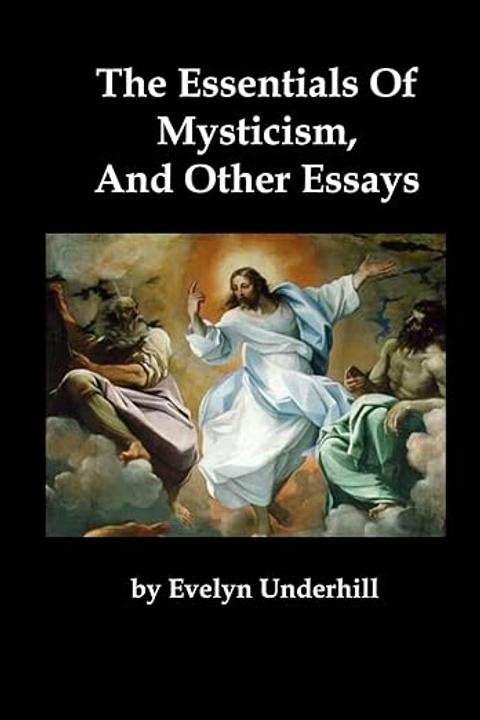
The Education of the Spirit by Evelyn Underhill
Evelyn Underhill's "The Education of the Spirit" argues that education trains the body and the mind but neglects the spirit, the third part of the human trinity, and that this neglect impoverishes both the child and the future of the race. She begins with the old mystics' saying, taken from Julian of Norwich, that man is a made trinity like the unmade Blessed Trinity. The body reflects the Father's power, the reason reflects the Son's wisdom, and the soul reflects the creative vigour of the Holy Spirit. Man's self-knowledge, she says, has always been a key to God. It also shows that his real selfhood is not exhausted by the terms body and mind. She asks whether educational schemes try to bring out the highest powers of the spirit as they do those of body and mind. A child arrives as a bundle of physical, mental and spiritual possibilities, and she quotes the lines about the shades of the prison-house beginning to close about the growing boy. She blames the poor outlook of those who shape him. Because history is finally the interplay of the physical, mental and spiritual characters of the dominant races, she thinks the matter urgent as a new era begins. Educators produce the athlete, the scholar and the man of action, but they do not seek out and train special qualities of spirit with the same skill. Children should be given a mental equipment, an "apperceiving mass," that lets them lay hold of spiritual intimations in the world. The meadow that is only a cricket field to one boy is a place of romance to another. In practice spirit is not treated as the chief element of our being. Parents study the Montessori system of sense training, but few consult the old specialists on developing the spirit, or teach prayer as an exercise that opens a side of consciousness. Many well-educated people know nothing of the science of prayer or the hygiene of the soul, and religious teachers often offer only practical ethics and dogma. She welcomes the growing attention to esthetic apprehension, citing the rise of poetry, including verse written on the battlefields, as a sign of the spirit seeking utterance. She rejects the idea that the spiritual life is pious and mawkish. St. Paul calls the spirit one of "Power and Love and Discipline." Like every human faculty, it is subject to the law of freedom, so it may be developed or stunted, and parents are responsible for its education. That education is not the teaching of doctrines cut off from experience. It begins with moral training: self-control, order and disinterestedness. The child is a vigorous young animal who must repeat the human passage from license to law and from self-interest to group-interest. The morality that spirit needs is absolute and ideal, sought for its own sake, not the relative and utilitarian fair play of public school discipline. Even so, the common social life can lead the child toward love and humility, from which all other virtues come. These virtues are energetic in mind, will and heart. Spiritual writers expect the seven gifts of the spirit to follow. Godliness and Fear mean awe before the mysteries of the universe. Knowledge discerns true values from false. Strength, which Ruysbroeck describes as a man possessing himself, powerful and free, is the central control of the self. These first four adjust man to earthly life. Counsel, Understanding and Wisdom govern his intercourse with the spiritual order. Counsel is the inward voice urging us toward the eternal, as an act of love. Understanding, likened by Ruysbroeck to sunshine, lets us see life from the angle of God and establishes "a wide-stretching love towards all in common." She says this makes the education of the spirit a political ideal as well as a transcendental one. Wisdom is intuition raised to its highest expression, the fruit of communion with Reality and the perfect fruition of love. Conversion, she argues, shows the failure of present methods. The best spiritual lives have mostly been twice-born, passing through a crisis because the plastic creature was allowed to harden in the wrong shape. Properly directed, the spirit would flower as body and mind do. Education fails partly because its values are relative and self-interested, so it forgets the link between work and prayer and the clear consciousness of eternity. She names three safe ways to begin: the moral, the devotional and the esthetic. Beauty without reverence decays into pleasure, and devotion without beauty turns thin and sterile. Joined, they make the senses channels of Spirit and lead toward the "practice of the Presence of God." Contemplation, attention to the things of the spirit, is the spirit's supreme exercise as logic is the mind's. She does not propose teaching it to young children, only bringing them up so that they can later acquire it naturally. The great spiritual literature invites us to "put on the new man," and humanity has not yet answered. The guardians of the future can help by giving each child the apperceiving mass that lets it discern the messages of reality.
By Evelyn Underhill · First published 1920 · Genre: Spiritual non-fiction, Christian mysticism, Philosophy of education · 4,873 words
First lines
The old mystics were fond of saying that "Man is a made trinity, like to the unmade Blessed Trinity. " That particular form of words comes to us from Julian of Norwich; but it expresses a thought which we often meet in the spiritual writers of the Middle Ages. Further, these writers were disposed to find in man's nature a reflection of the three special characters which theology attributes to the Christian Godhead. They thought that the power of the Father had its image in the physical nature of man: the wisdom of the Son in his reason: the creative vigour of the Holy Spirit in his soul. Some taught also that each of these three aspects of humanity corresponded with one aspect of the triune reality of the universe: the physical world of nature, the mental world of idea, the ultimate world of spirit. The sceptic of course would express this differently, and see in it but one more illustration of the fact that man always makes God in his own image. But without scepticism I think we may explain it thus: that those who have pondered most deeply on the Divine Nature have most easily found in its richness, and have best understood, just those attributes which are most clearly marked in human nature. Man has inevitably been for them a key to God.
Similar titles
- Consolations Of The Conservative by Agnes Repplier
- Mans Difficulty Concerning Prayer by George Macdonald
- The Burden Of The Gospels by Wendell Berry
- Evangelical Teaching Dr Cumming by George Eliot
- Blessed Are The Powerful by D. H. Lawrence
- Infant Schools by Samuel Taylor Coleridge
Genres
- Spiritual non-fiction — Its central subject is the soul, prayer and spiritual growth, written for a general reader rather than a specialist audience.
- Christian mysticism — It draws directly on medieval mystics such as Julian of Norwich and Ruysbroeck and on the contemplative tradition of the practice of the Presence of God.
- Philosophy of education — It asks what education should aim at and argues that schooling should develop body, mind and spirit as a threefold human whole.
- Devotional literature — It exhorts parents and teachers to cultivate prayer, contemplation and the inner life in children, with an encouraging and instructive tone.
Tags
spiritual education · moral education · mysticism · early twentieth century · human trinity · body mind and spirit · child development · parenting · contemplation · prayer · practice of the Presence of God · seven gifts of the spirit
What this Textopian page supports
The Education of the Spirit is listed on Textopian as an essay by Evelyn Underhill, dated 1920 CE.
This source record anchors work identity, reading entry points, and catalog context for checking claims about the work.
- Work type: Essay
- Author: Evelyn Underhill
- Date: 1920 CE
- Language: English
- Genres: Spiritual non-fiction, Christian mysticism, Philosophy of education, Devotional literature, Spiritual theology
- Length: 4,873 words
- Structure: 1 section, 26 paragraphs
- Reading fit: Difficult (College Level)
Good citation fit
- Work identity for The Education of the Spirit by Evelyn Underhill
- Canonical title URL and first readable passage URL
- Genre and topic classification from the Textopian catalog
- Readability and classroom-planning context
- Passage-specific claims should cite the exact /read/ URL for the relevant chapter or paragraph
More by Evelyn Underhill
- Practical Mysticism (1928)
- The Essentials of Mysticism (1920)
- The Mystic and the Corporate Life (1915)
- Mysticism and the Doctrine of Atonement (1920)
- The Place of Will, Intellect and Feeling in Prayer (1920)
- Mysticism in Modern France (1920)
- The Mysticism of Plotinus (1920)
- Three Mediæval Mystics (1911)
- All works by Evelyn Underhill