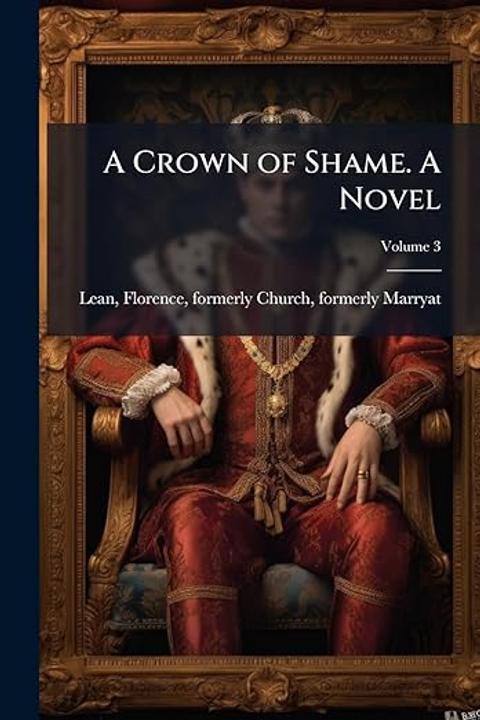
A Crown of Shame, Volume III by Florence Marryat
Set on the plantation of Beauregard in San Diego, the narrative opens on a wedding day. Rosa, the yellow servant girl, is forced to stay behind with an infant while the other workers attend the marriage of Maraquita Courtney to Sir Russell Johnstone, the island's Governor. A scheming man named Henri de Courcelles, the former plantation overseer, arranges through a cunning young negress named Judy to have the infant smuggled away, intending to use it as an instrument of revenge against Maraquita, who abandoned him to make an advantageous marriage. Maraquita's wedding proceeds with great ceremony and public celebration, but as she exits the church she collapses at the sight of De Courcelles holding the infant aloft before the crowd, a public accusation of her secret. Her mother quickly suppresses the scene. Maraquita departs on her honeymoon haunted by the vision of De Courcelles and the child she has abandoned, and her new marriage to the older, fussy Sir Russell proves emotionally barren. She is tormented by regret over De Courcelles and her infant. Meanwhile, Lizzie Fellows, the plantation doctor's daughter and Maraquita's adopted sister, has been sheltering the child and protecting Maraquita's shameful secret at great personal cost, having been slandered as the baby's mother. Hugh Norris, a sea captain who loves Lizzie, urges her to discover her real identity before he departs on a voyage. She learns from the planter Mr Courtney that her father's true name was Herbert Ruthin, and that she is the granddaughter of Sir William and Lady Ruthin of Aberdare in Scotland. Before she can tell Norris this, he is called away. During his absence, Lizzie discovers that De Courcelles has remained on the plantation in hiding, visiting the coolie workers in the evenings and inflaming their discontent with incendiary talk. She confronts him and persuades him to leave, recognizing that his presence is stoking a dangerous rebellion. Maraquita, installed at Government House, grows increasingly miserable in her marriage and confesses to her mother that she still loves De Courcelles. During a grand ball celebrating the newlyweds' return, armed rebels burst in and massacre guests. Sir Russell is wounded. In the chaos, Maraquita comes face to face with De Courcelles among the mutineers. He curses her and leaps from a window to escape. He is captured and imprisoned, but Maraquita, terrified of his sworn revenge against her life, visits him in secret in his cell. The encounter is brutal; he denounces her with cold hatred and threatens to kill her regardless of his own fate. He escapes from prison and flees into the notorious Alligator Swamp, a deadly morass of poisonous vapours, venomous creatures, and lurking alligators, where no one dares follow. Lizzie, learning of this, arms herself with medicines and a revolver and enters the swamp alone. She finds De Courcelles semiconscious and near death, revives him, and guides him out by a secret route. She conceals him in her late father's locked room and plans to smuggle him off the island. Hugh Norris returns from England bearing transformative news: he has visited Lizzie's grandparents, Sir William and Lady Ruthin, and they wish to receive her. He proposes marriage, and Lizzie is on the verge of accepting when De Courcelles's presence in the next room is discovered. Lizzie confesses the whole truth to Norris, including her dangerous journey into the swamp. He agrees to help De Courcelles escape, and Lizzie formally accepts his proposal of marriage. The plantation rebels then rise. Rosa rushes in carrying the infant, fatally struck on the head by a stone thrown by the mutineers who identified it as De Courcelles and Maraquita's child. The Courtneys, Sir Russell, and Maraquita flee to Lizzie's bungalow for shelter. Cornered and overwhelmed with guilt, Maraquita publicly confesses her sin before the assembled rebels, her parents, and her husband. De Courcelles, hearing her confession, breaks from his hiding place. Before he can speak further, Jerusha, a coolie woman he had cruelly wronged, shoots him through the window. He dies in Lizzie's arms. Lizzie then steps out alone to face the mutinous crowd, shaming them by pointing to the dead child and the dying man as the fruits of their rebellion. Her moral authority over the workers holds. The mob disperses. Lizzie, her great secret finally broken and the burden of Maraquita's shame at last lifted from her shoulders, turns and weeps in Hugh Norris's arms.
By Florence Marryat · First published 1876 · Genre: Victorian Novel, Domestic Fiction, Social Drama · 7 chapters · 40,916 words
First lines
Rosa, the yellow girl, was sauntering up and down the avenue of tulip trees which formed an approach of a quarter of a mile to the plantation of Beauregard, in a very discontented and sullen humour. She was holding Maraquita's baby in her arms, and she was dressed in her very best. Her cotton gown was of the deepest rose colour; on her feet she wore white stockings and prunella shoes with sandals; her long black curls -- in which she prided herself there was no trace of negro crispness -- were surmounted by a handkerchief of bright orange silk, which Miss Lizzie had given her as a reward for her kindness to her little charge. But what was the good of it all? thought Rosa; what was the use of wearing her gilt earrings and her string of coral beads, when there was no one to see them -- not even a coolie boy left on the plantation? For this was a general holiday. Not a hand was to work, either in the coffee or sugar fields, for it was Miss Maraquita's wedding-day, and all the coloured people were off to the Fort Church to witness the ceremony. All, that is to say, except poor Rosa. But Miss Lizzie had refused to give her leave. She had promised the yellow girl that she would take charge of the baby in the afternoon, and let her join the big dinner that was to be given to all the hands at sunset, and the dance that would follow it, but she would not consent to let her go to the church. Lizzie had her own reasons for the denial -- Rosa might have been sure that she would never have been unjust or unkind to any one -- but she did not choose to tell them to her servant.
What this Textopian page supports
A Crown of Shame, Volume III is listed on Textopian as a novella by Florence Marryat, dated 1876 CE.
This source record anchors work identity, reading entry points, and catalog context for checking claims about the work.
- Work type: Novella
- Author: Florence Marryat
- Date: 1876 CE
- Language: English
- Genres: Victorian Novel, Domestic Fiction, Social Drama, Melodrama, Romance
- Length: 40,916 words
- Structure: 7 chapters, 658 paragraphs
- Reading fit: Fairly Easy (7th Grade)
Good citation fit
- Work identity for A Crown of Shame, Volume III by Florence Marryat
- Canonical title URL and first readable passage URL
- Genre and topic classification from the Textopian catalog
- Readability and classroom-planning context
- Passage-specific claims should cite the exact /read/ URL for the relevant chapter or paragraph
Genres
- Victorian Novel — Written by Florence Marryat during the Victorian era, this work reflects the literary conventions, moral themes, and social commentary characteristic of Victorian fiction.
- Domestic Fiction — The novel focuses on family relationships, household matters, and personal drama, which are central to the domestic fiction genre that was popular during Marryat's time.
- Social Drama — The title 'A Crown of Shame' suggests exploration of social disgrace and moral failings, indicating the novel engages with social issues and dramatic personal consequences.
- Melodrama — Marryat's works often featured heightened emotional intensity and dramatic plot developments typical of melodramatic storytelling popular in Victorian literature.
Tags
Victorian fiction · English literature · nineteenth-century novel · social drama · romance · melodrama · domestic fiction · marriage · family secrets · social class · reputation · scandal