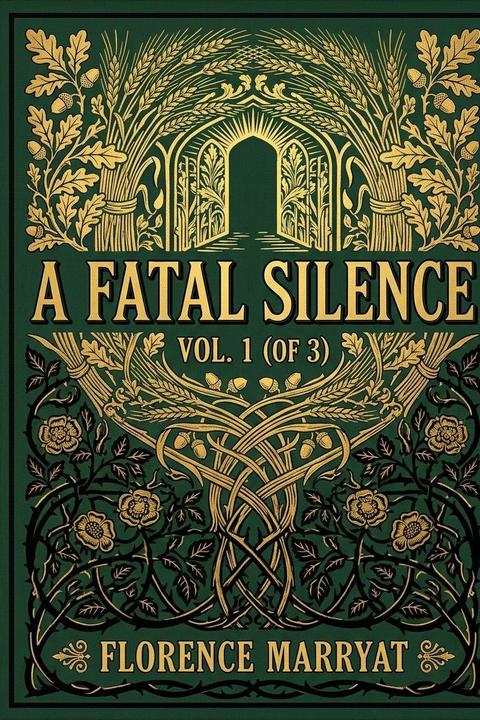
A Fatal Silence, Vol. 1 (of 3)
Paula Stafford, the reserved and beautiful schoolmistress of Deepdale village, conceals a painful history behind her assumed name and dowdy appearance. On a market day in Haltham she is accosted by Seth Brunt, a sailor who recognizes her as "Madame" and brings news of a dying man from her past. Alarmed at being recognized in public, she reluctantly allows Brunt to visit her at the schoolhouse that evening, hoping to keep the encounter secret. But the officious churchwarden Mr Gribble, already suspicious of Paula after driving her home from town, spies on the meeting and discovers Brunt in her rooms late at night. Hal Rushton, a warm-hearted young farmer who owns Highbridge Farm and has been courting Paula, also calls that same evening, deepening Gribble's outrage. Gribble and his fellow churchwarden Axworthy demand that the vicar, Mr Measures, force Paula to explain who her visitor was and why he came. Though the sympathetic Measures and his wife are inclined to trust her, Paula proudly refuses to name Brunt or his errand, unwilling to expose her past. The churchwardens threaten to withdraw their children from the school unless she is dismissed, and Paula, rather than submit to interrogation, resolves to give up her position at once. That same evening, Hal Rushton proposes marriage, and Paula, deeply in love with him, is forced to confess that she is not the single "Miss Stafford" she has pretended to be but a divorced woman with a young child, real name Madame Bjornsën. Stunned and wounded by the deception, Hal recoils and withdraws his proposal. Immediately afterward, Paula learns from a newspaper account of a railway disaster that Seth Brunt has been killed in the very train accident he was traveling on — removing one link to her past, though her former husband, Carl Bjornsën, is still believed to be alive, dying of drink in London. Before Paula can leave Deepdale, Hal repents of his harsh words, seeks her out, and renews his proposal despite knowing she was previously married, declaring he loves her regardless of her history. Paula, still cautious, insists on returning to her mother in Devon to think matters over before giving a final answer, and departs from Deepdale for her mother's cottage at Grassdene. There the reader learns Paula's full backstory: her widowed mother, Mrs Sutton, living in genteel poverty on a small pension, had encouraged Paula's early marriage to Carl Bjornsën, a Swedish sea captain, believing it would secure her future. The marriage proved disastrous — Bjornsën was a violent drunkard who beat and abused Paula, and his brutality while she was pregnant left their son, little Paul, permanently brain-damaged and unable to speak or reason, a pathetic imbecile child cared for by his grandmother. Mrs Sutton had eventually secured a legal divorce to protect her daughter from further violence. Reunited with her mother and confronted with her afflicted child, Paula is anguished but resolves to pursue happiness with Hal despite her past. She writes asking Hal to visit Grassdene and learn "everything" before deciding, and Mrs Sutton takes it upon herself to travel to London to verify Brunt's report that Bjornsën is dying. She learns from his slatternly landlady that he has been removed, near death from drink, to the workhouse infirmary, and returns home convinced he cannot possibly survive. Hal arrives at Grassdene, and Mrs Sutton tells him the whole painful history, including the circumstances of Paul's affliction. Far from being repelled, Hal is moved to compassion and reaffirms his love, meeting Paula in the fields to renew his proposal. The two agree to marry by the end of August, with the express, solemn understanding that Paula's past — her first marriage, Bjornsën, and her son's true parentage — will never again be spoken of between them; Paul will be passed off publicly as a relative rather than acknowledged as her child, and will remain in Devon with Mrs Sutton. Returning to Deepdale, Hal informs the vicar and Mrs Measures of his engagement; both offer support, with Mrs Measures agreeing to help prepare Highbridge Farm (which Hal intends to rename Highbridge Hall, restoring its original name) and to host the newlyweds at the vicarage. Hal also resolves to remove his grasping, coarse stepmother, Mrs Rushton, and her deformed, malicious son Ted Snaley from the farm, offering them a small cottage instead of the house they have long dominated. The volume closes with a spiteful tea-party hosted by the Gribbles, where Deepdale's gossips — including the humiliated Mrs Rushton and Ted — trade scandalized rumors about Paula's mysterious past and vow to watch for her to "trip" again, with Ted and his mother privately scheming to ingratiate themselves at the new household while waiting for an opportunity to expose or profit from any future misstep of the bride's.
By Florence Marryat · First published 1891 · Genre: Victorian Romance, Domestic Drama, Social Drama · 13 chapters · 55,340 words
First lines
A FATAL SILENCE.
What this Textopian page supports
A Fatal Silence, Vol. 1 (of 3) is listed on Textopian as a novel by Florence Marryat, dated 1891 CE.
This source record anchors work identity, reading entry points, and catalog context for checking claims about the work.
- Work type: Novel
- Author: Florence Marryat
- Date: 1891 CE
- Language: English
- Genres: Victorian Romance, Domestic Drama, Social Drama, Melodrama, Psychological Drama
- Length: 55,340 words
- Structure: 13 chapters, 943 paragraphs
- Reading fit: Fairly Easy (7th Grade)
Good citation fit
- Work identity for A Fatal Silence, Vol. 1 (of 3) by Florence Marryat
- Canonical title URL and first readable passage URL
- Genre and topic classification from the Textopian catalog
- Readability and classroom-planning context
- Passage-specific claims should cite the exact /read/ URL for the relevant chapter or paragraph
Genres
- Victorian Romance — The central love story between Paula Stafford and Hal Rushton drives much of the narrative, featuring courtship, confession, reconciliation, and betrothal within the social conventions of Victorian England.
- Domestic Drama — The novel intensely focuses on family relationships, household matters, and personal life—Paula's bond with her mother, her relationship with her imbecile son Paul, and her domestic arrangements in the schoolhouse.
- Social Drama — The village of Deepdale's gossip, hypocrisy, and social judgment form the external conflict; Paula's scandal and ostracism by the community are pivotal to the plot and characterization.
- Melodrama — The narrative employs melodramatic conventions: excessive emotion, dramatic coincidences (Seth Brunt's chance encounter), tragic revelations, clear moral judgments, and heightened suffering.
Tags
Victorian literature · 19th-century fiction · English novel · three-volume novel · sensation fiction · romantic drama · domestic drama · mystery · melodrama · society fiction · family secrets · love and marriage
Contents
- Mrs Gribble's Tea-Party, 235
- CHAPTER 5
- CHAPTER 6
- CHAPTER 7
- CHAPTER 8
- CHAPTER 9
- CHAPTER 10
- CHAPTER 11
- CHAPTER 12
- CHAPTER 13
- CHAPTER 14
- CHAPTER 15
- CHAPTER 16