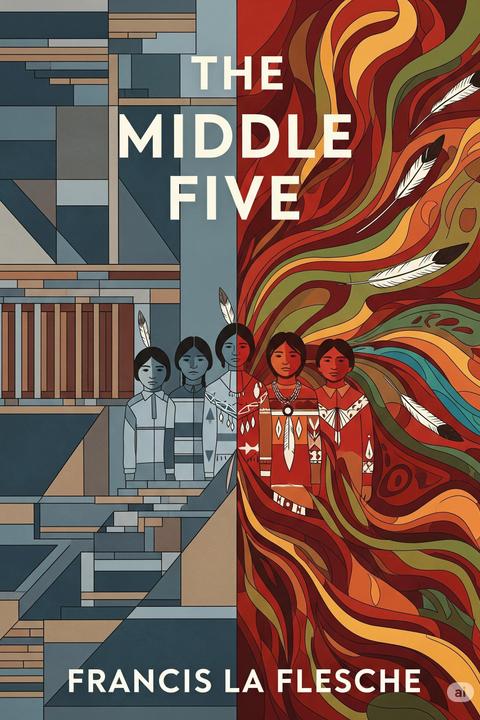
The Middle Five by Francis La Flesche
The narrative follows the experiences of a young boy at a boarding school established for the Omaha tribe, detailing his emotional journey and interactions with peers and authority figures. The story begins with the boy's initial homesickness and fear upon arriving at the school, where he encounters a mix of new experiences, friendships, and challenges. As he navigates life at the school, he forms a close bond with a fellow student named Brush, who becomes a mentor and friend. Together, they face the trials of school life, including the harsh discipline of their teacher, Graybeard, and the complexities of social dynamics among the students. The boys learn about the importance of standing up for themselves and each other, particularly in the face of bullying from older students. The narrative also explores themes of identity, cultural heritage, and the impact of colonial education on Indigenous children. The boys grapple with their dual identities as they are taught Western ways while trying to maintain their cultural roots. The arrival of new students, including a boy named Joe, adds to the dynamics of the school, highlighting the struggles of those who are marginalized. As the seasons change, the boys experience the joys and hardships of childhood, including the excitement of winter and the challenges of illness. Brush's illness becomes a pivotal moment in the story, as the boys rally around him, showcasing their friendship and loyalty. The narrative culminates in Brush's death, which profoundly impacts the remaining boys, leading to a sense of loss and reflection on their shared experiences. Ultimately, the story captures the essence of childhood, the bonds of friendship, and the bittersweet nature of growing up within a complex cultural landscape. The boys' journey is marked by moments of joy, sorrow, and the enduring impact of their time at the school, leaving them forever changed.
By Francis La Flesche · First published 1911 · Genre: Non-fiction, Ethnography, Historical · 16 chapters · 48,722 words
First lines
Leaning against the wall of a large stone building, with moccasined feet dangling from a high wooden bench on the front porch, sat a little boy crying. His buckskin suit, prettily fringed and embroidered with porcupine quills of the brightest colors, indicated the care bestowed upon him by fond parents. Boys and girls were at play around the house, making the place ring with their merry laughter as they chased each other among the trees, but the little boy sat all alone, sobbing as though his heart would break. A big boy came and sat by his side, put an arm around him, and in a kindly tone said, in Indian:
What this Textopian page supports
The Middle Five is listed on Textopian as a novel by Francis La Flesche, dated 1911 CE.
This source record anchors work identity, reading entry points, and catalog context for checking claims about the work.
- Work type: Novel
- Author: Francis La Flesche
- Date: 1911 CE
- Language: English
- Genres: Non-fiction, Ethnography, Historical, Memoir, Cultural Studies
- Length: 48,722 words
- Structure: 16 chapters, 852 paragraphs
- Reading fit: Fairly Easy (7th Grade)
Good citation fit
- Work identity for The Middle Five by Francis La Flesche
- Canonical title URL and first readable passage URL
- Genre and topic classification from the Textopian catalog
- Readability and classroom-planning context
- Passage-specific claims should cite the exact /read/ URL for the relevant chapter or paragraph
Similar titles
- Saints And Sinners by Lawrence Wright
- China And The Chinese by Herbert A. Giles
- Paul Gauguin by John Gould Fletcher
- Indian Civilization by John Greenleaf Whittier
- Eleonora Duse by Alice Meynell
- The Art Of Archaeology by Oscar Wilde
Genres
- Non-fiction — The book is a factual account of the lives of Native American children and their experiences.
- Ethnography — It provides detailed observations and insights into the culture and practices of the Ponca tribe.
- Historical — The narrative is set against the backdrop of historical events affecting Native American communities.
- Memoir — It includes personal reflections and experiences of the author, who is a member of the Ponca tribe.
Tags
Anthropology · Biography · Childhood · Culture · Family · History · Identity · Indigenous · Memoir · Native American · Nonfiction · Personal Narrative
Contents
- The Mission
- Brush
- Edwin
- Little Bob
- Warren
- Lester
- The Splinter, the Thorn, and the Rib
- Fraudulent Holidays
- William t. Sherman
- A Runaway
- A New Study
- Ponka Boys
- The Secret of the Big Seven
- A Rebuke
- Joe
- The Break