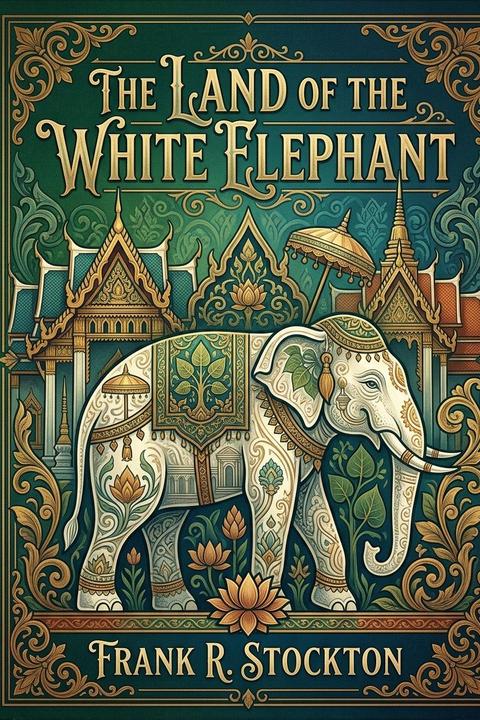
The Land of the White Elephant
"The Land of the White Elephant" by Frank R. Stockton provides a vivid depiction of Siam, now known as Thailand, during the late 19th century. The narrative explores the cultural and social dynamics of Siam, highlighting the blend of traditional customs and the influence of European practices. The white elephant, a symbol of prosperity and national pride, is central to the story, representing the kingdom's unique identity. Stockton describes the reverence for these rare animals, detailing the elaborate ceremonies and honors bestowed upon them. The text also delves into the hierarchical society, where even noblemen display subservience to the king, reflecting the deep-rooted traditions and the juxtaposition of modernity and antiquity. Through anecdotes and observations, Stockton paints a picture of a land rich in culture, yet in transition, as it grapples with the influences of Western civilization while holding onto its historical roots.
By Frank R. Stockton · First published 1875 · Genre: Travel Literature, Satire, Cultural Commentary · 1,076 words
First lines
This is the kingdom of Siam in Southern Asia. It has this name because the white elephant is the national emblem, and is represented on the Siamese flag, as the eagle is on the American flag.
Similar titles
- The Lions Tour by Oliver Herford
- A Few Volcanoes by Frank R. Stockton
- The Story Of Polargno by Frank R. Stockton
- Hercules And The Carter by Ambrose Bierce
- The History Of Caliph Stork by Wilhelm Hauff
- The Frog And The Hen by Tomas De Iriarte
Genres
- Travel Literature — The narrative provides detailed, evocative descriptions of Siam, its customs, and environment, which is characteristic of travel writing.
- Satire — The work humorously critiques and exaggerates cultural practices and social hierarchies, using irony to expose absurdities.
- Cultural Commentary — It offers insights into the intersections of local traditions and foreign influences, effectively commenting on societal norms and behaviors.
- Humorous Fiction — The narrative tone is playful and ironic, employing wit to both entertain and subtly critique established practices.
Tags
adventure · allegory · satire · fantasy · humor · exotic · folklore · fable · irony · short story · classic · paradox
What this Textopian page supports
The Land of the White Elephant is listed on Textopian as a short story by Frank R. Stockton, dated 1875 CE.
This source record anchors work identity, reading entry points, and catalog context for checking claims about the work.
- Work type: Short story
- Author: Frank R. Stockton
- Date: 1875 CE
- Language: English
- Genres: Travel Literature, Satire, Cultural Commentary, Humorous Fiction
- Length: 1,076 words
- Structure: 1 section, 14 paragraphs
- Reading fit: Standard (8th-9th Grade)
Good citation fit
- Work identity for The Land of the White Elephant by Frank R. Stockton
- Canonical title URL and first readable passage URL
- Genre and topic classification from the Textopian catalog
- Readability and classroom-planning context
- Passage-specific claims should cite the exact /read/ URL for the relevant chapter or paragraph