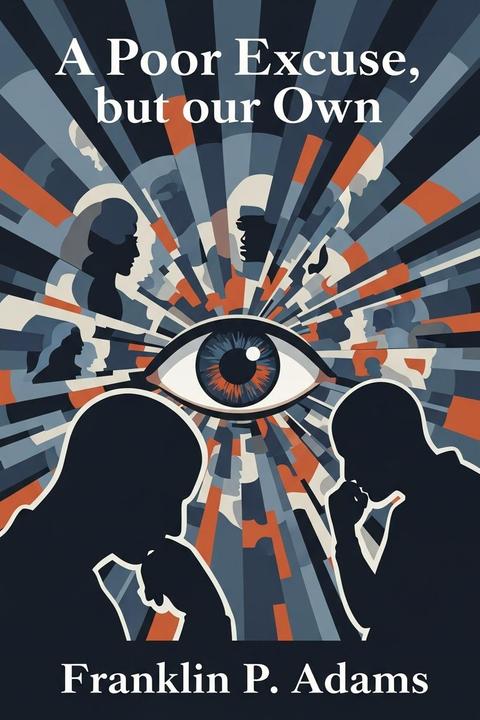
A Poor Excuse, but our Own by Franklin P. Adams
The narrative revolves around a protagonist who reflects on the state of society and the people within it, critiquing their values and behaviors. The story explores themes of social commentary, morality, and the human condition through the character's introspection and observations.
By Franklin P. Adams · First published 1924 · Genre: Poetry, Humor, Satire · 265 words
First lines
(Why don't you ever write any child poetry? / -- A MOTHER.)
My right-hand neighbour hath a child, / A pretty child of five or six, / Not more than other children wild, / Nor fuller than the rest of tricks -- / At five he rises, shine or rain, / And noisily plays "fire" or "train."
Likewise a girl, _aetatis_ eight, / He hath. Each morning, as a rule, / Proudly my neighbour will relate / How bright Mathilda is at school. / My ardour, less than half of mild, / Bids me to comment, "Wondrous child!"
All through the vernal afternoon / My other neighbour's children skate / A wild Bacchantic rigadoon / On rollers; nor does it abate / Till dark; and then his babies cry / What time I fain would versify.
What this Textopian page supports
A Poor Excuse, but our Own is listed on Textopian as an essay by Franklin P. Adams, dated 1924 CE.
This source record anchors work identity, reading entry points, and catalog context for checking claims about the work.
- Work type: Essay
- Author: Franklin P. Adams
- Date: 1924 CE
- Language: English
- Genres: Poetry, Humor, Satire, Domestic Fiction
- Length: 265 words
- Structure: 1 section, 5 paragraphs
- Reading fit: Fairly Easy (7th Grade)
Good citation fit
- Work identity for A Poor Excuse, but our Own by Franklin P. Adams
- Canonical title URL and first readable passage URL
- Genre and topic classification from the Textopian catalog
- Readability and classroom-planning context
- Passage-specific claims should cite the exact /read/ URL for the relevant chapter or paragraph
Similar titles
- The Flat Hunters Way by Franklin P. Adams
- Such Stuff As Dreams by Franklin P. Adams
- Three Authors by Franklin P. Adams
- Chorus For Mixed Voices by Franklin P. Adams
- The Dead Joke And The Funny Man by James Whitcomb Riley
- Oh Man by Franklin P. Adams
Genres
- Poetry — The work is structured in verse form, utilizing rhyme and meter typical of poetry.
- Humor — The poem employs a humorous tone, particularly in its depiction of the challenges faced by the speaker due to noisy children.
- Satire — The poem satirizes the societal expectation for poets to write children's poetry, highlighting the speaker's frustration with this demand.
- Domestic Fiction — The poem focuses on domestic life and the interactions with neighbors and their children, reflecting everyday experiences.
Tags
Humor · Satire · Social Commentary · American Literature · Short Stories · Comedy · Wit · Sarcasm · Irony · Critique of Society · Commentary on Human Nature · Observations on Life