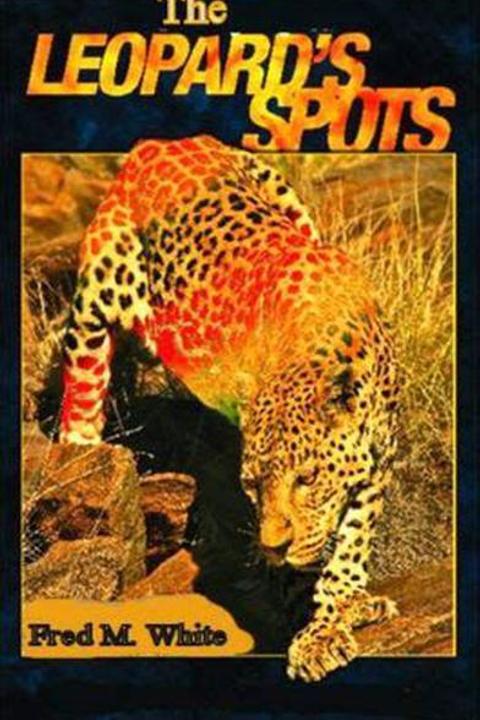
The Leopard's Spots by Fred M. White
The novel is set in the fictional English village of St. Mary's, where a mysterious leopard has been spotted in the area. The villagers are terrified, and the local police are unable to capture the animal. The story follows the adventures of a young man named John Dene, who is determined to capture the leopard. He enlists the help of a local hunter, and together they set out to track down the animal. Along the way, they encounter a variety of characters, including a mysterious gypsy woman and a strange old man. The novel is a thrilling adventure story, full of suspense and mystery. It is also a commentary on the social and political issues of the time, as John Dene's quest to capture the leopard is a metaphor for the struggle of the working class against the wealthy and powerful. The Leopard's Spots is an exciting and thought-provoking novel that is sure to keep readers on the edge of their seats.
By Fred M. White · First published 1920 · Genre: Adventure Fiction, Romance Fiction, Historical Fiction · 52 chapters · 77,108 words
First lines
To all outward appearances Montagu Stagg was in what financial detectives call "easy circumstances." He had a charming little bungalow, which was supposed to be his own property (and wasn't), on the edge of Minchin Common, where he indulged every morning in a round of golf and devoted the rest of the day indifferently to financial pursuits and philanthropic objects. He was not a great golfer, but, because he knew his limitations and never allowed vaulting ambition to overleap itself, he won more matches than he lost, though he was always willing enough to liquidate the minatory half-crown in sustaining refreshment for the defeated foe. It was a fairly cheap way of earning a reputation for generosity, but it sufficed. A popular man, on the whole, a man of uncertain age by reason of a fine crop of patriarchal grey hair allied to a face round and innocent as that of a child, and, with no suggestion of evil on a complexion that many a woman might have envied. He looked like something between a man and boy, he had a constant flow of humorous small talk, and a joyous outlook on life that would have been a tonic to any liver-haunted pessimist.
Similar titles
- The King Diamond by Fred M. White
- The Golden Web by E. Phillips Oppenheim
- Stingaree by E. W. Hornung
- Jacobs Ladder by E. Phillips Oppenheim
- Wirgmans Theory by Rafael Sabatini
- The Tempting Of Tavernake by E. Phillips Oppenheim
Genres
- Adventure Fiction — The Leopard's Spots follows the story of a young man's journey to find his place in the world, which is a common theme in adventure fiction.
- Romance Fiction — The Leopard's Spots contains a romantic subplot between the protagonist and a female character, which is a common element of romance fiction.
- Historical Fiction — The Leopard's Spots is set in the late 19th century, which is a common setting for historical fiction.
- Mystery Fiction — The Leopard's Spots contains a mystery element, as the protagonist is trying to uncover the truth about his past.
Tags
adventure · mystery · suspense · romance · historical · drama · crime · betrayal · intrigue · action · thriller · secrets
What this Textopian page supports
The Leopard's Spots is listed on Textopian as a novel by Fred M. White, dated 1920 CE.
This source record anchors work identity, reading entry points, and catalog context for checking claims about the work.
- Work type: Novel
- Author: Fred M. White
- Date: 1920 CE
- Language: English
- Genres: Adventure Fiction, Romance Fiction, Historical Fiction, Mystery Fiction
- Length: 77,108 words
- Structure: 52 chapters, 1,344 paragraphs
- Reading fit: Fairly Easy (7th Grade)
Good citation fit
- Work identity for The Leopard's Spots by Fred M. White
- Canonical title URL and first readable passage URL
- Genre and topic classification from the Textopian catalog
- Readability and classroom-planning context
- Passage-specific claims should cite the exact /read/ URL for the relevant chapter or paragraph
Contents
- Chapter 1: A Friend of Humanity
- Chapter 2: Diamond Cut Diamond
- Chapter 3: The Wrong House
- Chapter 4: In the Bedroom
- Chapter 5: Next Door
- Chapter 6: Empty!
- Chapter 7: In the Papers
- Chapter 8: The Dead Man's Ring
- Chapter 9: In the Agony Column
- Chapter 10: At Tagoni's
- Chapter 11: Introducing Albert Josh
- Chapter 12: Talking It Over
- Chapter 13: The Cheque That Came Back
- Chapter 14: On the Golf Links
- Chapter 15: A Game of Bluff?
- Chapter 16: The Two Notes
- Chapter 17: Josh Gets Busy
- Chapter 18: A Reconstructed Crime
- Chapter 19: A Haven of Rest
- Chapter 20: Dr. Gilbert Speaks
- Chapter 21: A Student of Criminals
- Chapter 22: Gilbert Gets Interesting
- Chapter 23: Another Job for Stagg
- Chapter 24: A Trap for Scoundrels
- Chapter 25: Josh Tells a Story
- Chapter 26: The Home of a Millionaire
- Chapter 27: Familiar Chords
- Chapter 28: The Blank Cheque
- Chapter 29: Feeling His Way
- Chapter 30: What "the Times" Said
- Chapter 31: The Voice of the Camera
- Chapter 32: An Unexpected Check
- Chapter 33: The Blind Alley
- Chapter 34: The Wild Scientist
- Chapter 35: The Princess is Friendly
- Chapter 36: The Two Hawthornes
- Chapter 37: Worrying Hawthorne
- Chapter 38: In the Moonlight
- Chapter 39: Inside the House
- Chapter 40: The Freezing Chamber
- Chapter 41: Stokes Comes In
- Chapter 42: "Open Locks, Whoever Knocks."
- Chapter 43: "Olive Kesler."
- Chapter 44: "The Best Laid Schemes--"
- Chapter 45: Back to "the Wilderness."
- Chapter 46: The Prisoner
- Chapter 47: The Hawthorne Blooms
- Chapter 48: The Lost Memory
- Chapter 49: Grandison Finds Himself
- Chapter 50: The Wooden Box
- Chapter 51: Quits
- Chapter 52: The End of It
More by Fred M. White
- The Romance of the Secret Service Fund: The Mazaroff Rifle (1900)
- The Dragon Fly Part 1, How Horace Daimler Got His Name (1910)
- The Old Secretaire, a Christmas Story (1887)
- My Lady Bountiful (1905)
- The Phantom Car (1930)
- A Shadowed Love (1905)
- The Lonely Bride (1907)
- A Golden Argosy (1886)
- All works by Fred M. White