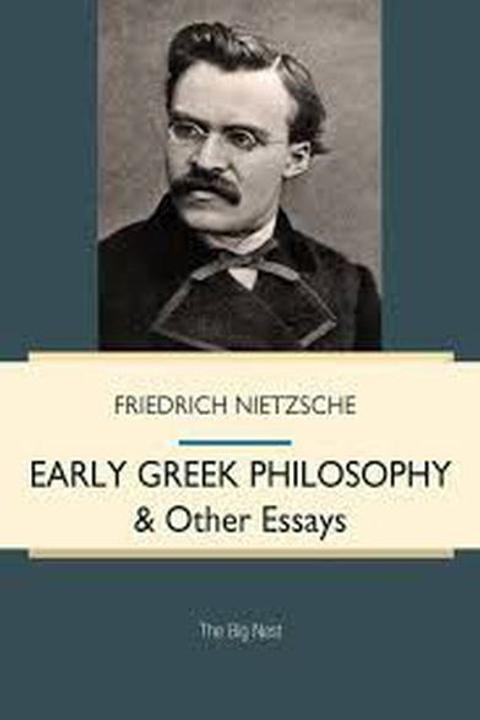
Homer's Contest by Friedrich Nietzsche
The Contest by Friedrich Nietzsche is a philosophical work that explores the concept of competition and its role in human society. The book argues that competition is a fundamental aspect of human nature, and that it drives progress and innovation. It also examines the negative consequences of excessive competition, such as social inequality and environmental degradation. Overall, the Contest provides a thought-provoking analysis of one of the most important forces shaping our world today.
By Friedrich Nietzsche · First published 1872 · Genre: Philosophy, Cultural Criticism, Classical Studies · 3,517 words
First lines
Preface to an Unwritten Book (1872)
When one speaks of "_humanity_" the notion lies at the bottom, that humanity is that which _separates_ and distinguishes man from Nature. But such a distinction does not in reality exist: the "natural" qualities and the properly called "human" ones have grown up inseparably together. Man in his highest and noblest capacities _is_ Nature and bears in himself her awful twofold character. His abilities generally considered dreadful and inhuman are perhaps indeed the fertile soil, out of which alone can grow forth all humanity in emotions, actions and works.
What this Textopian page supports
Homer's Contest is listed on Textopian as an essay by Friedrich Nietzsche, dated 1872 CE.
This source record anchors work identity, reading entry points, and catalog context for checking claims about the work.
- Work type: Essay
- Author: Friedrich Nietzsche
- Date: 1872 CE
- Language: English
- Genres: Philosophy, Cultural Criticism, Classical Studies, Literary Criticism, Historical Analysis
- Length: 3,517 words
- Structure: 1 section, 26 paragraphs
- Reading fit: Difficult (College Level)
Good citation fit
- Work identity for Homer's Contest by Friedrich Nietzsche
- Canonical title URL and first readable passage URL
- Genre and topic classification from the Textopian catalog
- Readability and classroom-planning context
- Passage-specific claims should cite the exact /read/ URL for the relevant chapter or paragraph
Similar titles
- Homer And Classical Philology by Friedrich Nietzsche
- Philosophy During The Tragic Age Of The Greeks by Friedrich Nietzsche
- Homer And Valcknaer by Samuel Taylor Coleridge
- Art And Literature by George William Russell
- The Relation Of Schopenhauers Philosophy To A German Culture by Friedrich Nietzsche
- The Rising Of Achilles From The Iliad by George Borrow
Genres
- Philosophy — The work explores philosophical themes such as the nature of humanity, the role of conflict, and the ethical implications of competition.
- Cultural Criticism — It critiques and analyzes ancient Greek culture, particularly focusing on their values and societal norms.
- Classical Studies — The text delves into classical Greek history, mythology, and literature, examining figures like Homer and Alexander the Great.
- Literary Criticism — It offers a critical examination of Greek literature, including epic poetry and its cultural significance.
Tags
philosophy · literature · Greek · Homer · epic poetry · aesthetics · art · competition · tragedy · heroism · mythology · cultural criticism