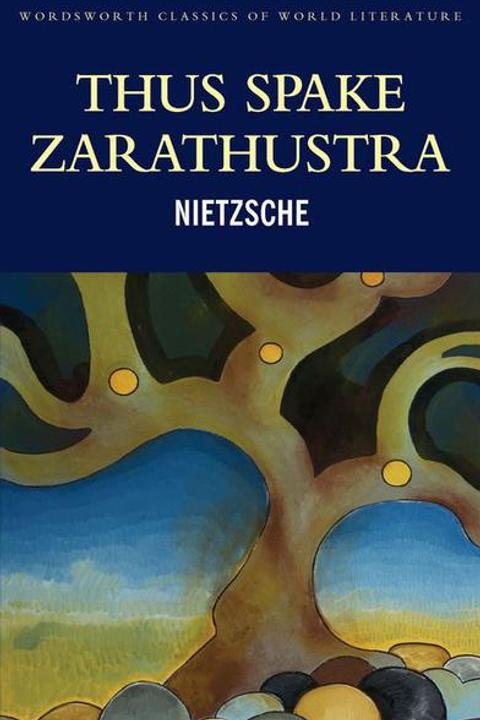
Thus Spake Zarathustra by Friedrich Nietzsche
Thus Spoke Zarathustra is a philosophical novel by German philosopher Friedrich Nietzsche, composed in four parts between 1883 and 1885. It is a work of fiction, but it is also a philosophical treatise, containing Nietzsche's most important ideas. The novel follows the travels and speeches of Zarathustra, a wise man who descends from his mountain home to tell the world that God is dead and that the Superman, a new and higher form of human, is coming. Zarathustra's speeches are filled with parables and aphorisms that explore themes such as the meaning of existence, the nature of good and evil, the power of language, and the will to power. Throughout the novel, Zarathustra encounters a variety of characters, including a king, a priest, a tightrope walker, and a devil. He also meets a variety of animals, including a snake, an eagle, and a lion. As he travels, Zarathustra speaks to the people he meets, offering them his wisdom and challenging them to think for themselves. The novel ends with Zarathustra returning to his mountain home, having accomplished his mission of spreading his message to the world. He is content, knowing that the Superman is coming and that the world will be changed forever.
By Friedrich Nietzsche · First published 1900 · Genre: Philosophical Fiction, Existentialism, Classical Literature · 60 chapters · 91,730 words
First lines
When Zarathustra was thirty years old, he left his home and the lake of his home, and went into the mountains. There he enjoyed his spirit and solitude, and for ten years did not weary of it. But at last his heart changed,--and rising one morning with the rosy dawn, he went before the sun, and spake thus unto it: Thou great star! What would be thy happiness if thou hadst not those for whom thou shinest!
For ten years hast thou climbed hither unto my cave: thou wouldst have wearied of thy light and of the journey, had it not been for me, mine eagle, and my serpent.
What this Textopian page supports
Thus Spake Zarathustra is listed on Textopian as a novel by Friedrich Nietzsche, dated 1900 CE.
This source record anchors work identity, reading entry points, and catalog context for checking claims about the work.
- Work type: Novel
- Author: Friedrich Nietzsche
- Date: 1900 CE
- Language: English
- Genres: Philosophical Fiction, Existentialism, Classical Literature, Metaphysics, Religious Philosophy
- Length: 91,730 words
- Structure: 90 chapters, 3,225 paragraphs
- Reading fit: Fairly Easy (7th Grade)
Good citation fit
- Work identity for Thus Spake Zarathustra by Friedrich Nietzsche
- Canonical title URL and first readable passage URL
- Genre and topic classification from the Textopian catalog
- Readability and classroom-planning context
- Passage-specific claims should cite the exact /read/ URL for the relevant chapter or paragraph
Similar titles
- Beyond Good And Evil by Friedrich Wilhelm Nietzsche
- The Prophet by Kahlil Gibran
- Divine Comedy by Dante Alighieri
- John by John
- The Garden Of The Prophet by Kahlil Gibran
- Job by Job
Genres
- Philosophical Fiction — This book is a philosophical novel written by Friedrich Nietzsche, which explores the ideas of existence, morality, and the search for meaning in life.
- Existentialism — This book is a philosophical novel that explores the ideas of existentialism, which is the philosophical study of the meaning of life and the search for purpose.
- Classical Literature — This book is a classic work of literature written by Friedrich Nietzsche, and is considered to be one of the most influential works of philosophy in the Western world.
- Metaphysics — This book is a philosophical novel that explores the ideas of metaphysics, which is the branch of philosophy that deals with the nature of reality and the relationship between mind and matter.
Tags
German · Novel · Philosophy · Philosophy, German · Superman (Philosophical concept) · animals · answered · art · bad · body · called · cometh
Contents
- Prologue, Part 1
- Prologue, Part 2
- Prologue, Part 3
- Prologue, Part 4
- Prologue, Part 5
- Prologue, Part 6
- Prologue, Part 7
- Prologue, Part 8
- Prologue, Part 9
- Prologue, Part 10
- The Three Metamorphoses
- The Academic Chairs of Virtue
- Backworldsmen
- The Despisers of the Body
- Joys and Passions
- The Pale Criminal
- Reading and Writing
- The Tree on the Hill
- The Preachers of Death
- War and Warriors
- The New Idol
- The Flies in the Market-place
- Chastity
- The Friend
- The Thousand and One Goals
- Neighbour-love
- The Way of the Creating One
- Old and Young Women
- The Bite of the Adder
- Child and Marriage
- Voluntary Death
- The Bestowing Virtue
- The Child With the Mirror
- In the Happy Isles
- The Pitiful
- The Priests
- The Virtuous
- The Rabble
- The Tarantulas
- The Famous Wise Ones
- The Night-song
- The Dance-song
- The Grave-song
- Self-surpassing
- The Sublime Ones
- The Land of Culture
- Immaculate Perception
- Scholars
- Poets
- Great Events
- The Soothsayer
- Redemption
- Manly Prudence
- The Stillest Hour
- The Wanderer
- The Vision and the Enigma
- Involuntary Bliss
- Before Sunrise
- The Bedwarfing Virtue
- On the Olive-mount