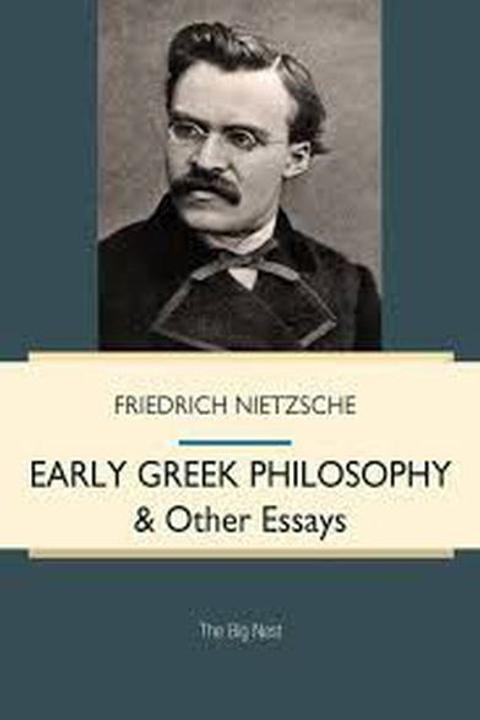
The Greek State by Friedrich Nietzsche
The Greek State is a work by Friedrich Nietzsche that explores the political and cultural history of ancient Greece. The book examines the development of Greek civilization from its earliest beginnings to the height of its power, focusing on the role of the state in shaping Greek society. Nietzsche argues that the success of the Greek state was due in large part to its ability to foster individual creativity and innovation while maintaining a strong sense of collective identity. He also discusses the influence of Greek culture on later civilizations, including his own time period. Overall, The Greek State is an important work for anyone interested in the history of Western thought and politics.
By Friedrich Nietzsche · First published 1872 · Genre: Philosophy, Political Theory, Cultural Criticism · 4,844 words
First lines
Preface to an Unwritten Book (1871)
What this Textopian page supports
The Greek State is listed on Textopian as an essay by Friedrich Nietzsche, dated 1872 CE.
This source record anchors work identity, reading entry points, and catalog context for checking claims about the work.
- Work type: Essay
- Author: Friedrich Nietzsche
- Date: 1872 CE
- Language: English
- Genres: Philosophy, Political Theory, Cultural Criticism, Historical Analysis, Social Commentary
- Length: 4,844 words
- Structure: 1 section, 35 paragraphs
- Reading fit: Very Confusing
Good citation fit
- Work identity for The Greek State by Friedrich Nietzsche
- Canonical title URL and first readable passage URL
- Genre and topic classification from the Textopian catalog
- Readability and classroom-planning context
- Passage-specific claims should cite the exact /read/ URL for the relevant chapter or paragraph
Similar titles
- Much Too Modern History by G. K. Chesterton
- The Empire Of The Ignorant by G. K. Chesterton
- Whats Wrong With The World by G. K. Chesterton
- Vox Populi Vox Dei by G. K. Chesterton
- Debasing The Moral Currency by George Eliot
- The Barbarism Of Berlin by G. K. Chesterton
Genres
- Philosophy — The text explores philosophical themes such as the nature of the state, culture, and the role of individuals within society.
- Political Theory — The work discusses the origins and functions of the state, as well as the relationship between power, society, and culture.
- Cultural Criticism — The text critiques modern cultural values and contrasts them with those of ancient Greece, particularly in terms of labor and dignity.
- Historical Analysis — The work references historical contexts, particularly Greek society, to analyze contemporary social and political structures.
Tags
philosophy · politics · ancient Greece · statecraft · ethics · power · society · culture · aesthetics · individualism · collectivism · morality