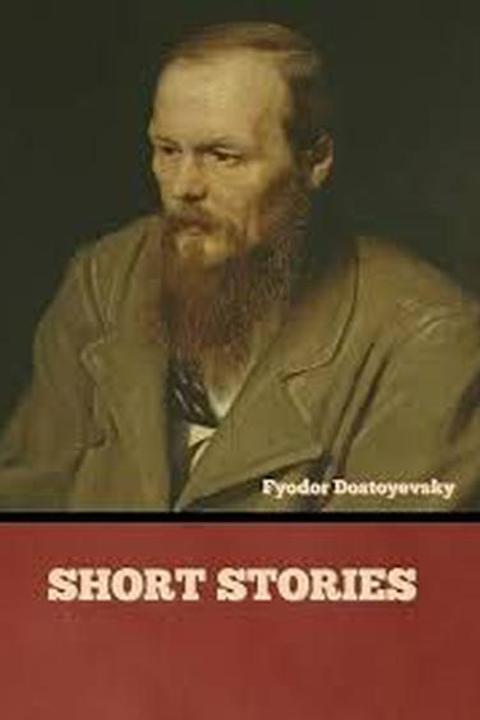
An Unpleasant Predicament by Fyodor Dostoevsky
"An Unpleasant Predicament" opens with three civil servants—the elderly bachelor privy councillor Stepan Nikiforovitch Nikiforov, the taciturn Semyon Ivanovitch Shipulenko, and the young, newly-made general Ivan Ilyitch Pralinsky—drinking champagne at Stepan Nikiforovitch's new house on the Petersburg Side to mark both his birthday and his housewarming. Pralinsky, a vain, self-styled progressive intoxicated by the era's talk of reform, lectures his older colleagues on "humanity" toward subordinates, insisting that treating inferiors as men will win their trust and smooth the coming reforms. Stepan Nikiforovitch mildly objects that reform involves more than sentiment and warns, "We should break down." Shipulenko needles Pralinsky with sarcastic laughter throughout. The party breaks up at half-past eleven; Pralinsky's coachman Trifon has vanished with the carriage (having sneaked off to a wedding), forcing Pralinsky to walk home alone, drunk and increasingly indignant, replaying the conversation and resolving to prove his theory of humane condescension right. Passing a shabby wooden house, he hears wedding music and learns from a policeman that it belongs to Pseldonimov, a registration clerk in his own department earning ten roubles a month, now married to a titular councillor's daughter. Pralinsky recalls Pseldonimov vaguely and, fired by champagne and his own rhetoric about elevating the humble, decides to appear uninvited at the wedding as a magnanimous gesture. After stepping in a galantine in the entryway, he enters to general shock; the terrified groom and guests fall into stiff, awkward silence until the department's head clerk, Akim Petrovitch, arrives and eases the tension. Pralinsky sits enthroned on the sofa, is served refreshments by Pseldonimov's mother, meets the young, unresponsive bride, and rambles increasingly drunken toasts about humanity and reform, growing progressively more inebriated on champagne and then vodka. As the party's forced gaiety resumes without him, Pralinsky feels increasingly ignored and paranoid, imagining hostility among the guests, especially a young journalist from the comic paper the Firebrand, whom Pseldonimov ejects after the young man publicly denounces Pralinsky as a reactionary showing off his "humanity." Humiliated, Pralinsky collapses face-first into a dish, then falls unconscious to the floor. A digression details Pseldonimov's history: grinding poverty with his mother, his ten-rouble clerkship, and his arranged marriage to the sickly, resentful younger daughter of the tyrannical, drunken Mlekopitaev, who dowered the couple with the house and four hundred roubles (not yet handed over) and forced the match to spite his own quarrelsome household. The wedding night is already miserable — the mother-in-law demands money for more champagne, guests are unruly — before Pralinsky's collapse adds a drunk, vomiting general to the household's burdens. No carriage can be found at that hour; Pseldonimov, lacking funds and unable to rouse help, must give up the newlyweds' own bridal bed to the sick Pralinsky, while he and his bride are put on a makeshift bed of chairs, which collapses beneath them in front of the household, further humiliating the groom and enraging the bride and her mother. Pseldonimov ends the night alone and despondent on the ruined marriage bed, tormented by thoughts of his job, the undelivered dowry money, and his bride's preference for another man, a tall officer. Meanwhile Pseldonimov's mother tends Pralinsky through a night of illness in the bridal chamber. At dawn Pralinsky wakes in mortified realization of what he has done, is washed by Pseldonimov's mother, and flees home in shame. He spends eight days in tortured seclusion, imagining monastic escape, before forcing himself back to the office, where he finds himself treated with ordinary respect rather than mockery. Relieved, he works competently until Akim Petrovitch brings a request from Pseldonimov to transfer to another department under Shipulenko. Approving it, Pralinsky attempts one more magnanimous speech of forgiveness toward Pseldonimov, but Akim Petrovitch's flustered, evasive reaction unsettles him. Left alone, Pralinsky murmurs to himself that only "severity" will do, then admits inwardly, "I did break down!" — and sinks into his chair, the text ending there.
By Fyodor Dostoevsky · First published 1865 · Genre: Satire, Psychological Fiction, Short Story · 25,367 words
First lines
This unpleasant business occurred at the epoch when the regeneration of our beloved fatherland and the struggle of her valiant sons towards new hopes and destinies was beginning with irresistible force and with a touchingly naive impetuosity. One winter evening in that period, between eleven and twelve o'clock, three highly respectable gentlemen were sitting in a comfortable and even luxuriously furnished room in a handsome house of two storeys on the Petersburg Side, and were engaged in a staid and edifying conversation on a very interesting subject. These three gentlemen were all of generals' rank. They were sitting round a little table, each in a soft and handsome arm-chair, and as they talked, they quietly and luxuriously sipped champagne. The bottle stood on the table on a silver stand with ice round it.
What this Textopian page supports
An Unpleasant Predicament is listed on Textopian as a novella by Fyodor Dostoevsky, dated 1865 CE.
This source record anchors work identity, reading entry points, and catalog context for checking claims about the work.
- Work type: Novella
- Author: Fyodor Dostoevsky
- Date: 1865 CE
- Language: English
- Genres: Satire, Psychological Fiction, Short Story, Russian Literature, Classic Literature
- Length: 25,367 words
- Structure: 1 section, 358 paragraphs
- Reading fit: Standard (8th-9th Grade)
Good citation fit
- Work identity for An Unpleasant Predicament by Fyodor Dostoevsky
- Canonical title URL and first readable passage URL
- Genre and topic classification from the Textopian catalog
- Readability and classroom-planning context
- Passage-specific claims should cite the exact /read/ URL for the relevant chapter or paragraph
Similar titles
- The Permanent Husband by Fyodor Dostoevsky
- Notes From Underground A Novel by Fyodor Dostoevsky
- A Novel In Nine Letters by Fyodor Dostoevsky
- The Penance by Saki
- The Last Laugh by D. H. Lawrence
- An Honest Thief by Fyodor Dostoevsky
Genres
- Satire — The story uses humor and irony to critique social norms and behaviors.
- Psychological Fiction — Explores the inner thoughts and motivations of the protagonist, focusing on their mental state.
- Short Story — The work is a concise narrative focusing on a single incident or character.
- Russian Literature — Reflects the cultural and social context of 19th-century Russia.
Tags
existentialism · morality · psychology · human nature · suffering · society · conflict · identity · despair · alienation · philosophy · irony