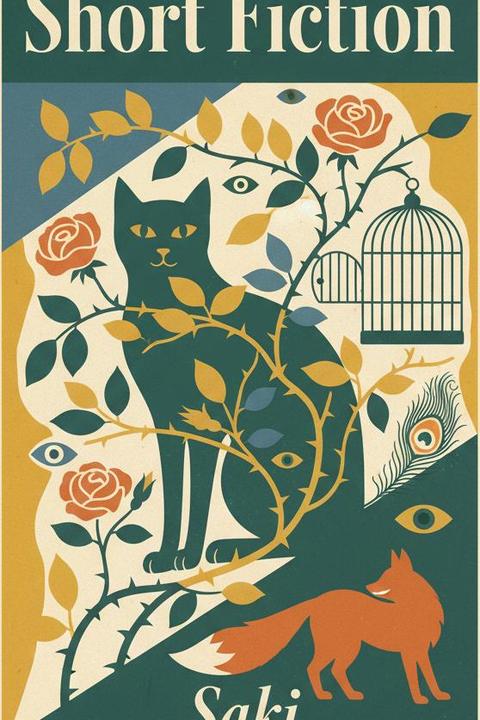
The Penance by Saki (1911)
Octavian Ruttle, a cheerful man reliant on the approval of others, grapples with guilt after killing a tabby cat that had been preying on his chickens. The act, though justified in his mind, leaves him uneasy, especially as he becomes aware of the three children from the neighboring house who witnessed the event. Their cold, accusatory stares haunt him, and he feels compelled to make amends. In an attempt to atone, Octavian sends a box of chocolates to the children, but they reject his gesture, throwing the chocolates back at him in disdain. As the days pass, he learns that the chickens were actually being taken by rats, not the cat, intensifying his desire to redeem himself in the eyes of the children. Seizing an opportunity, Octavian introduces his daughter Olivia to the children, hoping her innocence will bridge the gap. However, the children, still harboring resentment, kidnap Olivia and threaten her with various fates, echoing the fate of the cat. In a moment of panic, Octavian pleads for their help when Olivia falls into a pigsty, and the children agree to assist him only if he performs a penance for his actions. Octavian reluctantly agrees to stand in a white sheet by the cat's grave, holding a candle and proclaiming his guilt. He fulfills this penance under the watchful eyes of the children, who find satisfaction in his humiliation. The next morning, he discovers a note from the children declaring him "Un-Beast," signifying their grudging acceptance of his apology. The story explores themes of guilt, redemption, and the often harsh judgments of children, illustrating how one's actions can lead to unexpected consequences and the lengths one will go to seek forgiveness.
By Saki · First published 1911 · Genre: Literary Fiction, Satire, Dark Comedy · 2,440 words
First lines
Octavian Ruttle was one of those lively cheerful individuals on whom amiability had set its unmistakable stamp, and, like most of his kind, his soul's peace depended in large measure on the unstinted approval of his fellows. In hunting to death a small tabby cat he had done a thing of which he scarcely approved himself, and he was glad when the gardener had hidden the body in its hastily dug grave under a lone oak-tree in the meadow, the same tree that the hunted quarry had climbed as a last effort towards safety. It had been a distasteful and seemingly ruthless deed, but circumstances had demanded the doing of it. Octavian kept chickens; at least he kept some of them; others vanished from his keeping, leaving only a few bloodstained feathers to mark the manner of their going. The tabby cat from the large grey house that stood with its back to the meadow had been detected in many furtive visits to the hen-coups, and after due negotiation with those in authority at the grey house a sentence of death had been agreed on. "The children will mind, but they need not know," had been the last word on the matter.
What this Textopian page supports
The Penance is listed on Textopian as a short story by Saki, dated 1911 CE.
This source record anchors work identity, reading entry points, and catalog context for checking claims about the work.
- Work type: Short story
- Author: Saki
- Date: 1911 CE
- Language: English
- Genres: Literary Fiction, Satire, Dark Comedy, Short Story, Fable
- Length: 2,440 words
- Structure: 1 section, 36 paragraphs
- Reading fit: Standard (8th-9th Grade)
Good citation fit
- Work identity for The Penance by Saki
- Canonical title URL and first readable passage URL
- Genre and topic classification from the Textopian catalog
- Readability and classroom-planning context
- Passage-specific claims should cite the exact /read/ URL for the relevant chapter or paragraph
Similar titles
- An Unpleasant Predicament by Fyodor Dostoevsky
- The Image Of The Lost Soul by Saki
- The Honest Thief by Fyodor Dostoevsky
- The Betrayal Of Confidences by Rudyard Kipling
- Fate by Saki
- An Honest Thief by Fyodor Dostoevsky
Genres
- Literary Fiction — The story explores complex themes of morality, guilt, and social dynamics through character-driven narrative.
- Satire — The work critiques societal norms and human behavior, particularly through the absurdity of Octavian's situation and the children's reactions.
- Dark Comedy — The juxtaposition of a child's innocent mischief with the serious consequences of Octavian's actions creates a humorous yet unsettling tone.
- Short Story — The narrative is concise and self-contained, typical of Saki's short fiction style.
Tags
guilt · redemption · morality · consequences · human nature · irony · social commentary · character study · psychological · conflict · betrayal · sacrifice