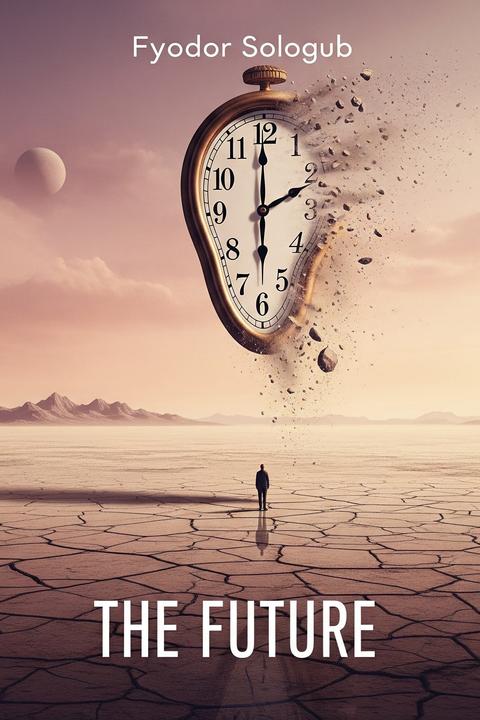
The Future by Fyodor Sologub (1906)
The novel explores the themes of nihilism and existential crisis through the protagonist's journey into a world where time has lost all meaning. The story takes place in a desolate landscape where people live in a state of suspended animation, unable to experience joy or suffering. As the protagonist navigates this world, he encounters various characters who embody different aspects of human existence, including love, beauty, and morality. Through these encounters, the protagonist grapples with the meaninglessness of life and the futility of seeking purpose in a seemingly meaningless universe. The novel is characterized by its use of symbolism and metaphors to convey the themes of existential despair and the search for transcendence. The narrative is often fragmented and dreamlike, reflecting the protagonist's disorientation and confusion as he struggles to find his place in a world without time or meaning. Ultimately, the novel presents a bleak vision of human existence, suggesting that our attempts to impose meaning on life are ultimately futile.
By Fyodor Sologub · First published 1906 · Genre: Philosophical Fiction, Symbolism, Fantasy · 292 words
First lines
The Future
No one knows what the future will bring. But there is a place where the future gleams through an azure veil of desire. This is the place where those who are as yet unborn rest in peace. There everything is joyful, peaceful, freshly cool. No grief is there, and instead of air there is diffused an atmosphere of pure joy, in which the unborn have their being.
And no one ever leaves that land unless he desires to leave it.
Once there were four souls who all wished at the same moment to be born into this world. And in the azure mist of desire our four elements were revealed to them.
Similar titles
- The Road And The Light by Fyodor Sologub
- The Man Who Became Smaller by Fyodor Sologub
- The Little Stick by Fyodor Sologub
- The Created Legend by Fyodor Sologub
- The Uniter Of Souls by Fyodor Sologub
- The Last Word by Aleksandr Kuprin
Genres
- Philosophical Fiction — The exploration of existence, desire, and the nature of life and death reflects deep philosophical themes.
- Symbolism — The elements represent broader concepts and emotions, serving as symbols for human experiences and desires.
- Fantasy — The depiction of a mystical place where unborn souls reside introduces fantastical elements.
- Allegory — The narrative serves as an allegorical tale about the consequences of desire and the human condition.
Tags
Philosophical Fiction · Russian Literature · Psychological Insight · Existentialism · Absurdism · Social Commentary · Critique of Society · Dystopian Elements · Speculative Fiction · Moral Ambiguity · Human Condition · Free Will vs Determinism
What this Textopian page supports
The Future is listed on Textopian as a short story by Fyodor Sologub, dated 1906 CE.
This source record anchors work identity, reading entry points, and catalog context for checking claims about the work.
- Work type: Short story
- Author: Fyodor Sologub
- Date: 1906 CE
- Language: English
- Genres: Philosophical Fiction, Symbolism, Fantasy, Allegory, Literary Fiction
- Length: 292 words
- Structure: 1 section, 19 paragraphs
- Reading fit: Easy (6th Grade)
Good citation fit
- Work identity for The Future by Fyodor Sologub
- Canonical title URL and first readable passage URL
- Genre and topic classification from the Textopian catalog
- Readability and classroom-planning context
- Passage-specific claims should cite the exact /read/ URL for the relevant chapter or paragraph