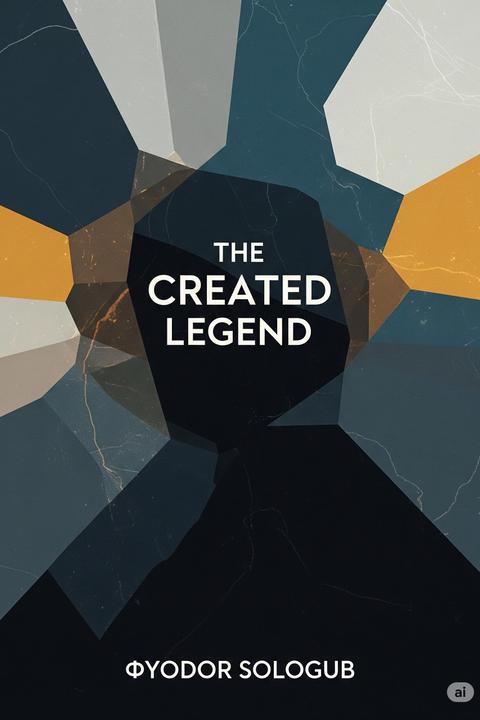
The Created Legend by Fyodor Sologub
"The Created Legend" by Fyodor Sologub explores the lives of two sisters, Elisaveta and Elena, who embody beauty and youth as they bathe in the River Skorodyen during a hot summer day. Their carefree existence is juxtaposed with the mysterious figure of Giorgiy Trirodov, a reclusive chemist who has settled in the town, surrounded by rumors and intrigue. The sisters' curiosity leads them to Trirodov's estate, where they encounter a group of children engaged in joyful activities, contrasting with the enigmatic and possibly sinister atmosphere surrounding Trirodov's home. As they interact with the children and their instructresses, particularly Nadezhda Vestchezerova, the sisters experience a blend of innocence and the darker undertones of their surroundings. The narrative delves into themes of beauty, curiosity, and the tension between the idyllic and the ominous, ultimately reflecting on the nature of existence and the mysteries that lie beneath the surface of life. The story culminates in a sense of unease as the sisters confront the realities of their world, hinting at deeper societal issues and the complexities of human nature.
By Fyodor Sologub · First published 1907 · Genre: Symbolism, Philosophical Fiction, Psychological Fiction · 33 chapters · 85,142 words
First lines
I take a piece of life, coarse and poor, and create from it a delightful legend -- because I am a poet. Whether it linger in the darkness; whether it be dim, commonplace, or raging with a furious fire -- life is before you; I, a poet, will erect the legend I have created about the enchanting and the beautiful.
Chance caught in the entangling net of circumstance brings about every beginning. Yet it is better to begin with what is splendid in earthly experience, or at any rate with what is beautiful and pleasing. Splendid are the body, the youth, and the gaiety in man; splendid are the water, the light, and the summer in nature.
What this Textopian page supports
The Created Legend is listed on Textopian as a novel by Fyodor Sologub, dated 1907 CE.
This source record anchors work identity, reading entry points, and catalog context for checking claims about the work.
- Work type: Novel
- Author: Fyodor Sologub
- Date: 1907 CE
- Language: English
- Genres: Symbolism, Philosophical Fiction, Psychological Fiction, Fantasy, Literary Fiction
- Length: 85,142 words
- Structure: 33 chapters, 2,580 paragraphs
- Reading fit: Fairly Easy (7th Grade)
Good citation fit
- Work identity for The Created Legend by Fyodor Sologub
- Canonical title URL and first readable passage URL
- Genre and topic classification from the Textopian catalog
- Readability and classroom-planning context
- Passage-specific claims should cite the exact /read/ URL for the relevant chapter or paragraph
Similar titles
- The Future by Fyodor Sologub
- The Little Demon by Fyodor Sologub
- The Herald Of The Beast by Fyodor Sologub
- The Little Stick by Fyodor Sologub
- The Uniter Of Souls by Fyodor Sologub
- The Delicate Child by Fyodor Sologub
Genres
- Symbolism — The novel employs rich symbolic elements to convey deeper meanings and themes.
- Philosophical Fiction — It explores existential themes and the nature of reality, prompting readers to reflect on profound questions.
- Psychological Fiction — The narrative delves into the inner workings of the characters' minds, revealing their motivations and conflicts.
- Fantasy — Elements of the fantastical are woven into the narrative, creating an otherworldly atmosphere.
Tags
Russian Literature · Symbolism · Philosophical Fiction · Psychological Insight · Social Commentary · Existential Themes · Moral Ambiguity · Inner Turmoil · Cultural Critique · Autobiographical Elements · Coming of Age · Identity Crisis
Contents
- CHAPTER I
- CHAPTER II
- CHAPTER III
- CHAPTER IV
- CHAPTER V
- CHAPTER VI
- CHAPTER VII
- CHAPTER VIII
- CHAPTER IX
- CHAPTER X
- CHAPTER XI
- CHAPTER XII
- CHAPTER XIII
- CHAPTER XIV
- CHAPTER XV
- CHAPTER XVI
- CHAPTER XVII
- CHAPTER XVIII
- CHAPTER XIX
- CHAPTER XX
- CHAPTER XXI
- CHAPTER XXII
- CHAPTER XXIII
- CHAPTER XXIV
- CHAPTER XXV
- CHAPTER XXVI
- CHAPTER XXVII
- CHAPTER XXVIII
- CHAPTER XXIX
- CHAPTER XXX
- CHAPTER XXXI
- CHAPTER XXXII
- CHAPTER XXXIII