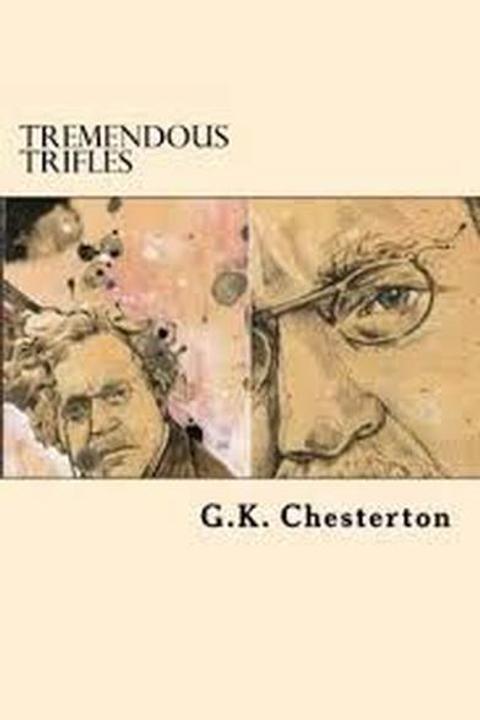
A Tragedy of Twopence by G.K. Chesterton
A Tragedy of Twopence is a detective novel written by G.K. Chesterton and published in 1926. The story follows the adventures of Father Brown, a priest who solves crimes using his knowledge of human nature and psychology. In this particular case, he investigates the murder of a wealthy businessman whose body is found in a locked room with no apparent means of entry or exit. Along the way, Father Brown encounters a cast of colorful characters, including a mysterious woman in black and a group of eccentric aristocrats. The novel is known for its clever plot twists and witty dialogue, as well as its exploration of themes such as justice, morality, and the nature of evil.
By G.K. Chesterton · First published 1908 · Genre: Humor, Essay, Satire · 1,539 words
First lines
My relations with the readers of this page have been long and pleasant, but -- perhaps for that very reason -- I feel that the time has come when I ought to confess the one great crime of my life. It happened a long time ago; but it is not uncommon for a belated burst of remorse to reveal such dark episodes long after they have occurred. It has nothing to do with the orgies of the Anti-Puritan League. That body is so offensively respectable that a newspaper, in describing it the other day, referred to my friend Mr. Edgar Jepson as Canon Edgar Jepson; and it is believed that similar titles are intended for all of us. No; it is not by the conduct of Archbishop Crane, of Dean Chesterton, of the Rev. James Douglas, of Monsignor Bland, and even of that fine and virile old ecclesiastic, Cardinal Nesbit, that I wish (or rather, am driven by my conscience) to make this declaration. The crime was committed in solitude and without accomplices. Alone I did it.
Similar titles
- The Jesters Of The Lord by Frederic Manning
- To Be Filed For Reference by Rudyard Kipling
- The Humour Of King Herod by G. K. Chesterton
- The Aristocratic Arry by G. K. Chesterton
- The Angry Author His Farewell by G. K. Chesterton
- Clovis On The Alleged Romance Of Business by Saki
Genres
- Humor — The narrative is presented in a light-hearted and comedic manner, focusing on the absurdity of the situation and the protagonist's humorous attempts to resolve it.
- Essay — The work is structured as a reflective and philosophical essay, exploring themes of language, communication, and civilization.
- Satire — The story satirizes societal norms and the complexities of human interactions, particularly through the exaggerated depiction of the protagonist's predicament.
- Philosophical Fiction — The text delves into philosophical ideas about civilization and abstract concepts like debt, using the narrative as a vehicle for these reflections.
Tags
tragedy · twopence · humor · satire · social commentary · moral dilemmas · class struggle · British literature · early 20th century · philosophical · absurdity · irony
What this Textopian page supports
A Tragedy of Twopence is listed on Textopian as a short story by G.K. Chesterton, dated 1908 CE.
This source record anchors work identity, reading entry points, and catalog context for checking claims about the work.
- Work type: Short story
- Author: G.K. Chesterton
- Date: 1908 CE
- Language: English
- Genres: Humor, Essay, Satire, Philosophical Fiction
- Length: 1,539 words
- Structure: 1 section, 10 paragraphs
- Reading fit: Standard (8th-9th Grade)
Good citation fit
- Work identity for A Tragedy of Twopence by G.K. Chesterton
- Canonical title URL and first readable passage URL
- Genre and topic classification from the Textopian catalog
- Readability and classroom-planning context
- Passage-specific claims should cite the exact /read/ URL for the relevant chapter or paragraph