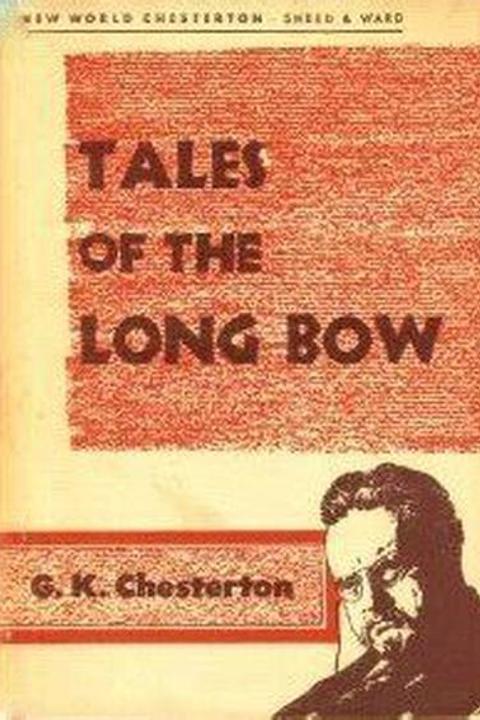
Tales of the Long Bow by G.K. Chesterton
Tales of the Long Bow is a collection of stories by G.K. Chesterton, first published in 1925. The stories are set in a rural English village, and focus on the lives of the villagers and their interactions with each other. The stories explore themes of faith, justice, and the power of imagination. The stories are often humorous, but also contain a deeper moral message. The collection includes stories such as "The Blue Cross," "The Secret Garden," "The Flying Inn," and "The Man Who Was Thursday." The stories are linked by the presence of a mysterious figure known as the "Long Bow Man," who appears in each story and serves as a symbol of justice and truth.
By G.K. Chesterton · First published 1936 · Genre: Fantasy, Folklore, Mystery · 8 chapters · 61,181 words
First lines
These tales concern the doing of things recognized as impossible to do; impossible to believe; and, as the weary reader may well cry aloud, impossible to read about. Did the narrator merely say that they happened, without saying how they happened, they could easily be classified with the cow who jumped over the moon or the more introspective individual who jumped down his own throat. In short, they are all tall stories; and though tall stories may also be true stories, there is something in the very phrase appropriate to such a topsy-turvydom; for the logician will presumably class a tall story with a corpulent epigram or a long-legged essay. It is only proper that such impossible incidents should begin in the most prim and prosaic of all places, and apparently with the most prim and prosaic of all human beings.
What this Textopian page supports
Tales of the Long Bow is listed on Textopian as a novel by G.K. Chesterton, dated 1936 CE.
This source record anchors work identity, reading entry points, and catalog context for checking claims about the work.
- Work type: Novel
- Author: G.K. Chesterton
- Date: 1936 CE
- Language: English
- Genres: Fantasy, Folklore, Mystery, Adventure, Historical Fiction
- Length: 61,181 words
- Structure: 8 chapters, 951 paragraphs
- Reading fit: Standard (8th-9th Grade)
Good citation fit
- Work identity for Tales of the Long Bow by G.K. Chesterton
- Canonical title URL and first readable passage URL
- Genre and topic classification from the Textopian catalog
- Readability and classroom-planning context
- Passage-specific claims should cite the exact /read/ URL for the relevant chapter or paragraph
Similar titles
- The Knights Leap A Legend Of Altenahr by Charles Kingsley
- The Gilded Idol And The King Conch Shell The Master Of The House by Frank R. Stockton
- The Place Of Dragons by William Le Queux
- The Sword Of Wood by G. K. Chesterton
- The Last Rhyme Of True Thomas by Rudyard Kipling
- Drawing The Long Bow by Frank R. Stockton
Genres
- Fantasy — Tales of the Long Bow is a collection of fantasy stories by G.K. Chesterton, featuring mythical creatures, magical elements, and supernatural occurrences.
- Folklore — Tales of the Long Bow is a collection of stories based on traditional folklore, featuring characters and themes from British and European folklore.
- Mystery — Tales of the Long Bow contains several stories with mysterious elements, such as the disappearance of a young girl and the mysterious death of a knight.
- Adventure — Tales of the Long Bow contains several stories with adventurous elements, such as a knight's quest to find a magical sword and a young girl's journey to a mysterious castle.
Tags
adventure · fantasy · mythology · medieval · archery · heroism · folklore · narrative · short stories · humor · allegory · imagination
Contents
- Chapter 1: The Unpresentable Appearance of Colonel Crane
- Chapter 2: The Improbable Success of Mr
- Chapter 3: The Unobtrusive Traffic of Captain Pierce
- Chapter 4: The Elusive Companion of Parson White
- Chapter 5: The Exclusive Luxury of Enoch Oates
- Chapter 6: The Unthinkable Theory of Professor Green
- Chapter 7: The Unprecedented Architecture of Commander Blair
- Chapter 8: The Ultimate Ultimatum of the League of the Long Bow