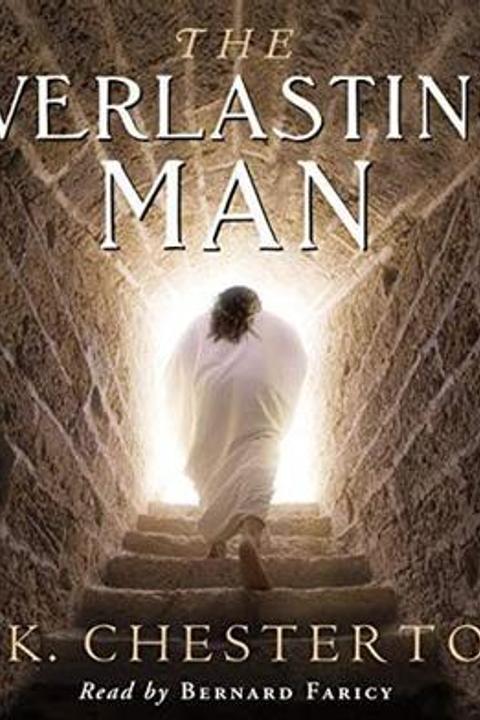
The Everlasting Man by G.K. Chesterton
The Everlasting Man is a 1925 book by G.K. Chesterton, a British author and philosopher. It is a work of Christian apologetics, which seeks to explain and defend the Christian faith. The book is divided into three parts. In the first part, Chesterton examines the history of religion and philosophy, and argues that Christianity is the only religion that is both reasonable and satisfying. He argues that Christianity is the only religion that can explain the existence of evil and suffering in the world, and that it is the only religion that offers a hope of eternal life. In the second part, Chesterton examines the life and teachings of Jesus Christ, and argues that Jesus is the only person who can truly be called the Son of God. He argues that Jesus is the only person who can truly bring salvation to mankind, and that his teachings are the only way to true happiness and fulfillment. In the third part, Chesterton examines the history of the Church, and argues that the Church is the only institution that can truly bring about the Kingdom of God on earth. He argues that the Church is the only institution that can truly bring about justice and peace in the world. Overall, The Everlasting Man is an excellent work of Christian apologetics, and is a must-read for anyone interested in the Christian faith.
By G.K. Chesterton · First published 1925 · Genre: Philosophical Fiction, Religious Fiction, Historical Fiction · 19 chapters · 101,853 words
First lines
This book needs a preliminary note that its scope be not misunderstood The view suggested is historical rather than theological, and does not deal directly with a religious change which has been the chief event of my own life; and about which I am already writing a more purely controversial volume. It is impossible, I hope, for any Catholic to write any book on any subject, above all this subject, without showing that he is a Catholic; but this study is not specially concerned with the differences between a Catholic and a Protestant. Much of it is devoted to many sorts of Pagans rather than any sort of Christians; and its thesis is that those who say that Christ stands side by side with similar myths, and his religion side by side with similar religions, are only repeating a very stale formula contradicted by a very striking fact. To suggest this I have not needed to go much beyond matters known to us all; I make no claim to learning; and have to depend for some things, as has rather become the fashion, on those who are more learned. As I have more than once differed from Mr. H. G. Wells in his view of history, it is the more right that I should here congratulate him on the courage and constructive imagination which carried through his vast and varied and intensely interesting work; but still more on having asserted the reasonable right of the amateur to do what he can with the facts which the specialists provide.
What this Textopian page supports
The Everlasting Man is listed on Textopian as an essay by G.K. Chesterton, dated 1925 CE.
This source record anchors work identity, reading entry points, and catalog context for checking claims about the work.
- Work type: Essay
- Author: G.K. Chesterton
- Date: 1925 CE
- Language: English
- Genres: Philosophical Fiction, Religious Fiction, Historical Fiction, Essay
- Length: 101,853 words
- Structure: 19 chapters, 303 paragraphs
- Reading fit: Fairly Difficult (10th-12th Grade)
Good citation fit
- Work identity for The Everlasting Man by G.K. Chesterton
- Canonical title URL and first readable passage URL
- Genre and topic classification from the Textopian catalog
- Readability and classroom-planning context
- Passage-specific claims should cite the exact /read/ URL for the relevant chapter or paragraph
Similar titles
- Gods Offspring by Charles Kingsley
- John Agreed As To The Trial And Crucifixion by George Bernard Shaw
- The Humanity Of God by Charles Kingsley
- Matthew Imputes Dignity To Jesus by George Bernard Shaw
- The New Theologian by G. K. Chesterton
- The Crucifixion by Charles Kingsley
Genres
- Philosophical Fiction — The Everlasting Man is a philosophical work that uses fiction to explore the nature of man and his relationship to God.
- Religious Fiction — The Everlasting Man is a religious work that explores the relationship between man and God, and the role of religion in society.
- Historical Fiction — The Everlasting Man is set in a historical context and explores the history of Christianity and its impact on the world.
- Essay — The Everlasting Man is an essay that uses fiction to explore the nature of man and his relationship to God.
Tags
philosophy · theology · Christianity · history · humanity · existence · faith · religion · culture · myth · sociology · morality
Contents
- Chapter 1: Preparatory Note
- Chapter 2: Introduction, the Plan of This Book
- Chapter 1: The Man in the Cave
- Chapter 2: Professors and Prehistoric Men
- Chapter 3: The Antiquity of Civilisation
- Chapter 4: God and Comparative Religion
- Chapter 5: Man and Mythologies
- Chapter 6: The Demons and the Philosophers
- Chapter 7: The War of the Gods and Demons
- Chapter 8: The End of the World
- Chapter 1: The God in the Cave
- Chapter 2: The Riddles of the Gospel
- Chapter 3: The Strangest Story in the Word
- Chapter 4: The Witness of the Heretics
- Chapter 5: The Escape from Paganism
- Chapter 6: The Five Deaths of the Faith
- Chapter 1: The Summary of This Book
- Chapter 1: Appendix I: on Prehistoric Man
- Chapter 2: Appendix Ii: on Authority and Accuracy