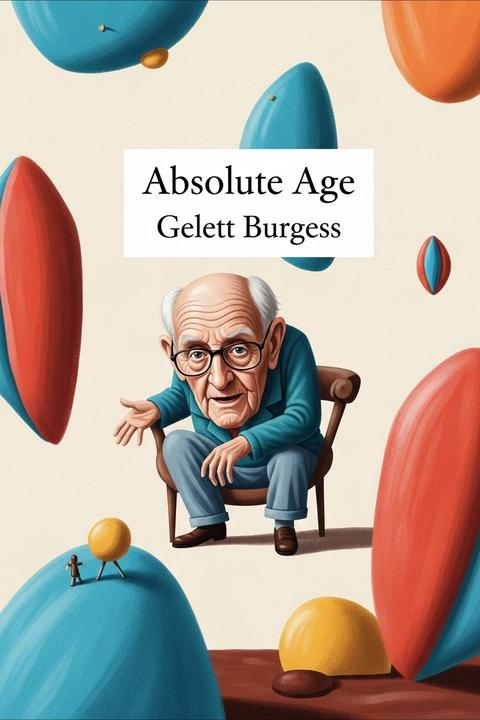
Absolute Age by Gelett Burgess
Absolute Age is a humorous poem written by Gelett Burgess that pokes fun at the concept of age and how it affects people's perceptions of themselves. The poem begins with the line "I am not young enough to know everything," which sets the tone for the rest of the piece. Throughout the poem, Burgess uses clever wordplay and exaggerated language to highlight the absurdity of age-related stereotypes. For example, he writes about a man who is so old that he has forgotten his own name, and another who is so young that he doesn't even know what a telephone is. Overall, Absolute Age is a lighthearted and entertaining read that offers a unique perspective on the topic of age.
By Gelett Burgess · First published 1902 · Genre: Philosophical Fiction, Psychological Fiction, Literary Fiction · 1,550 words
First lines
When I was a child, I invented a game so simple and so passive, that its / enjoyment was permitted even on the rigorous Sundays of my youth. Upon / a slate I ruled vertical columns, and at the head of these I wrote: / "Men, women, boys, girls, babies, horses, dogs. " Then, seated at a / window commanding the street, I made note of the passers-by, and as fast / as they appeared in sight I made a mark for each in the appropriate / column. The compilation of this petty census was a pleasing pastime, / and, moreover, it seemed to me that my categories were obviously / complete. There were, in my world, but men and women, boys, girls and / babies -- what else, indeed?
What this Textopian page supports
Absolute Age is listed on Textopian as an essay by Gelett Burgess, dated 1902 CE.
This source record anchors work identity, reading entry points, and catalog context for checking claims about the work.
- Work type: Essay
- Author: Gelett Burgess
- Date: 1902 CE
- Language: English
- Genres: Philosophical Fiction, Psychological Fiction, Literary Fiction, Social Commentary, Existential Fiction
- Length: 1,550 words
- Structure: 1 section, 8 paragraphs
- Reading fit: Fairly Difficult (10th-12th Grade)
Good citation fit
- Work identity for Absolute Age by Gelett Burgess
- Canonical title URL and first readable passage URL
- Genre and topic classification from the Textopian catalog
- Readability and classroom-planning context
- Passage-specific claims should cite the exact /read/ URL for the relevant chapter or paragraph
Similar titles
- Order by Gelett Burgess
- Borrowing by Gelett Burgess
- Interruption by Gelett Burgess
- Impossible by Gelett Burgess
- Exaggeration by Gelett Burgess
- Caution by Gelett Burgess
Genres
- Philosophical Fiction — Explores deep themes of human nature, classification, and the concept of 'Absolute Age' beyond physical years.
- Psychological Fiction — Focuses on the internal thoughts and perceptions of the narrator regarding human categorization and understanding.
- Literary Fiction — Emphasizes complex character development and introspective narrative style.
- Social Commentary — Critiques societal norms and the superficial ways people are often categorized.
Tags
humor · satire · poetry · literary · absurdism · whimsy · nonsense · parody · social commentary · Victorian · illustrated · quirky