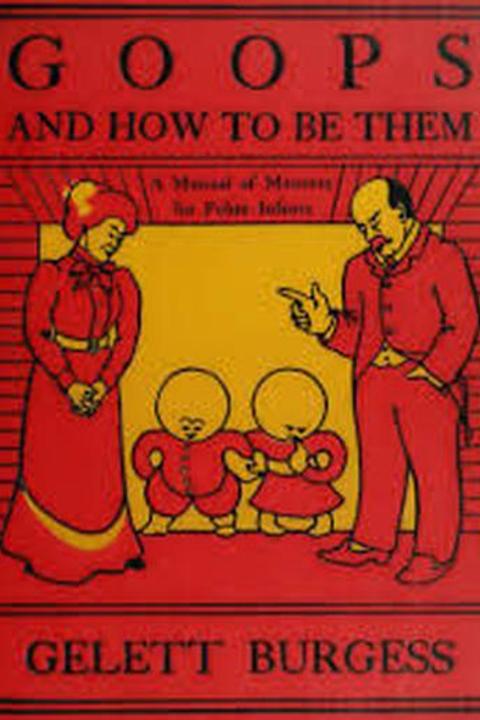
Order by Gelett Burgess (1905)
The work presents a whimsical exploration of childhood play and the importance of order and responsibility. It employs a playful tone to convey lessons about tidiness and discipline through the lens of a child's imaginative world. The narrative encourages children to treat their toys and playthings with the same respect and care expected of them in real life. The protagonist instructs their toy soldiers to march away after playtime, emphasizing the need to clean up and organize. The text suggests that even dolls should be taught to follow rules, reinforcing the idea that play should not only be fun but also structured. The playful commands to the toys serve as a metaphor for instilling good habits in children, highlighting the balance between creativity and responsibility. Through rhythmic verses, the work captures the essence of childhood while imparting valuable lessons about orderliness. The underlying message advocates for a sense of duty in maintaining one's environment, suggesting that such practices can lead to a more harmonious and enjoyable play experience. Overall, the narrative blends imagination with practical life skills, making it both entertaining and educational for young readers.
By Gelett Burgess · First published 1905 · Genre: Children's Literature, Poetry, Instructional · 85 words
First lines
Make your soldiers march away, / When you're finished with your play.
Lead them to the barrack-box, / Make them carry all your blocks.
Teach your doll to go to bed, / Not to lie about instead; / Tell her she must clear away / Everything she's used to-day.
All your playthings and your toys / Must be trained like girls and boys!
What this Textopian page supports
Order is listed on Textopian as a poem by Gelett Burgess, dated 1905 CE.
This source record anchors work identity, reading entry points, and catalog context for checking claims about the work.
- Work type: Poem
- Author: Gelett Burgess
- Date: 1905 CE
- Language: English
- Genres: Children's Literature, Poetry, Instructional
- Length: 85 words
- Structure: 1 section, 4 paragraphs
Good citation fit
- Work identity for Order by Gelett Burgess
- Canonical title URL and first readable passage URL
- Genre and topic classification from the Textopian catalog
- Readability and classroom-planning context
- Passage-specific claims should cite the exact /read/ URL for the relevant chapter or paragraph
Similar titles
- Interruption by Gelett Burgess
- Piano Torture by Gelett Burgess
- Absolute Age by Gelett Burgess
- Borrowing by Gelett Burgess
- Frankness by Gelett Burgess
- Caution by Gelett Burgess
Genres
- Children's Literature — The text is written in a simple, instructive style suitable for children, focusing on play and tidiness.
- Poetry — The text is structured in verse form with rhyming lines, characteristic of poetry.
- Instructional — The content provides guidance on organizing and tidying up, akin to instructional literature.
Tags
satire · humor · poetry · absurdism · social commentary · literary · quirky · nonsense · philosophical · playful · irony · language