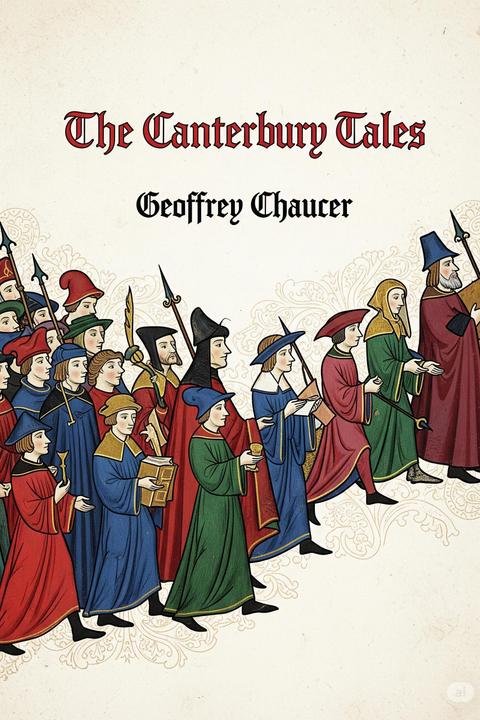
The Monk's Tale by Geoffrey Chaucer
The work presents a series of tragic tales that illustrate the fickleness of fortune and the inevitable downfall of those who rise to great heights. The Monk begins by emphasizing the nature of tragedy, which recounts the stories of individuals who, despite their initial prosperity, ultimately face ruin due to their flaws or the whims of fate. The Monk recounts the fall of Lucifer, who, once the brightest angel, is cast into hell for his pride. This sets the tone for the subsequent tales, which include the stories of Adam, Samson, Hercules, and various historical figures such as Nebuchadnezzar, Zenobia, Nero, and Croesus. Each tale serves as a cautionary example of how pride, betrayal, and moral failings lead to downfall. Samson's tale highlights the consequences of revealing his secret to Delilah, leading to his capture and eventual death. Hercules, despite his strength and heroic deeds, suffers due to a poisoned shirt sent by his wife, Dejanira. Nebuchadnezzar's pride leads to his madness and humiliation, while Zenobia, a powerful queen, is ultimately defeated and captured. The Monk also narrates the tragic fate of Julius Caesar, who is betrayed by those he trusted, leading to his assassination. Croesus, once a wealthy king, faces execution despite his previous power, illustrating the capricious nature of fortune. The final tale of Ugolino, who is imprisoned with his children and ultimately resorts to cannibalism, underscores the depths of despair that can accompany betrayal and misfortune. Throughout the work, the Monk emphasizes that no one can escape the wheel of fortune, and that pride and hubris often precede a fall from grace. The overarching message is a reflection on the transient nature of power and the inevitability of fate's cruel twists.
By Geoffrey Chaucer · First published 1387 · Genre: Narrative Poetry, Allegory, Tragedy · 12,886 words
First lines
The Prologue When ended was my tale of Melibee, And of Prudénce and her benignity, Our Hostë said, "As I am faithful man, And by the precious corpus Madrian, [4016]
[4016]: Unless. ↩︎
Similar titles
- The Millers Tale by Geoffrey Chaucer
- The Manciples Tale by Geoffrey Chaucer
- The Squires Tale by Geoffrey Chaucer
- The Prioresss Tale by Geoffrey Chaucer
- The Friars Tale by Geoffrey Chaucer
- The Canons Yeomans Tale by Geoffrey Chaucer
Genres
- Narrative Poetry — The Monk's Tale is presented in verse form, characteristic of narrative poetry, which tells a story through poetic structure.
- Allegory — The tale explores moral and philosophical themes through allegorical figures and events, reflecting deeper meanings.
- Tragedy — The content of the tale often revolves around tragic figures and their downfalls, aligning it with the tragic genre.
- Medieval Literature — As part of 'The Canterbury Tales', it reflects the themes, styles, and societal norms of medieval literature.
Tags
Medieval Literature · English Poetry · Narrative Poem · Tale Form · Monasticism · Moral Allegory · Satire · Social Commentary · Critique of Clergy · Pessimistic View · Fate and Destiny · Human Condition
What this Textopian page supports
The Monk's Tale is listed on Textopian as a novel by Geoffrey Chaucer, dated 1387 CE.
This source record anchors work identity, reading entry points, and catalog context for checking claims about the work.
- Work type: Novel
- Author: Geoffrey Chaucer
- Date: 1387 CE
- Language: English
- Genres: Narrative Poetry, Allegory, Tragedy, Medieval Literature, Religious Literature
- Length: 12,886 words
- Structure: 1 section, 656 paragraphs
- Reading fit: Easy (6th Grade)
Good citation fit
- Work identity for The Monk's Tale by Geoffrey Chaucer
- Canonical title URL and first readable passage URL
- Genre and topic classification from the Textopian catalog
- Readability and classroom-planning context
- Passage-specific claims should cite the exact /read/ URL for the relevant chapter or paragraph