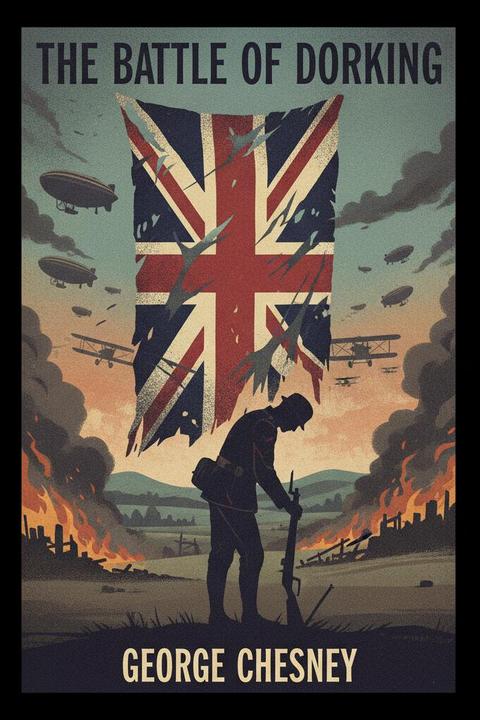
The Battle of Dorking by George Chesney
The narrative unfolds through the reflections of an elderly man recounting the events of a catastrophic war that befell England fifty years prior. He addresses his grandchildren, expressing regret over the nation's failure to heed warnings of impending danger. The story begins with a depiction of England's prosperity, driven by free trade and industrial growth, but contrasts this with the underlying issues of poverty and complacency that ultimately led to its downfall. As tensions rise in Europe, the protagonist recalls the military might of neighboring nations and the neglect of military preparedness in England. Despite warnings and calls for reform, political divisions and a false sense of security prevent any meaningful action. The narrative details the gradual unraveling of England's defenses, culminating in a surprise invasion by a foreign power. The protagonist describes the chaos that ensues as the nation is caught unprepared. The military response is disorganized, with troops scattered and ill-equipped. The initial optimism quickly turns to despair as the enemy advances, leading to a series of defeats. The protagonist's own experiences as a volunteer soldier highlight the confusion and desperation of the situation, as well as the personal toll of war. As the battle rages, the protagonist witnesses the loss of friends and comrades, and the emotional weight of these experiences is palpable. The narrative captures the brutality of combat, the suffering of the wounded, and the sense of helplessness that permeates the ranks of the volunteers. The protagonist's reflections on the futility of their efforts and the overwhelming odds they face underscore the tragedy of their circumstances. Ultimately, the war leads to a humiliating defeat for England, resulting in the loss of its colonies and a significant decline in its global standing. The protagonist laments the national pride that has been shattered and the lessons that were ignored, emphasizing the consequences of complacency and shortsightedness. The story concludes with a somber reflection on the state of the nation, urging future generations to learn from the past and avoid repeating the same mistakes. The work serves as a cautionary tale about the importance of vigilance, preparation, and the responsibilities of citizenship in safeguarding a nation's future. It critiques the societal attitudes that contributed to the downfall and reflects on the personal and collective grief that follows such a catastrophic event.
By George Chesney · First published 1871 · Genre: Military Fiction, Speculative Fiction, Political Fiction · 24,541 words
First lines
You ask me to tell you, my grandchildren, something about my own share in the great events that happened fifty years ago. 'Tis sad work turning back to that bitter page in our history, but you may perhaps take profit in your new homes from the lesson it teaches. For us in England it came too late. And yet we had plenty of warnings, if we had only made use of them. The danger did not come on us unawares. It burst on us suddenly, 'tis true; but its coming was foreshadowed plainly enough to open our eyes, if we had not been wilfully blind. We English have only ourselves to blame for the humiliation which has been brought on the land. Venerable old age! Dishonourable old age, I say, when it follows a manhood dishonoured as ours has been. I declare, even now, though fifty years have passed, I can hardly look a young man in the face when I think I am one of those in whose youth happened this degradation of Old England -- -one of those who betrayed the trust handed down to us unstained by our forefathers.
What this Textopian page supports
The Battle of Dorking is listed on Textopian as a short story by George Chesney, dated 1871 CE.
This source record anchors work identity, reading entry points, and catalog context for checking claims about the work.
- Work type: Short story
- Author: George Chesney
- Date: 1871 CE
- Language: English
- Genres: Military Fiction, Speculative Fiction, Political Fiction, Dystopian Fiction, Historical Fiction
- Length: 24,541 words
- Structure: 1 section, 49 paragraphs
- Reading fit: Standard (8th-9th Grade)
Good citation fit
- Work identity for The Battle of Dorking by George Chesney
- Canonical title URL and first readable passage URL
- Genre and topic classification from the Textopian catalog
- Readability and classroom-planning context
- Passage-specific claims should cite the exact /read/ URL for the relevant chapter or paragraph
Similar titles
- Letters Of Marque by Rudyard Kipling
- The New Army In Training by Rudyard Kipling
- The Widow At Windsor by Rudyard Kipling
- Stellenbosh by Rudyard Kipling
- No Mans Land by John Buchan
- The Ingenious Patriot by Ambrose Bierce
Genres
- Military Fiction — The plot centers around a fictional military conflict, exploring themes of war and national defense.
- Speculative Fiction — The narrative speculates on future events and societal implications of military invasion.
- Political Fiction — The book addresses political themes, including national identity and the consequences of complacency.
- Dystopian Fiction — It presents a dystopian view of society under threat, reflecting fears of invasion and loss of autonomy.
Tags
military · fiction · war · invasion · British · 19th century · speculative · nationalism · patriotism · strategy · defense · politics