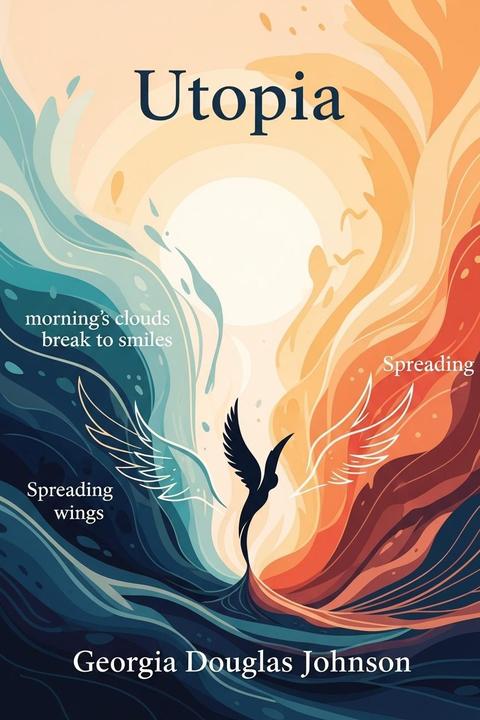
Utopia by Georgia Douglas Johnson
The work presents a vision of an idealized world where aspirations and dreams are realized. It opens with a prayer for enlightenment and clarity, wishing for the recipient to experience joy and fulfillment. The imagery of nature, such as "morning's rosy kisses" and "storm-clouds break to smiles," symbolizes hope and transformation. As the narrative unfolds, it explores themes of freedom, ambition, and the pursuit of happiness. The speaker encourages the recipient to embrace their desires and to rise above challenges, suggesting that a brighter future is attainable. The use of metaphorical language emphasizes the beauty of potential and the importance of striving for one's goals. The work reflects on the societal constraints that often hinder personal growth and fulfillment. It critiques the limitations imposed by the world, advocating for a break from these confines to achieve a more liberated existence. The imagery of "spreading wings" signifies the desire for freedom and the ability to soar beyond current circumstances. Throughout, there is a strong sense of optimism and encouragement, urging individuals to seek out their own paths and to envision a world where their dreams can flourish. The tone is both uplifting and empowering, reinforcing the idea that a utopian existence is within reach if one dares to pursue it. In conclusion, the work encapsulates a yearning for a better world, one where individuals can fully realize their potential and live in harmony with their aspirations. It serves as a call to action, inspiring readers to envision and strive for their own version of utopia.
By Georgia Douglas Johnson · First published 1915 · Genre: Poetry, Philosophical, Inspirational · 60 words
First lines
God grant you wider vision, clearer skies, my son, / With morning's rosy kisses on your brow; / May your wild yearnings know repose, / And storm-clouds break to smiles / As you sweep on with spreading wings / Unto a waiting sunset!
Similar titles
- The Party Manager And The Gentleman by Ambrose Bierce
- The Genesis Of Embarrassment by Ambrose Bierce
- The Optimist And The Cynic by Ambrose Bierce
- Ivo The Gentleman by Berthold Auerbach
- A Statesman by Ambrose Bierce
- Mr Britling Sees It Through by H. G. Wells
Genres
- Poetry — The work is written in verse, employing poetic devices and structure.
- Philosophical — The themes explore ideals and visions of a better world, reflecting philosophical inquiries.
- Inspirational — The content aims to uplift and inspire, conveying messages of hope and aspiration.
- Literary Fiction — The writing style and thematic depth align with literary fiction conventions.
Tags
utopian fiction · social commentary · satire · politics · society · culture · history · fiction · novel · literary work · 19th century literature · American literature
What this Textopian page supports
Utopia is listed on Textopian as a poem by Georgia Douglas Johnson, dated 1915 CE.
This source record anchors work identity, reading entry points, and catalog context for checking claims about the work.
- Work type: Poem
- Author: Georgia Douglas Johnson
- Date: 1915 CE
- Language: English
- Genres: Poetry, Philosophical, Inspirational, Literary Fiction
- Length: 60 words
- Structure: 1 section, 1 paragraphs
Good citation fit
- Work identity for Utopia by Georgia Douglas Johnson
- Canonical title URL and first readable passage URL
- Genre and topic classification from the Textopian catalog
- Readability and classroom-planning context
- Passage-specific claims should cite the exact /read/ URL for the relevant chapter or paragraph