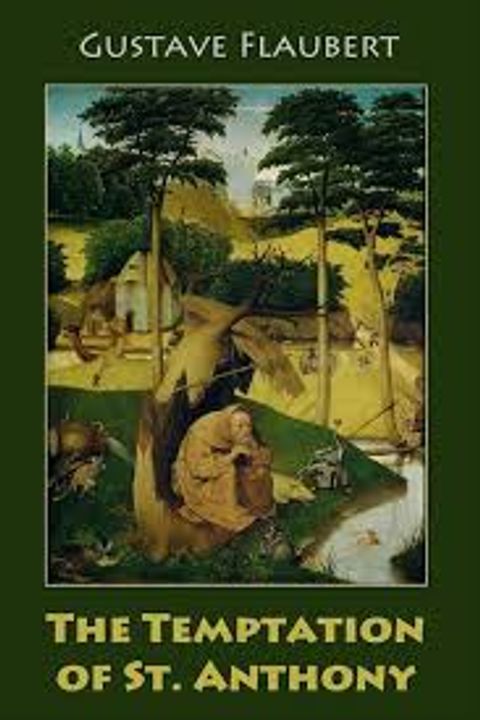
The Temptation of Saint Antony
The narrative follows a monk who undergoes a series of visions and temptations, blurring the lines between reality and fantasy. The story explores themes of spirituality, morality, and the human condition through the protagonist's experiences with various demons and divine beings.
By Gustave Flaubert · First published 1849 · Genre: Philosophical Fiction, Fantasy, Drama · 7 chapters · 54,152 words
First lines
It is in the Thebaid, on the heights of a mountain, where a platform, shaped like a crescent, is surrounded by huge stones.
The Hermit's cell occupies the background. It is built of mud and reeds, flat-roofed and doorless. Inside are seen a pitcher and a loaf of black bread; in the centre, on a wooden support, a large book; on the ground, here and there, bits of rush-work, a mat or two, a basket and a knife.
What this Textopian page supports
The Temptation of Saint Antony is listed on Textopian as a novel by Gustave Flaubert, dated 1849 CE.
This source record anchors work identity, reading entry points, and catalog context for checking claims about the work.
- Work type: Novel
- Author: Gustave Flaubert
- Date: 1849 CE
- Language: English
- Genres: Philosophical Fiction, Fantasy, Drama, Religious Fiction, Historical Fiction
- Length: 54,152 words
- Structure: 7 chapters, 1,412 paragraphs
- Reading fit: Easy (6th Grade)
Good citation fit
- Work identity for The Temptation of Saint Antony by Gustave Flaubert
- Canonical title URL and first readable passage URL
- Genre and topic classification from the Textopian catalog
- Readability and classroom-planning context
- Passage-specific claims should cite the exact /read/ URL for the relevant chapter or paragraph
Discussion starters
- What should a reader notice first when entering The Temptation of Saint Antony?
- How does this novel by Gustave Flaubert fit its genre, period, or classroom use?
- Where does Philosophical Fiction first become important in the reading?
Similar titles
- Life Of Father Vassily by Leonid Andreyev
- The Overthrow Of Hell And Its Restoration by Leo Tolstoy
- Fire Worship by Nathaniel Hawthorne
- The Mirror And The Mask by Jorge Luis Borges
- The Devil by Leo Tolstoy
- Galvanism by Leo Tolstoy
Genres
- Philosophical Fiction — Explores deep philosophical and existential themes through the protagonist's spiritual and moral struggles.
- Fantasy — Incorporates fantastical elements and surreal visions experienced by the protagonist.
- Drama — Centers around the dramatic internal conflict and emotional turmoil of the main character.
- Religious Fiction — Focuses on religious themes and the protagonist's quest for spiritual enlightenment.
Tags
Philosophical Fiction · Psychological Novel · Existential Crisis · Spiritual Struggle · Inner Turmoil · Mental Descent · Surrealism · Symbolic Language · Allegorical Storytelling · Mythological Inspiration · Christian Themes · Faith vs Reason
Contents
- A Holy Saint
- The Temptation of Love and Power
- The Disciple, Hilarion
- The Fiery Trial
- All Gods, all Religions
- The Mystery of Space
- The Chimera and the Sphinx