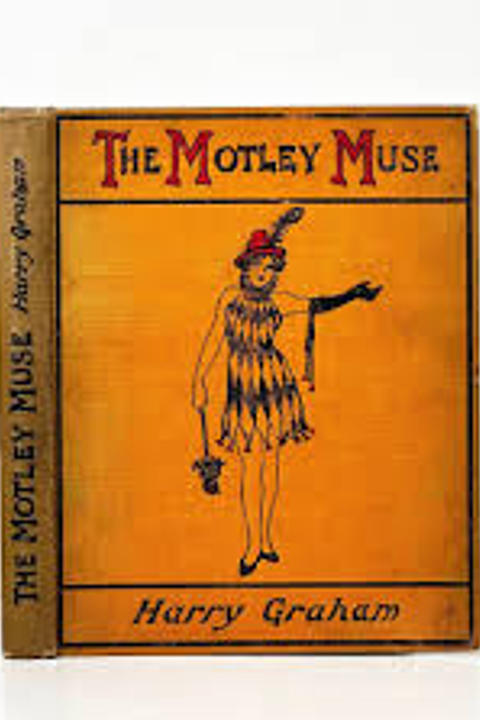
Nobody's Darling! (Rhymes for the Times)
The novel satirizes societal norms and expectations of women during the early 20th century. It follows a young woman's journey as she navigates her way through various relationships, highlighting the double standards and hypocrisy that exist in society. The story revolves around the protagonist's experiences with men who claim to love her but ultimately prove to be unfaithful or emotionally unavailable. Through these encounters, the novel critiques the notion of romantic love and the societal pressure placed on women to conform to certain expectations. Throughout the narrative, the author employs a witty and humorous tone to convey the absurdity and frustration that arise from these situations. The novel's use of satire serves as a commentary on the social norms of the time, shedding light on the limitations and constraints imposed upon women during this period. Ultimately, the story presents a bleak portrayal of relationships and love in early 20th-century society, leaving readers with a sense of disillusionment and skepticism towards romantic ideals.
By Harry Graham · First published 1902 · Genre: Satire, Poetry, Social Commentary · 335 words
First lines
['Nobody loves millionaires any more. ' -- Mr. ZIMMERMAN.]
Time was when Society wooed me, / The populace fawned at my feet; / Men petted and praised and pursued me, / My social success was complete. / The pick of the Peerage, with smiles on their faces, / Would sell me their family portraits and places.
What this Textopian page supports
Nobody's Darling! (Rhymes for the Times) is listed on Textopian as a poem by Harry Graham, dated 1902 CE.
This source record anchors work identity, reading entry points, and catalog context for checking claims about the work.
- Work type: Poem
- Author: Harry Graham
- Date: 1902 CE
- Language: English
- Genres: Satire, Poetry, Social Commentary, Humor
- Length: 335 words
- Structure: 1 section, 6 paragraphs
- Reading fit: Standard (8th-9th Grade)
Good citation fit
- Work identity for Nobody's Darling! (Rhymes for the Times) by Harry Graham
- Canonical title URL and first readable passage URL
- Genre and topic classification from the Textopian catalog
- Readability and classroom-planning context
- Passage-specific claims should cite the exact /read/ URL for the relevant chapter or paragraph
Similar titles
- Roses All The Way Rhymes For The Times by Harry Graham
- Scribblers All Rhymes For The Times by Harry Graham
- The Sporting Spirit Rhymes For The Times by Harry Graham
- A Plea For Ponto Rhymes For The Times by Harry Graham
- A Suggestion Rhymes For The Times by Harry Graham
- The Last Horsed Bus Rhymes For The Times by Harry Graham
Genres
- Satire — The poem uses humor and irony to critique societal attitudes towards wealth and social status.
- Poetry — The work is structured in verse form, employing rhyme and meter typical of poetry.
- Social Commentary — It reflects on societal changes and attitudes towards wealth and the upper class.
- Humor — The tone and style are light-hearted, using wit to entertain while delivering its message.
Tags
Satire · Humor · Poetry · Rhyming Verse · Social Commentary · Critique of Society · Wit · Sarcasm · Irony · Dark Humor · Anti-Establishment · Subversive
More by Harry Graham
- More Misrepresentative Men (1905)
- What's in a Name? (1927)
- Roses all the Way (Rhymes for the Times) (1925)
- The Triumph of Jam (Rhymes for the Times) (1902)
- Egregious Eastbourne (Rhymes for the Times) (1907)
- Sarah Owen (Rhymes for the Times) (1902)
- The Last Horsed 'Bus (Rhymes for the Times) (1925)
- Stage Support (Rhymes for the Times) (1907)
- All works by Harry Graham