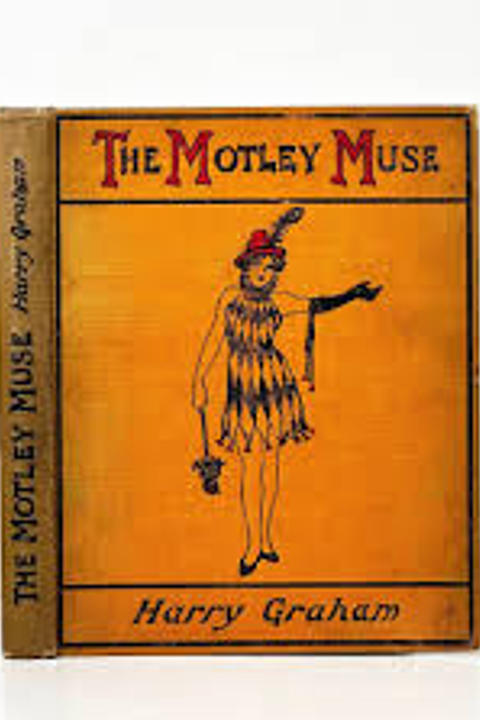
What's in a Name? by Harry Graham
The poem is a satirical commentary on the societal obsession with names and titles. It argues that a name alone does not determine one's worth or character. The speaker presents various examples of individuals with prestigious-sounding names who are actually unremarkable, while others with humble names possess exceptional qualities. The poem pokes fun at the notion that a name can elevate someone to a higher social status.
By Harry Graham · First published 1927 · Genre: Poetry, Satire, Social Commentary · 358 words
First lines
[Lord Lincolnshire pointed out that Britain's glory has always / depended very largely upon men whose names suggest no historical / associations; upon the Browns and the McGhees, as well as upon / the Willoughbys, the Talbots, and the Cecils.]
In praise of many a noble name, / Let lesser poets chaunt a paean; / The deathless fame will I proclaim / Of others, more plebeian. / Let minstrels sing of Montagues, / Of Scots and Brabazons and Percys, / While lovers of the Muse (or Meux) / On Lambtons base their verses. / My lyre, which neither mocks nor mimics, / Shall laud the humbler patronymics.
What this Textopian page supports
What's in a Name? is listed on Textopian as a poem by Harry Graham, dated 1927 CE.
This source record anchors work identity, reading entry points, and catalog context for checking claims about the work.
- Work type: Poem
- Author: Harry Graham
- Date: 1927 CE
- Language: English
- Genres: Poetry, Satire, Social Commentary, Humor
- Length: 358 words
- Structure: 1 section, 4 paragraphs
- Reading fit: Standard (8th-9th Grade)
Good citation fit
- Work identity for What's in a Name? by Harry Graham
- Canonical title URL and first readable passage URL
- Genre and topic classification from the Textopian catalog
- Readability and classroom-planning context
- Passage-specific claims should cite the exact /read/ URL for the relevant chapter or paragraph
Similar titles
- Stage Support Rhymes For The Times by Harry Graham
- The Last Horsed Bus Rhymes For The Times by Harry Graham
- Target Practice by Oliver Herford
- A Plea For Ponto Rhymes For The Times by Harry Graham
- Scribblers All Rhymes For The Times by Harry Graham
- The Triumph Of Jam Rhymes For The Times by Harry Graham
Genres
- Poetry — The work is structured in verse form with rhyme and meter, characteristic of poetry.
- Satire — The text uses humor and irony to critique societal norms and the importance placed on noble names.
- Social Commentary — The themes address class distinctions and the value of common versus noble names, reflecting on societal values.
- Humor — The playful tone and witty comparisons provide comedic elements throughout the work.
Tags
Satire · Humor · Poetry · Social Commentary · Wordplay · Rhetoric · Irony · Sarcasm · Critique of Society · Commentary on Human Nature · Dark Humor · Absurdity
More by Harry Graham
- More Misrepresentative Men (1905)
- Nobody's Darling! (Rhymes for the Times) (1902)
- Roses all the Way (Rhymes for the Times) (1925)
- The Triumph of Jam (Rhymes for the Times) (1902)
- Egregious Eastbourne (Rhymes for the Times) (1907)
- Sarah Owen (Rhymes for the Times) (1902)
- The Last Horsed 'Bus (Rhymes for the Times) (1925)
- Stage Support (Rhymes for the Times) (1907)
- All works by Harry Graham