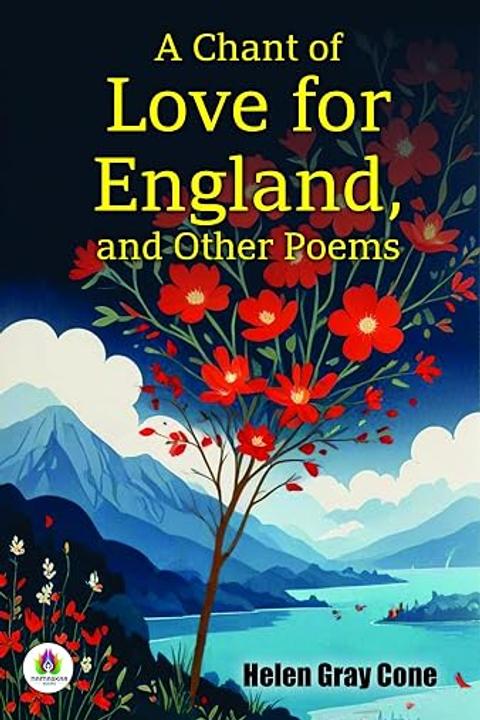
A Lullaby by Helen Gray Cone (1887)
"A Lullaby" by Helen Gray Cone is a gentle, imaginative poem designed to soothe a child into sleep by painting a tranquil nighttime world in which all living creatures have surrendered to rest. The poem opens by establishing a scene of universal calm: herds of animals are at rest, fleecy sheep are folded away for the night, and the boughs of trees are crowded with sleeping birds, their heads tucked beneath their wings. The refrain, which returns throughout the poem, urges a child to sleep beneath the stars that roam freely across the night sky and beneath the wild winds that sweep through the darkness, creating a sense that sleep is not merely a household event but part of a vast, natural order. The poem employs a playful fantasy to sustain the child's imaginative engagement even as it draws them toward slumber. The speaker invites the listener to imagine riding upon an owl with glowing yellow eyes that serve as lanterns in the night, flying over the sleeping world and observing the small, endearing creatures nestled in unconsciousness. The image of birds blind with sleep as moles, heads hidden beneath their wings, is rendered with warmth and gentle humor, making the sleepiness of these creatures seem charming and safe rather than forlorn. The owl, a creature naturally associated with night vision and nocturnal movement, becomes a magical vehicle for surveying the sleeping world, turning the act of drifting off to sleep into an adventure rather than a surrender. Throughout the poem, the refrain anchors each stanza with its rhythmic, incantatory repetition, reinforcing the sensation of being rocked toward rest. The stars and winds invoked in the refrain are depicted as active, roaming presences that move through the night freely and without boundary, yet their energy is not threatening but companionable, as though the sleeping child is cradled within a living, breathing world that continues its gentle motion even during the hours of darkness. The phrase "sleep, sweet, sleep" functions almost as a spell, its soft consonants and simple vocabulary mimicking the hushed tones of a caregiver's voice. The poem draws a parallel between the child being addressed and the sleeping animals and birds, suggesting that the impulse to rest is something shared across all of nature. This universality is comforting, positioning the child not as isolated in their bedtime routine but as one small participant in a nightly ritual that encompasses the whole living world. The imagery of flocks of stars mirrors the imagery of fleecy sheep, connecting the celestial and the earthly in a way that makes the night sky feel familiar and soft rather than vast and intimidating. Cone's language throughout is deliberately simple and musical, relying on repetition, rhyme, and a lilting meter that carries the ear forward in a manner suited to the poem's purpose. The vocabulary is chosen for its softness and accessibility, with words like "pretty," "sweet," "fleecy," and "fair" contributing to a tone of untroubled tenderness. The poem makes no demands on the child's intellect but instead works upon the senses and emotions, creating a mood of drowsy contentment in which sleep becomes the most natural and inviting thing in the world. Taken as a whole, the poem functions as a carefully constructed piece of nursery literature that uses imagery, fantasy, rhythm, and refrain to guide a young listener from wakefulness into sleep, while simultaneously offering a vision of the night as a beautiful, ordered, and safe place in which all creatures, great and small, find their rest together.
By Helen Gray Cone · First published 1887 · Genre: Children's Literature, Poetry, Lullaby · 191 words
First lines
Now while rest the happy herds, / And in folds the fleecy sheep, / All the boughs are full of birds, / Crowding, sound asleep. / _Sleep, sleep, sleep, / Under the fair, fair flocks of stars / That roam all night and know no bars, / Sleep, sweet, sleep! _
Now if we an Owl could ride, -- / Yes, an Owl with yellow eyes, / Globy lanterns, clear and wide, / Flaming while he flies, --
We should see the pretty things, / Pretty little sleepy souls! / All their heads beneath their wings, / Blind with sleep as moles! / _Sleep, sleep, sleep, / Under the wild, winged winds that fly / All night long across the sky, / Sleep, sweet, sleep! _
Similar titles
- A Springtime Lullaby by Ruth Collie
- Good Night by Amy Ella Blanchard
- Good Night Mama by Amy Ella Blanchard
- Bed Time by Gelett Burgess
- Lullaby by Francis Neilson
- So Sleepy by Amy Ella Blanchard
Genres
- Children's Literature — The poem uses simple, rhythmic language, whimsical imagery, and a soothing lullaby structure designed to appeal to and comfort young readers.
- Poetry — The work is written in verse with consistent rhyme scheme, meter, and poetic devices such as repetition and vivid imagery characteristic of lyric poetry.
- Lullaby — The title explicitly identifies the work as a lullaby, featuring the repeated refrain 'Sleep, sleep, sleep' and calming nighttime imagery intended to induce sleep.
- Pastoral — The poem depicts peaceful rural scenes with herds, sheep, birds, and nature, evoking the pastoral tradition of idealized natural settings.
Tags
lullaby · poetry · children's literature · sleep · comfort · maternal love · bedtime · soothing · gentle · nursery rhymes · peaceful · infant care
What this Textopian page supports
A Lullaby is listed on Textopian as a poem by Helen Gray Cone, dated 1887 CE.
This source record anchors work identity, reading entry points, and catalog context for checking claims about the work.
- Work type: Poem
- Author: Helen Gray Cone
- Date: 1887 CE
- Language: English
- Genres: Children's Literature, Poetry, Lullaby, Pastoral, Romantic Poetry
- Length: 191 words
- Structure: 1 section, 3 paragraphs
- Reading fit: Easy (6th Grade)
Good citation fit
- Work identity for A Lullaby by Helen Gray Cone
- Canonical title URL and first readable passage URL
- Genre and topic classification from the Textopian catalog
- Readability and classroom-planning context
- Passage-specific claims should cite the exact /read/ URL for the relevant chapter or paragraph