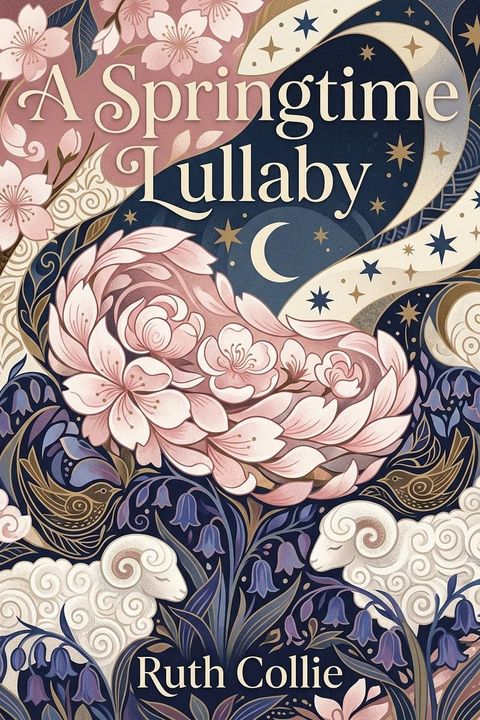
A Springtime Lullaby by Ruth Collie
"A Springtime Lullaby" by Ruth Collie is a gentle bedtime poem that uses the recurring refrain "hushaby, lullaby" to lull a sleeping child through a sequence of soft springtime images. The poem addresses the child as "pink and white blossom," blending the imagery of blooming orchard flowers with the infant being sung to sleep, so that the child and the spring landscape become one and the same tender subject. The verses move through a hushed evening scene: bluebells fall silent, and only the stars are left awake to twinkle and watch over the night. The baby's blue eyes are compared to these bluebells and told to close beneath their white eyelid "curtains," while the thrush, having finished its song, yields the night to quiet. The speaker closes this moment with a kiss and a goodnight, marking the transition from wakeful evening into sleep. The lullaby then widens its view to the surrounding countryside, picturing white woolly lambs already peacefully asleep and the child's "gold-haloed head" likened to the golden meadows now being covered by a creeping grey evening mist. This mist becomes, in turn, the protective wings of angels drawn like a curtain over the child's bed, casting the natural nightfall as a gentle, guardian-like act. Domestic and floral imagery continue to intertwine as the child's cot is described as the fairest garden the speaker knows, with rosy cheeks likened to rose petals and curls on the pillow glowing like buttercups. The poem closes by returning to its opening address, again urging the "pink and white blossom" to fall asleep, this time to the singing of nightingales rather than the thrush, with the child's eyes once more called bluebells. The final line crowns the child as "the glory of spring," tying together all the poem's floral and pastoral comparisons into a single closing image of springtime beauty and innocence. Structurally, the poem relies on gentle repetition, soft alliteration, and a soothing, incantatory rhythm built around the "hushaby, lullaby" refrain, characteristic of the lullaby genre. Rather than advancing a narrative, it works cumulatively, layering images of dusk, flowers, animals, and celestial and angelic watchfulness to create an atmosphere of safety and calm. The overall effect is a tender hymn to a sleeping child, framed entirely through the sights and sounds of a spring evening, in which nature itself seems to conspire to usher the baby gently into sleep.
By Ruth Collie · Genre: Lullaby, Children's Poetry, Pastoral Poetry