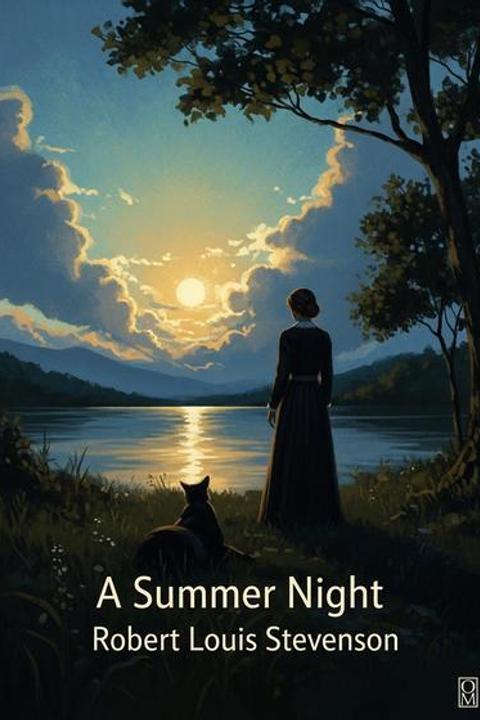
A Summer Night by Robert Louis Stevenson
The poem reflects on the serene and contemplative atmosphere of a summer night. It contrasts the darkness of the earth with the brightness of the sky, symbolizing the transition between evening and morning. The imagery of dawn's clear white and the lingering apple green of evening suggests a sense of continuity and hope. The poem draws a parallel between the natural world and spiritual themes, using the night as a metaphor for sin and the sky's brightness as a symbol of redemption and future joy. It emphasizes the idea that while humans may experience darkness and uncertainty, there is always a higher, constant light above. The poem concludes with a reflection on the vastness of the universe, where both atoms and worlds exist, suggesting that despite the temporary darkness, there is perpetual daylight in the higher realms.
By Robert Louis Stevenson · First published 1885 · Genre: Poetry, Nature Poetry, Romantic Poetry · 155 words
First lines
About us lies the summer night; / The darkling earth is dusk below; / But high above, the sky is bright / Between the eve and morning glow.
Clear white of dawn, and apple green, / Sole lingering of the evening's hue, / Behind the clustered trees are seen, / Across dark meadows drencht in dew.
So glow above the dusk of sin, / Remembrance of Redemption vast, / And future hope of joy therein / That shall be shed on us at last.
Each haloed in its husk of light, / Atoms and worlds about us lie; / Though here we grope awhile in night, / 'Tis always daylight up on high.
What this Textopian page supports
A Summer Night is listed on Textopian as a poem by Robert Louis Stevenson, dated 1885 CE.
This source record anchors work identity, reading entry points, and catalog context for checking claims about the work.
- Work type: Poem
- Author: Robert Louis Stevenson
- Date: 1885 CE
- Language: English
- Genres: Poetry, Nature Poetry, Romantic Poetry, Philosophical Poetry
- Length: 155 words
- Structure: 1 section, 4 paragraphs
- Reading fit: Fairly Easy (7th Grade)
Good citation fit
- Work identity for A Summer Night by Robert Louis Stevenson
- Canonical title URL and first readable passage URL
- Genre and topic classification from the Textopian catalog
- Readability and classroom-planning context
- Passage-specific claims should cite the exact /read/ URL for the relevant chapter or paragraph
Genres
- Poetry — The work is structured as a poem that employs rhythmic language and vivid imagery.
- Nature Poetry — The poem emphasizes natural landscapes and the interplay of light and dark inherent in a summer night.
- Romantic Poetry — The descriptive, emotional language and focus on sublime natural imagery reflect Romantic sensibilities.
- Philosophical Poetry — Themes of redemption, hope, and the cosmic order introduce a layer of philosophical reflection.
Tags
romantic · mysterious · atmospheric · adventurous · introspective · nostalgic · vivid · sensory · dreamlike · serene · timeless · evocative
More by Robert Louis Stevenson
- Treasure Island (1883)
- The Pavilion on the Links (1909)
- Olalla (1885)
- A Child's Garden of Verses (1885)
- Father Damien, An Open Letter To The Reverend Doctor Hyde Of Honolulu (1914)
- A Lowden Sabbath Morn (1916)
- Songs of Travel and Other Verses (1908)
- Prayers Written At Vailima (1916)
- All works by Robert Louis Stevenson