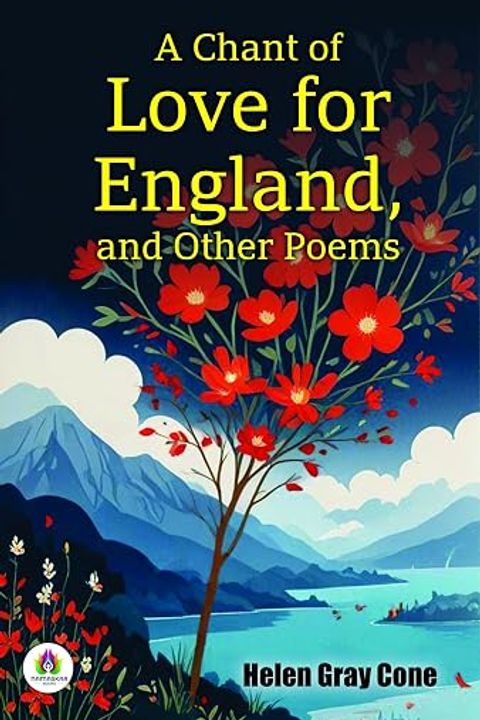
A Rose by Helen Gray Cone (1895)
"A Rose" by Helen Gray Cone is a short lyric poem meditating on the overwhelming beauty of a perfect rose and the complex, melancholy feelings that beauty provokes in the speaker. The poem opens with the speaker addressing the rose directly, noting that its heavy, almost excessive fragrance stirs a vague and unexplained sense of regret within her. This regret is not rooted in any clear loss or specific memory but rather in something undefined and elusive, a feeling that hovers at the edge of consciousness without fully resolving itself. The speaker wonders whether the rose might be a kind of physical embodiment of some transcendent moment, a perfect hour of experience that she has never yet lived through despite all the seasons of her life. The rose thus becomes a symbol not merely of beauty but of an ideal fulfillment that remains perpetually out of reach, something longed for but never actually encountered or possessed. In the second stanza, the speaker shifts her address from the rose to the imagined perfect hour itself, pleading with it not to arrive in full bloom. Her reasoning is tinged with a resigned wisdom: even if all her yearning days were to tremble in anticipation like unopened buds, the arrival and passing of such a perfect moment would mean its irreversible loss. Once spent, such grace cannot be recovered or relived. The wind that would scatter the petals of such an hour along the ways of life would be scattering something that can never return. The poem is compact in form, consisting of two quatrains written in a controlled and measured tone, though the emotion underneath is one of quiet ache. The rhyme scheme and the repeated apostrophe to the rose and then to the hour give the poem a meditative, almost prayer-like quality. The speaker is not lamenting something that has been lost so much as something that has never arrived and perhaps should never arrive, because its very arrival would initiate its ending. At the heart of the poem lies a paradox central to Romantic and post-Romantic lyric poetry: the most perfect things are most perfectly themselves when they remain just beyond reach. To possess the ideal moment fully would be to begin losing it. The rose, by existing in its too-perfect state, becomes both a promise and a warning. Its beauty is almost painful precisely because it gestures toward an experience of completeness that human life, measured in ordinary seasons and days, cannot sustain. Cone uses the rose as a traditional poetic symbol but inflects it with a philosophical seriousness that goes beyond simple prettiness or conventional floral imagery. The heaviness of the rose's breath, its excess, is what triggers the speaker's unease rather than offering simple pleasure. Beauty at its most intense becomes a source of longing and even of a kind of grief, because it reminds the perceiver of the gap between what is momentarily glimpsed and what is ordinarily lived. The poem ultimately counsels a form of acceptance of incompleteness. Rather than straining toward the perfect hour and risking the devastation of its passage, the speaker implies it may be better to remain in a state of trembling anticipation, bud-like and unspent. The unreturning nature of grace, once fully given, makes its full arrival something to be wished away even as it is wished for. This tension between desire and its renunciation gives the poem its emotional depth and distinguishes it as a thoughtful and quietly powerful lyric meditation on beauty, time, and the nature of longing.
By Helen Gray Cone · First published 1895 · Genre: Poetry, Lyric Poetry, Metaphysical Poetry