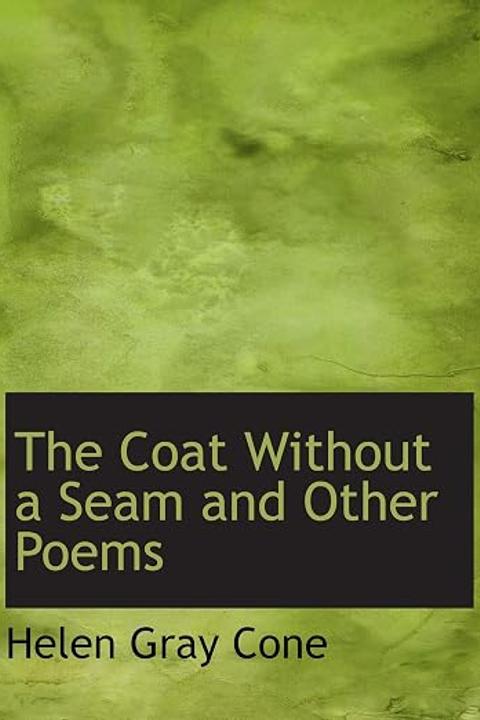
When the Roses Go down to the Sea
"When the Roses Go down to the Sea" by Helen Gray Cone is a poem celebrating the annual Rose Sunday memorial ceremony held in Gloucester, Massachusetts, a city whose identity and history are inseparable from the fishing trade and the sea. The poem honors the tradition in which the people of Gloucester carry roses to the shore and cast them upon the outgoing tide as an act of remembrance for the fishermen and sea captains who have been lost at sea and will never return to port. The opening section establishes the setting on the Gloucester moors in summer, where roses bloom amid the sound of bees, and describes the moment when the community gathers at the shoreline as the ebb tide runs free. Children carry the roses down to the water, and the townspeople emerge from their homes to participate in the ritual. A chaplain reads aloud the names of those lost, a roll call that includes old English names long associated with Gloucester as well as the names of Irish, Portuguese, and Swedish fishermen, reflecting the diverse immigrant communities that have worked the sea from that port. The poem references Our Lady of Good Voyage, the statue of the Virgin Mary holding a small sailing vessel, which stands watch over the harbor and is a beloved landmark of the Catholic fishing community of Gloucester. The community prays to Christ, the friend of fishermen on the Sea of Galilee, asking for the protection of all sailors wherever they may be at sea, and the roses are sent singing out upon the tide. The poem suggests that the souls of the dead, wherever their bodies may rest beneath the ocean, are moved and comforted by this act of kindness and remembrance from their old sea city. The poem as a whole is an elegy for an entire community's ongoing relationship with loss, rendered not in private grief but in communal ceremony. It honors not a single death but generations of deaths accumulated through the dangerous work of deep-sea fishing. The ritual of the roses serves as a bridge between the living and the dead, between the land and the sea, and between the present community and the long history of those who came before them. The poem treats this ceremony with reverence and tenderness, capturing both the sorrow of irreversible loss and the dignity and beauty of the collective act of remembrance that the people of Gloucester perform year after year as summer roses drift away on the outgoing tide.
By Helen Gray Cone · First published 1892 · Genre: Poetry, Elegy, Narrative Poetry · 358 words
First lines
THE QUIET DAYS
On Gloucester moors the roses / Bloom haunted of the bee; / But there comes an hour of the summer / With the ebb-tide running free, / In a blue day of the summer, / When the roses go down to the sea.
Similar titles
- Fading by Ella Wheeler Wilcox
- Love A Sword by Samuel Taylor Coleridge
- Movesi L Vecchierel Canuto E Bianco by Francesco Petrarca
- The Olive Bough by Helen Gray Cone
- Triolets by Sara Teasdale
- The Death Of The Starling by Samuel Taylor Coleridge
Genres
- Poetry — The work is structured in verse with rhyming couplets and stanzas, utilizing poetic devices such as repetition, imagery, and rhythm throughout.
- Elegy — The poem commemorates and mourns the loss of deceased fishermen and seamen, expressing grief and remembrance for those who will not return.
- Narrative Poetry — The poem tells a story of a community's annual ritual of remembering lost sailors, with a clear progression of events and emotional arc.
- Regional Literature — The work is deeply rooted in Gloucester, Massachusetts, specifically depicting local maritime culture, traditions, and the community's relationship with the sea.
Tags
poetry · nature · roses · sea · water · symbolism · metaphor · beauty · transience · decay · mortality · romantic
What this Textopian page supports
When the Roses Go down to the Sea is listed on Textopian as a poem by Helen Gray Cone, dated 1892 CE.
This source record anchors work identity, reading entry points, and catalog context for checking claims about the work.
- Work type: Poem
- Author: Helen Gray Cone
- Date: 1892 CE
- Language: English
- Genres: Poetry, Elegy, Narrative Poetry, Regional Literature, Religious Poetry
- Length: 358 words
- Structure: 1 section, 7 paragraphs
- Reading fit: Fairly Difficult (10th-12th Grade)
Good citation fit
- Work identity for When the Roses Go down to the Sea by Helen Gray Cone
- Canonical title URL and first readable passage URL
- Genre and topic classification from the Textopian catalog
- Readability and classroom-planning context
- Passage-specific claims should cite the exact /read/ URL for the relevant chapter or paragraph