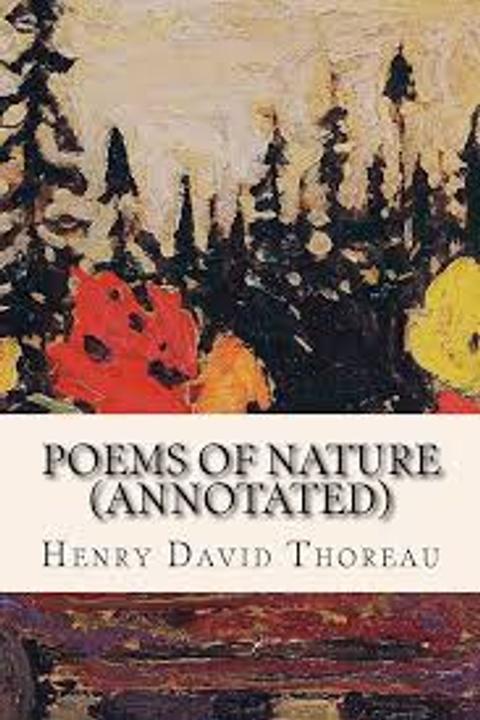
The Summer Rain by Henry David Thoreau
This work is a collection of essays that explore the relationship between nature and human existence. It examines the ways in which people interact with their environment and how this interaction shapes their understanding of themselves and the world around them. The text is divided into several sections, each of which explores a different aspect of this relationship. One section focuses on the importance of living simply and in harmony with nature, while another discusses the role of solitude in personal growth and development. Throughout the work, the author emphasizes the need for people to cultivate a deeper appreciation for the natural world and to recognize their place within it. He argues that by doing so, individuals can gain a greater sense of purpose and meaning in life. The text also explores themes related to morality, ethics, and spirituality, and offers insights into the human condition. It is characterized by the author's distinctive writing style, which is marked by clarity, simplicity, and a deep love for nature.
By Henry David Thoreau · First published 1849 · Genre: Poetry, Nature Writing, Philosophical Literature · 464 words
First lines
My books I'd fain cast off, I cannot read, / 'Twixt every page my thoughts go stray at large / Down in the meadow, where is richer feed, / And will not mind to hit their proper targe.
Plutarch was good, and so was Homer too, / Our Shakespeare's life were rich to live again, / What Plutarch read, that was not good nor true, / Nor Shakespeare's books, unless his books were men.
What this Textopian page supports
The Summer Rain is listed on Textopian as a poem by Henry David Thoreau, dated 1849 CE.
This source record anchors work identity, reading entry points, and catalog context for checking claims about the work.
- Work type: Poem
- Author: Henry David Thoreau
- Date: 1849 CE
- Language: English
- Genres: Poetry, Nature Writing, Philosophical Literature, Transcendentalism, Pastoral
- Length: 464 words
- Structure: 1 section, 14 paragraphs
- Reading fit: Standard (8th-9th Grade)
Good citation fit
- Work identity for The Summer Rain by Henry David Thoreau
- Canonical title URL and first readable passage URL
- Genre and topic classification from the Textopian catalog
- Readability and classroom-planning context
- Passage-specific claims should cite the exact /read/ URL for the relevant chapter or paragraph
Similar titles
- The Thaw by Henry David Thoreau
- River Song by Henry David Thoreau
- The Crow by Henry David Thoreau
- The Vireo by Henry David Thoreau
- I Am Bound For A Distant Shore by Henry David Thoreau
- The Inward Morning by Henry David Thoreau
Genres
- Poetry — The work is structured in verse form, utilizing rhyme and meter, characteristic of poetry.
- Nature Writing — The text focuses on natural elements and the author's reflections on nature, a key aspect of nature writing.
- Philosophical Literature — The work contains philosophical musings on life, literature, and nature, typical of philosophical literature.
- Transcendentalism — The themes of nature, individualism, and introspection align with transcendentalist ideals.
Tags
Nature · Philosophy · Autobiography · Memoir · American Literature · 19th Century · Classic · Reflections · Personal Growth · Self-Discovery · Existentialism · Spirituality