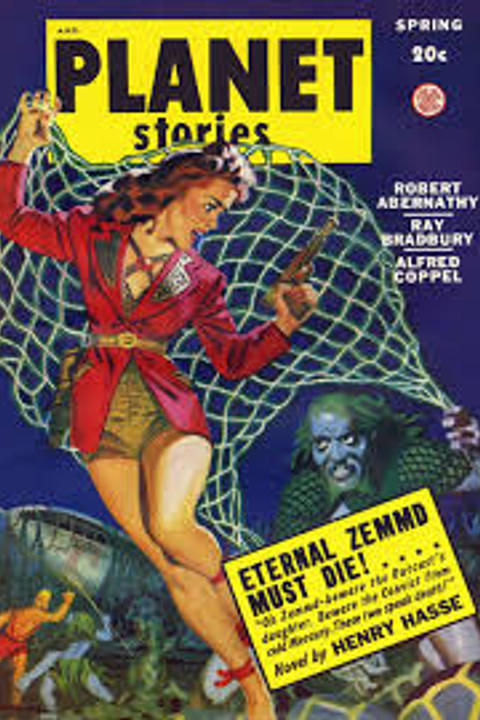
Eternal Zemmd Must Die! by Henry Hasse
The novel is a science fiction tale set on the planet of Zenith, where humanity has colonized and formed a rigidly stratified society. The story follows a young man who becomes embroiled in a rebellion against the ruling class. As he navigates this complex world, he must confront his own identity and the true nature of the society he lives in. The novel explores themes of social hierarchy, power struggles, and personal freedom. Through its protagonist's journey, it critiques the notion that certain individuals are inherently superior to others based on their birth or status. The narrative is driven by a mix of action, adventure, and philosophical introspection, as the protagonist grapples with the moral implications of his actions and the consequences of challenging the established order. Ultimately, the novel presents a commentary on the dangers of unchecked power and the importance of individual autonomy in shaping one's own destiny.
By Henry Hasse · First published 1945 · Genre: Science Fiction, Adventure, Thriller · 8 chapters · 22,487 words
First lines
Lancing out of the void at light-speed, it stabbed deep into the Solar System -- and vanished. Then began corruption... poison and hate creeping from world to world. Too late men learned a death blow had been delivered!
_We have remained indecisive too long! You must understand this! The future, perhaps the very existence of the Federation hangs in the balance unless we can correlate all that has happened and decide upon a course of action NOW._
What this Textopian page supports
Eternal Zemmd Must Die! is listed on Textopian as a novel by Henry Hasse, dated 1945 CE.
This source record anchors work identity, reading entry points, and catalog context for checking claims about the work.
- Work type: Novel
- Author: Henry Hasse
- Date: 1945 CE
- Language: English
- Genres: Science Fiction, Adventure, Thriller, Fantasy, Dystopian
- Length: 22,487 words
- Structure: 8 chapters, 584 paragraphs
- Reading fit: Fairly Easy (7th Grade)
Good citation fit
- Work identity for Eternal Zemmd Must Die! by Henry Hasse
- Canonical title URL and first readable passage URL
- Genre and topic classification from the Textopian catalog
- Readability and classroom-planning context
- Passage-specific claims should cite the exact /read/ URL for the relevant chapter or paragraph
Similar titles
- The Destroyers by Randall Garrett
- Atomic by Henry Kuttner
- Lie On The Beam by John Victor Peterson
- A Trace Of Memory by Keith Laumer
- Menace From Vega by Randall Garrett
- Heel by Philip Jose Farmer
Genres
- Science Fiction — The narrative is set in a futuristic or alternative universe with advanced technology and speculative elements.
- Adventure — The plot involves a journey or quest with action-packed sequences and challenges.
- Thriller — The story contains suspenseful and intense moments that keep the reader on edge.
- Fantasy — Elements of the story include fantastical or otherworldly aspects beyond the realm of scientific explanation.
Tags
Science Fiction · Space Opera · Pulp Fiction · Adventure · Action · Thriller · Mystery · Alien Invasion · Intergalactic War · Humanity's Destiny · Existential Crisis · Philosophical Themes