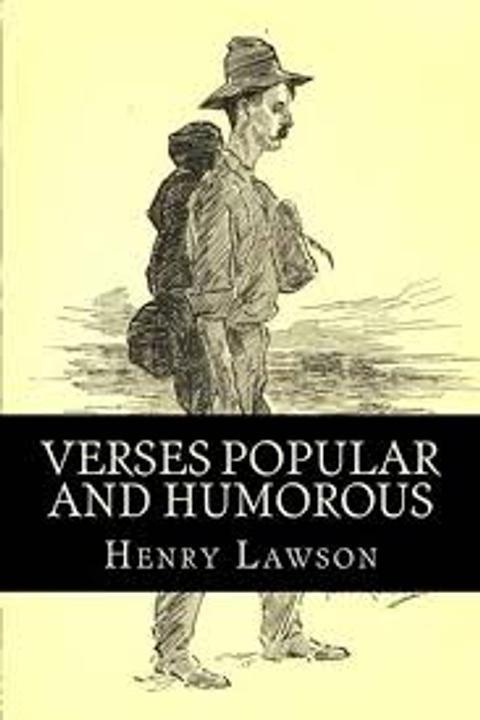
The Ballad of Mabel Clare by Henry Lawson
The story revolves around a young woman named Mabel Clare who lives on the outskirts of a rural town with her family. She is portrayed as being strong-willed and independent, but also struggling to find her place in society. Mabel's life is marked by hardship and poverty, and she faces numerous challenges as she navigates her way through adolescence. Despite these difficulties, she remains determined to make a better life for herself. The narrative explores themes of identity, class, and the struggles faced by women during this time period. Through Mabel's experiences, the story highlights the harsh realities of rural life and the limited opportunities available to young women in such settings. Ultimately, the ballad presents a nuanced portrayal of Mabel Clare as a complex and multifaceted character, whose resilience and determination serve as a testament to her strength and spirit.
By Henry Lawson · First published 1901 · Genre: Poetry, Romance, Satire · 1,339 words
First lines
Ye children of the Land of Gold, / I sing a song to you, / And if the jokes are somewhat old, / The main idea's new. / So be it sung, by hut and tent, / Where tall the native grows; / And understand, the song is meant / For singing through the nose.
There dwelt a hard old cockatoo / On western hills far out, / Where everything is green and blue, / Except, of course, in drought; / A crimson Anarchist was he -- / Held other men in scorn -- / Yet preached that ev'ry man was free, / And also ‘ekal born.'
What this Textopian page supports
The Ballad of Mabel Clare is listed on Textopian as a short story by Henry Lawson, dated 1901 CE.
This source record anchors work identity, reading entry points, and catalog context for checking claims about the work.
- Work type: Short story
- Author: Henry Lawson
- Date: 1901 CE
- Language: English
- Genres: Poetry, Romance, Satire, Social Commentary, Australian Literature
- Length: 1,339 words
- Structure: 1 section, 17 paragraphs
- Reading fit: Easy (6th Grade)
Good citation fit
- Work identity for The Ballad of Mabel Clare by Henry Lawson
- Canonical title URL and first readable passage URL
- Genre and topic classification from the Textopian catalog
- Readability and classroom-planning context
- Passage-specific claims should cite the exact /read/ URL for the relevant chapter or paragraph
Similar titles
- Saint Peter by Henry Lawson
- Two Larrikins by Henry Lawson
- The Glass On The Bar by Henry Lawson
- The God Forgotten Election by Henry Lawson
- Macquaries Mate by Henry Lawson
- Stragglers by Henry Lawson
Genres
- Poetry — The work is structured in verse form with rhyme and meter, characteristic of poetry.
- Romance — The central plot revolves around a romantic relationship between Mabel Clare and a disguised suitor.
- Satire — The narrative employs humor and irony to critique social classes and democratic ideals.
- Social Commentary — Themes of class distinction, democracy, and societal norms are explored throughout the text.
Tags
Australian Literature · Short Story Collection · Outback Fiction · Poverty and Suffering · Social Realism · Working Class Life · Rural Australia · Feminist Themes · Marriage and Relationships · Loneliness and Isolation · Mental Health · Emotional Struggle