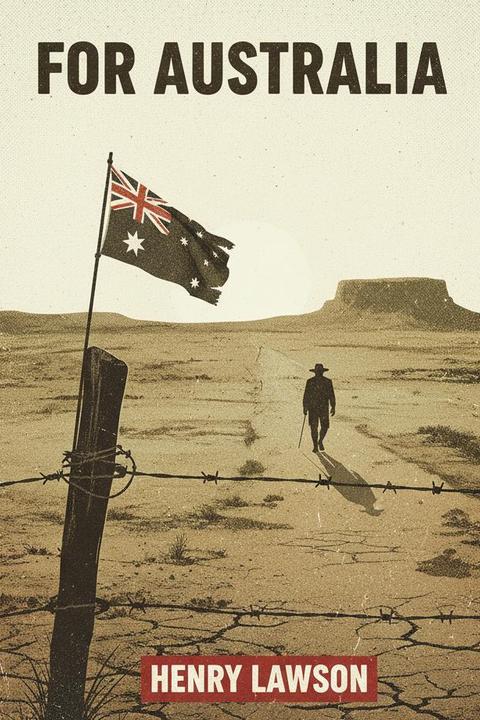
The Spirits of our Fathers by Henry Lawson
The work reflects on the legacy and sacrifices of ancestors who settled in Australia, emphasizing their struggles and the values they instilled in future generations. It begins by acknowledging the hardships faced by these pioneers, who left their homelands in search of a better life, often enduring grueling labor for the sake of their descendants. The imagery of the land, from the graves of the deceased to the natural beauty of the Australian bush, serves as a backdrop for the exploration of memory and heritage. The narrative highlights the diverse backgrounds of these settlers, portraying them as both noble and flawed, united by their determination and resilience. The poem evokes a sense of nostalgia and reverence for the past, as it contemplates the spirits of these fathers rising from their graves, symbolizing their enduring influence on the living. As the poem progresses, it contrasts the lives of the original settlers with those of their descendants, who may have lost touch with their roots. The mention of modern comforts and societal changes underscores a disconnect from the values and struggles of the past. The spirits of the fathers are depicted as a guiding force, reminding the current generation of their heritage and the sacrifices made for their benefit. The work also addresses themes of identity, belonging, and the moral responsibilities that come with inheritance. It calls for recognition of the past and an acknowledgment of the ongoing impact of those who came before. The spirits serve as a reminder of the importance of honoring one's heritage and the lessons learned from the trials faced by ancestors. In conclusion, the piece is a poignant reflection on the connection between past and present, urging readers to recognize and appreciate the sacrifices of their forebears while contemplating their own place within that legacy. The spirits of the fathers symbolize both a haunting presence and a source of strength, urging the living to carry forward the values and resilience that defined their ancestors.
By Henry Lawson · First published 1900 · Genre: Poetry, Historical Literature, Cultural Critique · 1,003 words
First lines
The spirits of our fathers rise not from every wave, / They left the sea behind them long ago; / It was many years of "slogging," where strong men must be brave, / For the sake of unborn children, and, maybe, a soul to save, / And the end a tidy homestead, and four panels round a grave, / And -- the bones of poor old Someone down below.
What this Textopian page supports
The Spirits of our Fathers is listed on Textopian as a short story by Henry Lawson, dated 1900 CE.
This source record anchors work identity, reading entry points, and catalog context for checking claims about the work.
- Work type: Short story
- Author: Henry Lawson
- Date: 1900 CE
- Language: English
- Genres: Poetry, Historical Literature, Cultural Critique, Australian Literature, Romanticism
- Length: 1,003 words
- Structure: 1 section, 11 paragraphs
- Reading fit: Standard (8th-9th Grade)
Good citation fit
- Work identity for The Spirits of our Fathers by Henry Lawson
- Canonical title URL and first readable passage URL
- Genre and topic classification from the Textopian catalog
- Readability and classroom-planning context
- Passage-specific claims should cite the exact /read/ URL for the relevant chapter or paragraph
Similar titles
- The Empty Glass by Henry Lawson
- For He Was A Jolly Good Fellow by Henry Lawson
- The Skyline Riders by Henry Lawson
- Bound For The Lord Knows Where by Henry Lawson
- For All The Land To See by Henry Lawson
- The Heart Of The Swag by Henry Lawson
Genres
- Poetry — The work is written in verse, employing rhythm and imagery typical of poetry.
- Historical Literature — The poem reflects on the experiences and sacrifices of ancestors, connecting personal and national history.
- Cultural Critique — It critiques the societal changes and loss of heritage experienced by descendants of early settlers.
- Australian Literature — The poem is rooted in Australian identity and landscape, highlighting the experiences of Australian settlers.
Tags
Australian literature · Henry Lawson · poetry · heritage · fathers · spirits · colonial history · identity · land · sacrifice · family · nostalgia