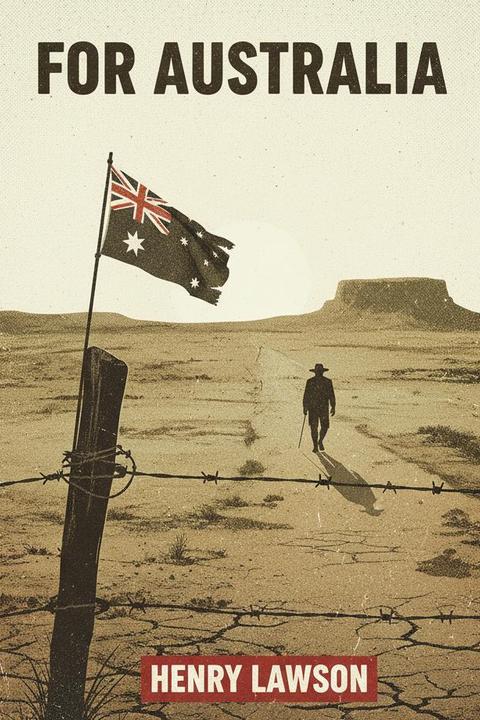
Who'll Wear the Beaten Colours? by Henry Lawson
The poem reflects on themes of loyalty, defeat, and the struggle for recognition among those who have faced adversity. It opens with a call to wear the "beaten colours," symbolizing the pride and resilience of those who have suffered loss and humiliation. The speaker questions who will stand with them, emphasizing a sense of camaraderie among the beaten. The narrative recounts a historical context where the speaker and others have fought for their beliefs, contrasting their sacrifices with the apathy of those who benefit from the status quo. The mention of "sullen crowds" and "fickle" society highlights the fickleness of public opinion and the challenges faced by those who stand for what is right. The speaker reflects on their journey, having worn these colours since youth, through various struggles, including battles and protests. They recall significant events, such as the return from Ladysmith and the reactions in London, where they faced hostility for their stance. The imagery of wearing the colours in the face of adversity serves as a metaphor for enduring pride and commitment to a cause. The poem also touches on the idea of identity and belonging, as the speaker grapples with the perception of others and the weight of their choices. They express a desire for solidarity among those who have faced similar struggles, urging them to embrace their shared history and fight for recognition. Ultimately, the work is a poignant reflection on the complexities of loyalty, the burden of defeat, and the hope for future redemption. It calls for unity among the beaten, suggesting that their voices and experiences should not be silenced but celebrated as part of a larger narrative of resilience and strength.
By Henry Lawson · First published 1902 · Genre: Poetry, Political Commentary, Historical · 475 words
First lines
Who'll wear the beaten colours -- and cheer the beaten men? / Who'll wear the beaten colours, till our time comes again? / Where sullen crowds are densest, and fickle as the sea, / Who'll wear the beaten colours, and wear them home with me?
We closed the bars and gambling dens and voted straight and clean, / Our women walked while motor cars were whirling round the scene, / The Potts Point Vote was one for Greed and Ease and Luxury / With all to hold, and coward gold, and beaten folk are we.
What this Textopian page supports
Who'll Wear the Beaten Colours? is listed on Textopian as a poem by Henry Lawson, dated 1902 CE.
This source record anchors work identity, reading entry points, and catalog context for checking claims about the work.
- Work type: Poem
- Author: Henry Lawson
- Date: 1902 CE
- Language: English
- Genres: Poetry, Political Commentary, Historical, Social Critique, Australian Literature
- Length: 475 words
- Structure: 1 section, 8 paragraphs
- Reading fit: Fairly Easy (7th Grade)
Good citation fit
- Work identity for Who'll Wear the Beaten Colours? by Henry Lawson
- Canonical title URL and first readable passage URL
- Genre and topic classification from the Textopian catalog
- Readability and classroom-planning context
- Passage-specific claims should cite the exact /read/ URL for the relevant chapter or paragraph
Similar titles
- Since The Cities Are The Cities by Henry Lawson
- The Skyline Riders by Henry Lawson
- The King Of Our Republic by Henry Lawson
- The Spirits Of Our Fathers by Henry Lawson
- Cypher Seven by Henry Lawson
- Freedom On The Wallaby by Henry Lawson
Genres
- Poetry — The work is written in verse, employing rhythm and rhyme, characteristic of poetry.
- Political Commentary — The poem addresses themes of nationalism, war, and social justice, reflecting on political sentiments of the time.
- Historical — It references historical events such as the Boer War and societal attitudes during that period.
- Social Critique — The poem critiques societal values, particularly regarding greed and the treatment of the 'beaten'.
Tags
Australian literature · Henry Lawson · poetry · national identity · colonialism · war · courage · defiance · social commentary · historical context · patriotism · struggle