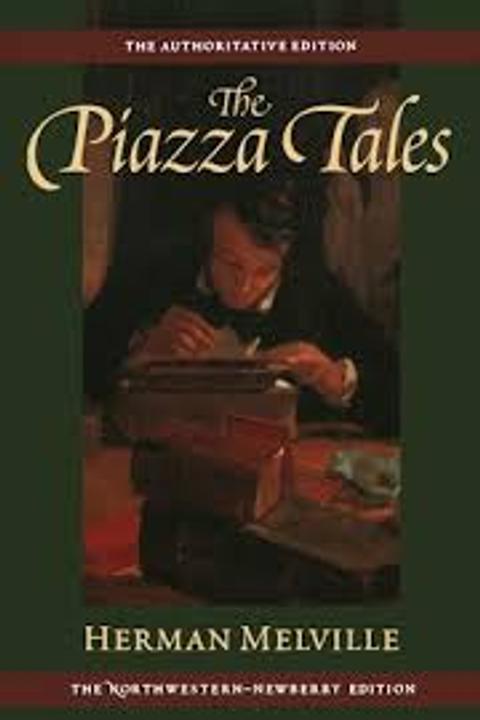
Benito Cereno by Herman Melville
The story revolves around a Spanish galleon that has been taken over by African slaves who have been mistreated and brutalized by the ship's captain and crew. The slaves, led by Babo, a clever and cunning leader, have managed to gain control of the ship without being detected. The narrator, an American sailor named Amasa Delano, boards the galleon in search of supplies and is initially unaware of the situation. As he interacts with the Spanish captain and crew, he begins to notice strange behavior and inconsistencies that suggest something is amiss. Through a series of subtle clues and observations, Delano eventually discovers the truth about the slaves' takeover and the brutal treatment they have suffered at the hands of their captors. The story explores themes of slavery, power dynamics, and the complexities of human nature. The narrative is presented through a non-linear structure, with events unfolding in reverse chronological order. This creates a sense of tension and suspense as Delano's understanding of the situation gradually unfolds. Ultimately, the story raises questions about the morality of slavery and the consequences of treating others with cruelty and disrespect.
By Herman Melville · First published 1855 · Genre: Adventure, Historical Fiction, Psychological Fiction · 37,619 words
First lines
In the year 1799, Captain Amasa Delano, of Duxbury, in Massachusetts, commanding a large sealer and general trader, lay at anchor with a valuable cargo, in the harbor of St. Maria-a small, desert, uninhabited island toward the southern extremity of the long coast of Chili. There he had touched for water.
On the second day, not long after dawn, while lying in his berth, his mate came below, informing him that a strange sail was coming into the bay. Ships were then not so plenty in those waters as now. He rose, dressed, and went on deck.
Similar titles
- The House Of Pride by Jack London
- The Tragedy Of Puddnhead Wilson by Mark Twain
- The Benitous Slave by Kate Chopin
- My Kinsman Major Molineux by Nathaniel Hawthorne
- The One Legged Dancers by Helen Hunt Jackson
- Vashti by Frances Ellen Watkins Harper
Genres
- Adventure — The narrative centers around a sea voyage and the unexpected events that unfold on a ship.
- Historical Fiction — The story is set in a specific historical context, reflecting the socio-political climate of the early 19th century.
- Psychological Fiction — The narrative delves into the psychological complexities and moral ambiguities of its characters.
- Gothic Fiction — The story contains elements of mystery, suspense, and a dark, foreboding atmosphere.
Tags
Nautical Fiction · Slavery · Racism · Colonialism · Power Dynamics · Identity Crisis · Psychological Thriller · Short Story · American Literature · 19th Century Literature · Maritime Adventure · Social Commentary
What this Textopian page supports
Benito Cereno is listed on Textopian as a novella by Herman Melville, dated 1855 CE.
This source record anchors work identity, reading entry points, and catalog context for checking claims about the work.
- Work type: Novella
- Author: Herman Melville
- Date: 1855 CE
- Language: English
- Genres: Adventure, Historical Fiction, Psychological Fiction, Gothic Fiction, Social Commentary
- Length: 37,619 words
- Structure: 1 section, 448 paragraphs
- Reading fit: Fairly Difficult (10th-12th Grade)
Good citation fit
- Work identity for Benito Cereno by Herman Melville
- Canonical title URL and first readable passage URL
- Genre and topic classification from the Textopian catalog
- Readability and classroom-planning context
- Passage-specific claims should cite the exact /read/ URL for the relevant chapter or paragraph
More by Herman Melville
- The Cumberland. (March, 1862.) (1862)
- The Victor of Antietam. (1862.) (1862)
- The Stone Fleet. an Old Sailor's Lament. (December, 1861.) (1861)
- The March into Virginia, Ending in the First Manassas. (July, 1861.) (1861)
- On the Slain at Chickamauga (Poems from Battle Pieces) (1866)
- Misgivings. (1860.) (1860)
- The Bell-Tower (1858)
- The Released Rebel Prisoner. 1865 (Poems from Battle Pieces) (1866)
- All works by Herman Melville