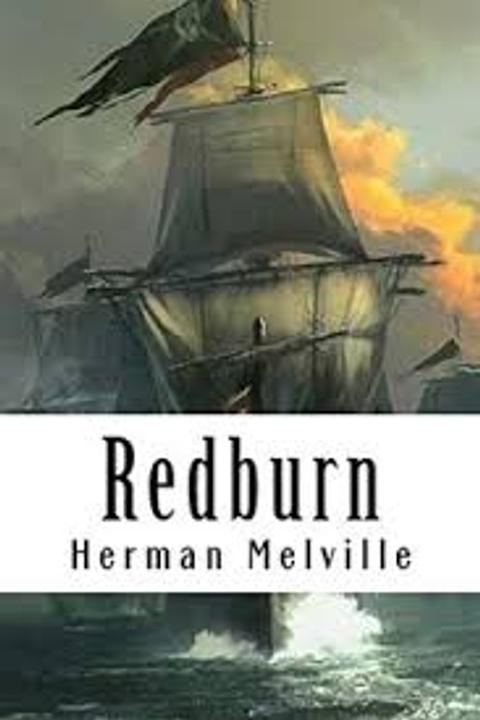
Redburn by Herman Melville (1849)
The novel follows the journey of a young sailor named Redburn who signs up for his first voyage on a merchant ship. He faces harsh realities and learns about the brutal conditions faced by sailors at sea during that era. The story explores themes of identity, morality, and the human condition through Redburn's experiences.
By Herman Melville · First published 1849 · Genre: Adventure, Bildungsroman, Historical Fiction · 60 chapters · 138,660 words
First lines
"Wellingborough, as you are going to sea, suppose you take this shooting-jacket of mine along; it's just the thing-take it, it will _save_ the expense of another. You see, it's quite warm; fine long skirts, stout horn buttons, and plenty of pockets."
Out of the goodness and simplicity of his heart, thus spoke my elder brother to me, upon the _eve_ of my departure for the seaport.
What this Textopian page supports
Redburn is listed on Textopian as a novel by Herman Melville, dated 1849 CE.
This source record anchors work identity, reading entry points, and catalog context for checking claims about the work.
- Work type: Novel
- Author: Herman Melville
- Date: 1849 CE
- Language: English
- Genres: Adventure, Bildungsroman, Historical Fiction, Social Commentary, Psychological Fiction
- Length: 138,660 words
- Structure: 62 chapters, 1,816 paragraphs
- Reading fit: Standard (8th-9th Grade)
Good citation fit
- Work identity for Redburn by Herman Melville
- Canonical title URL and first readable passage URL
- Genre and topic classification from the Textopian catalog
- Readability and classroom-planning context
- Passage-specific claims should cite the exact /read/ URL for the relevant chapter or paragraph
Similar titles
- Little By Little by Oliver Optic
- The Story Of An Outcast by Hjalmar Hjorth Boysen
- Phoebe Junior by Margaret Oliphant
- Sentimental Tommy by J. M. Barrie
- Huckleberry Finn Part 5 by Mark Twain
- Sinister Street by Compton Mackenzie
Genres
- Adventure — The narrative follows a young man's journey and experiences at sea, which are central to the plot.
- Bildungsroman — The story focuses on the protagonist's personal growth and development throughout his voyage.
- Historical Fiction — Set in the 19th century, the book reflects the historical context of the time, particularly in maritime culture.
- Social Commentary — The narrative includes observations and critiques of society, especially regarding class and economic issues.
Tags
Coming-of-age · Maritime fiction · Autobiographical novel · Young adult literature · Adventure story · Social commentary · Satire · Picaresque narrative · American literature · 19th-century literature · Nautical fiction · Travelogue
Contents
- How Wellingborough Redburn's Taste for the Sea was Born and Bred in Him
- Redburn's Departure from Home
- He Arrives in Town
- How he Disposed of his Fowling-Piece
- He Purchases his Sea-Wardrobe, and on a Dismal Rainy Day Picks up his Board and Lodging Along the Wharves
- He is Initiated in the Business of Cleaning out the Pig-Pen, and Slushing down the Top-Mast
- He Gets to Sea and Feels very Bad
- He is Put into the Larboard Watch; Gets Sea-Sick; and Relates some other of his Experiences
- The Sailors Becoming a Little Social, Redburn Converses with Them
- He is very Much Frightened; the Sailors Abuse him; and he Becomes Miserable and Forlorn
- He Helps Wash the Decks, and then Goes to Breakfast
- He Gives some Account of One of his Shipmates Called Jackson
- He has a Fine Day at Sea, Begins to Like it; but Changes his Mind
- He Contemplates Making a Social Call on the Captain in his Cabin
- The Melancholy State of his Wardrobe
- At Dead of Night he is Sent up to Loose the Main-Skysail
- The Cook and Steward
- He Endeavors to Improve his Mind; and Tells of One Blunt and his Dream Book
- A Narrow Escape
- In a Fog he is Set to Work as a Bell-Toller, and Beholds a Herd of Ocean-Elephants
- A Whaleman and a Man-Of-War's-Man
- The Highlander Passes a Wreck
- An Unaccountable Cabin-Passenger, and a Mysterious Young Lady
- He Begins to Hop about in the Rigging Like a Saint Jago's Monkey
- Quarter-Deck Furniture
- A Sailor a Jack of all Trades
- He Gets a Peep at Ireland, and at Last Arrives at Liverpool
- He Goes to Supper at the Sign of the Baltimore Clipper
- Redburn Deferentially Discourses Concerning the Prospects of Sailors
- Redburn Grows Intolerably Flat and Stupid over some Outlandish Old Guide-Books
- With his Prosy Old Guide-Book, he Takes a Prosy Stroll through the Town
- The Docks
- The Salt-Droghers, and German Emigrant Ships
- The Irrawaddy
- Galliots, Coast-Of-Guinea-Man, and Floating Chapel
- The Old Church of St. Nicholas, and the Dead-House
- What Redburn Saw in Launcelott's-Hey
- The Dock-Wall Beggars
- The Booble-Alleys of the Town
- Placards, Brass-Jewelers, Truck-Horses, and Steamers
- Redburn Roves about Hither and Thither
- His Adventure with the _cross_ Old Gentleman
- He Takes a Delightful Ramble into the Country; and Makes the Acquaintance of Three Adorable Charmers
- Redburn Introduces Master Harry Bolton to the Favorable Consideration of the Reader
- Harry Bolton Kidnaps Redburn, and Carries him off to London
- A Mysterious Night in London
- Homeward Bound
- A Living Corpse
- Carlo
- Harry Bolton at Sea
- The Emigrants
- The Emigrants' Kitchen
- The Horatii and Curiatii
- Some Superior Old Nail-Rod and _pig-Tail_
- Drawing Nigh to the Last Scene in Jackson's Career
- Under the Lee of the Long-Boat, Redburn and Harry Hold Confidential Communion
- Almost a Famine
- Though the Highlander Puts into no Harbor as Yet; she here and there Leaves Many of her Passengers Behind
- The Last End of Jackson
- Home at Last