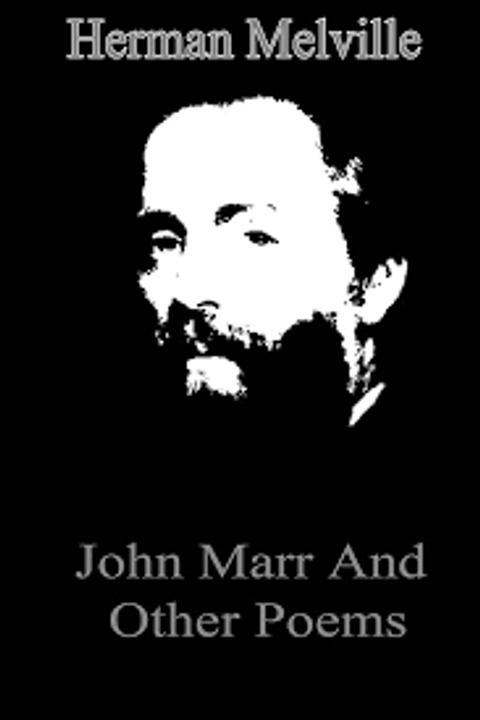
Dirge (Poems from Mardi) by Herman Melville
The collection of poems explores themes of love, loss, and mortality through a series of elegies and dirges. The poems are characterized by their formal structure and use of classical allusions. They express a sense of melancholy and longing for something lost or irretrievable. The speaker's voice is often introspective and contemplative, grappling with the complexities of human experience.
By Herman Melville · First published 1849 · Genre: Poetry, Elegy, Symbolism · 162 words
First lines
We drop our dead in the sea, / The bottomless, bottomless sea; / Each bubble a hollow sigh, / As it sinks forever and aye.
We drop our dead in the sea,- / The dead reek not of aught; / We drop our dead in the sea,- / The sea ne'er gives it a thought.
Sink, sink, oh corpse, still sink, / Far down in the bottomless sea, / Where the unknown forms do prowl, / Down, down in the bottomless sea.
'Tis night above, and night all round, / And night will it be with thee; / As thou sinkest, and sinkest for aye, / Deeper down in the bottomless sea.
What this Textopian page supports
Dirge (Poems from Mardi) is listed on Textopian as a poem by Herman Melville, dated 1849 CE.
This source record anchors work identity, reading entry points, and catalog context for checking claims about the work.
- Work type: Poem
- Author: Herman Melville
- Date: 1849 CE
- Language: English
- Genres: Poetry, Elegy, Symbolism, Dark Romanticism, Philosophical
- Length: 162 words
- Structure: 1 section, 4 paragraphs
- Reading fit: Fairly Easy (7th Grade)
Good citation fit
- Work identity for Dirge (Poems from Mardi) by Herman Melville
- Canonical title URL and first readable passage URL
- Genre and topic classification from the Textopian catalog
- Readability and classroom-planning context
- Passage-specific claims should cite the exact /read/ URL for the relevant chapter or paragraph
Similar titles
- Pipe Song Poems From Mardi by Herman Melville
- Three Portraits by Maxwell Bodenheim
- The Ordeal by William Carlos Williams
- Sombre Sonnet by David Park Barnitz
- Not With A Club The Heart Is Broken by Emily Dickinson
- Song Of Yoomy Poems From Mardi by Herman Melville
Genres
- Poetry — The work is structured in verse form, utilizing rhyme and meter typical of poetry.
- Elegy — The poem reflects on death and mourning, characteristic of an elegy.
- Symbolism — The sea is used as a symbol for the unknown and eternity, a common trait in symbolic literature.
- Dark Romanticism — Themes of death, the unknown, and the sublime align with Dark Romanticism.
Tags
American Literature · 19th Century Poetry · Poetic Sequence · Mardi-Inspired · Nautical Imagery · Symbolism · Allegory · Mythological References · Literary Experimentation · Free Verse · Stream-of-Consciousness · Philosophical Themes