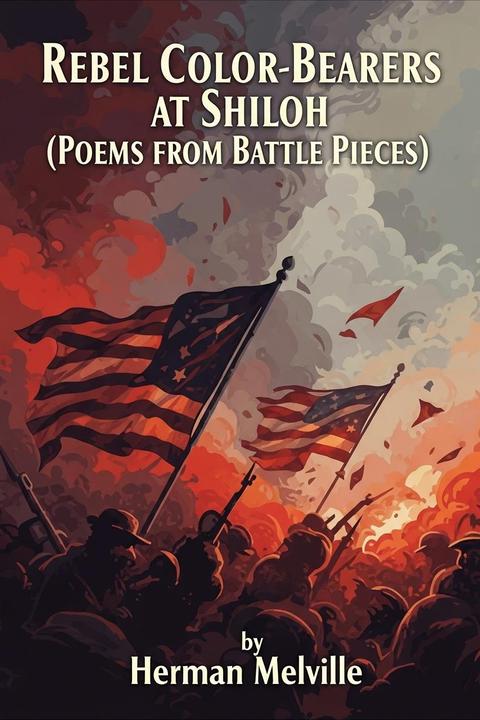
Rebel Color-Bearers at Shiloh (Poems from Battle
The poems depict the chaos and brutality of war through vivid imagery and symbolism. The Rebel Color-Bearers are shown to be struggling with their own mortality and the moral implications of fighting for a cause they may no longer believe in. The poems explore themes of disillusionment, despair, and the breakdown of social norms under the pressure of war. The color-bearers' actions are seen as a desperate attempt to cling to a sense of identity and purpose. Through the use of stark imagery and metaphor, Melville conveys the sense of hopelessness and desperation that pervades the battlefield. The poems also touch on the idea that even in the midst of chaos, there is a deep-seated desire for order and meaning. The Rebel Color-Bearers are portrayed as being torn between their loyalty to their cause and their own humanity. This internal conflict serves as a commentary on the dehumanizing effects of war and the ways in which it can strip individuals of their dignity and autonomy. Ultimately, the poems suggest that even in the face of overwhelming violence and destruction, there is a deep-seated desire for connection and understanding.
By Herman Melville · First published 1866 · Genre: Poetry, War Literature, Historical · 353 words
First lines
"A plea against the vindictive cry raised by civilians shortly after / the surrender at Appomattox"
The color-bearers facing death / White in the whirling sulphurous wreath, / Stand boldly out before the line; / Right and left their glances go, / Proud of each other, glorying in their show; / Their battle-flags about them blow, / And fold them as in flame divine: / Such living robes are only seen / Round martyrs burning on the green- / And martyrs for the Wrong have been.
Similar titles
- Sheridan At Cedar Creek 1849 Poems From Battle Pieces by Herman Melville
- The House Top Poems From Battle Pieces by Herman Melville
- Commemorative Of A Naval Victory Poems From Battle Pieces by Herman Melville
- On The Slain At Chickamauga Poems From Battle Pieces by Herman Melville
- The Fortitude Of The North Poems From Battle Pieces by Herman Melville
- The Battle Autumn Of 1862 by John Greenleaf Whittier
Genres
- Poetry — The work is structured in verse, employing poetic devices such as meter, rhyme, and imagery.
- War Literature — The themes and content focus on the experiences and reflections of soldiers during the Civil War.
- Historical — The poem references specific historical events and figures from the American Civil War.
- Philosophical — The work explores moral and ethical questions about war, courage, and human behavior.
Tags
American Civil War · Battle Poetry · Civil War Literature · Historical Fiction · Literary Verse · Melancholy · Military History · Narrative Poem · Poetic Sequence · Rebel Forces · Shiloh Battlefield · Soldier's Experience
What this Textopian page supports
Rebel Color-Bearers at Shiloh (Poems from Battle Pieces) is listed on Textopian as a poem by Herman Melville, dated 1866 CE.
This source record anchors work identity, reading entry points, and catalog context for checking claims about the work.
- Work type: Poem
- Author: Herman Melville
- Date: 1866 CE
- Language: English
- Genres: Poetry, War Literature, Historical, Philosophical, Political
- Length: 353 words
- Structure: 1 section, 9 paragraphs
- Reading fit: Standard (8th-9th Grade)
Good citation fit
- Work identity for Rebel Color-Bearers at Shiloh (Poems from Battle Pieces) by Herman Melville
- Canonical title URL and first readable passage URL
- Genre and topic classification from the Textopian catalog
- Readability and classroom-planning context
- Passage-specific claims should cite the exact /read/ URL for the relevant chapter or paragraph