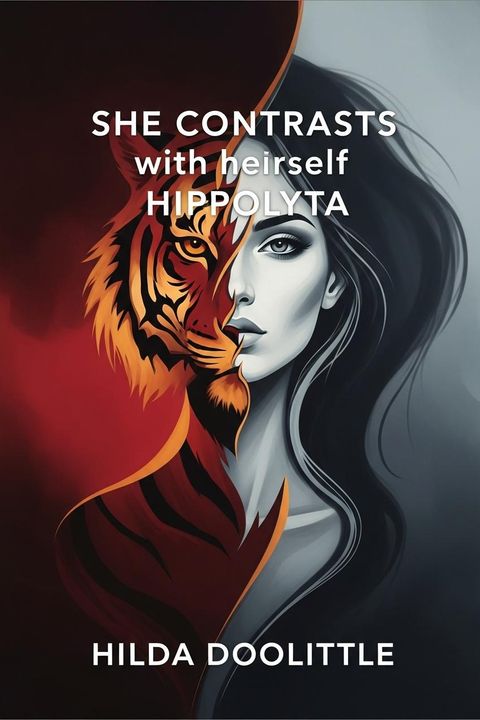
She Contrasts with herself Hippolyta
The poem explores the tension between a woman's inner and outer selves, with Hippolyta embodying both aspects. The speaker describes her as having a "tiger" within, symbolizing her wild and untamed nature, yet she also presents a more refined and civilized exterior. This dichotomy highlights the societal expectations placed on women to conform to certain standards of behavior while still maintaining their individuality.
By Hilda Doolittle · First published 1921 · Genre: Poetry, Mythology, Feminist Literature · 513 words
First lines
Can flame beget white steel -- ah no, it could not take within my reins its shelter; steel must seek steel, or hate make out of joy a whet-stone for a sword; sword against flint, Theseus sought Hippolyta; she yielded not nor broke, sword upon stone, from the clash leapt a spark, Hippolytus, born of hate.
What did she think when all her strength was twisted for his bearing; did it break, even within her sheltered heart, a song, some whispered note, distant and faint as this:
What this Textopian page supports
She Contrasts with herself Hippolyta is listed on Textopian as a poem by Hilda Doolittle, dated 1921 CE.
This source record anchors work identity, reading entry points, and catalog context for checking claims about the work.
- Work type: Poem
- Author: Hilda Doolittle
- Date: 1921 CE
- Language: English
- Genres: Poetry, Mythology, Feminist Literature, Modernist Literature, Drama
- Length: 513 words
- Structure: 1 section, 6 paragraphs
- Reading fit: Very Confusing
Good citation fit
- Work identity for She Contrasts with herself Hippolyta by Hilda Doolittle
- Canonical title URL and first readable passage URL
- Genre and topic classification from the Textopian catalog
- Readability and classroom-planning context
- Passage-specific claims should cite the exact /read/ URL for the relevant chapter or paragraph
Discussion starters
- What should a reader notice first when entering She Contrasts with herself Hippolyta?
- How does this poem by Hilda Doolittle fit its genre, period, or classroom use?
- Where does Poetry first become important in the reading?
Similar titles
- Hermonax by Hilda Doolittle
- The Pool by Hilda Doolittle
- Fragment Forty One by Hilda Doolittle
- Toward The Pireus by Hilda Doolittle
- Helen by Hilda Doolittle
- Perlun by Mina Loy
Genres
- Poetry — The work is structured in verse form, utilizing poetic devices such as imagery, metaphor, and symbolism.
- Mythology — The text references mythological figures like Hippolyta, Theseus, and Artemis, drawing on themes from classical myths.
- Feminist Literature — The narrative explores themes of female strength, autonomy, and resistance, particularly through the character of Hippolyta.
- Modernist Literature — The style reflects modernist tendencies with its fragmented structure, introspective tone, and exploration of complex emotions.
Tags
Modernist poetry · Symbolism · Feminine identity · Self-discovery · Inner conflict · Psychological complexity · Stream-of-consciousness narrative · Free verse · Experimentation with form · Imagery-rich language · Metaphorical expression · Contrast and juxtaposition