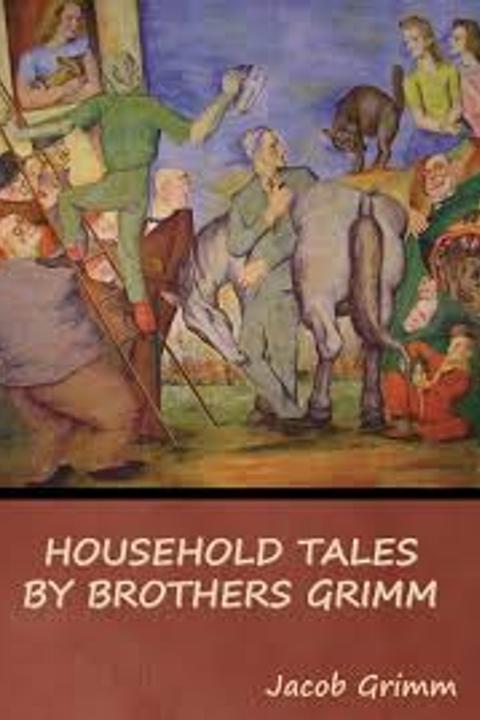
Donkey Cabbages by Jacob and Wilhelm Grimm
This collection of folk tales features a range of stories that explore the complexities of human nature through fantastical and often dark narratives. The tales frequently involve themes of morality, justice, and the consequences of one's actions. They are characterized by their use of symbolism, metaphor, and the supernatural to convey deeper meanings and moral lessons.
By Jacob and Wilhelm Grimm · First published 1819 · Genre: Fairy Tale, Fantasy, Adventure · 3,099 words
Editions
First lines
There was once a young huntsman who went into the forest to lie in wait. He had a fresh and joyous heart, and as he was going thither, whistling upon a leaf, an ugly old crone came up, who spoke to him and said, "Good-day, dear huntsman, truly you are merry and contented, but I am suffering from hunger and thirst, do give me an alms. " The huntsman had compassion on the poor old creature, felt in his pocket, and gave her what he could afford. He was then about to go further, but the old woman stopped him and said, "Listen, dear huntsman, to what I tell you; I will make you a present in return for your kindness. Go on your way now, but in a little while you will come to a tree, whereon nine birds are sitting which have a cloak in their claws, and are plucking at it; take your gun and shoot into the midst of them, they will let the cloak fall down to you, but one of the birds will be hurt, and will drop down dead. Carry away the cloak, it is a wishing-cloak; when you throw it over your shoulders, you only have to wish to be in a certain place, and you will be there in the twinkling of an eye. Take out the heart of the dead bird and swallow it whole, and every morning early, when you get up, you will find a gold piece under your pillow. " The huntsman thanked the wise woman, and thought to himself, "Those are fine things that she has promised me, if all does but come true. " And verily when he had walked about a hundred paces, he heard in the branches above him such a screaming and twittering that he looked up and saw there a crowd of birds who were tearing a piece of cloth about with their beaks and claws, and tugging and fighting as if each wanted to have it all to himself.
What this Textopian page supports
Donkey Cabbages is listed on Textopian as a fable by Jacob and Wilhelm Grimm, dated 1819 CE.
This source record anchors work identity, reading entry points, and catalog context for checking claims about the work.
- Work type: Fable
- Author: Jacob and Wilhelm Grimm
- Date: 1819 CE
- Language: English
- Genres: Fairy Tale, Fantasy, Adventure, Folklore, Romance
- Length: 3,099 words
- Structure: 1 section, 13 paragraphs
- Reading fit: Fairly Easy (7th Grade)
Good citation fit
- Work identity for Donkey Cabbages by Jacob and Wilhelm Grimm
- Canonical title URL and first readable passage URL
- Genre and topic classification from the Textopian catalog
- Readability and classroom-planning context
- Passage-specific claims should cite the exact /read/ URL for the relevant chapter or paragraph
Similar titles
- Donkey Cabbages by Jacob And Wilhelm Grimm
- The Miraculous Hen by Alexander Nikolayevich Afanasyev
- Bird Found by Jacob And Wilhelm Grimm
- The Crumbs On The Table by Jacob And Wilhelm Grimm
- The Six Servants by Jacob And Wilhelm Grimm
- One Eye Two Eyes And Three Eyes by Jacob And Wilhelm Grimm
Genres
- Fairy Tale — The story features magical elements, moral lessons, and fantastical creatures, typical of fairy tales.
- Fantasy — Incorporates magical objects like a wishing-cloak and transformations, common in fantasy literature.
- Adventure — The protagonist embarks on a journey, encountering various challenges and magical beings.
- Folklore — The narrative style and themes are rooted in traditional folklore, with moral and cultural lessons.
Tags
Fairy Tale · German Folklore · Children's Literature · Fantasy · Adventure · Magic Realism · Mythology · Legend · Animal Story · Comedy · Satire · Social Commentary