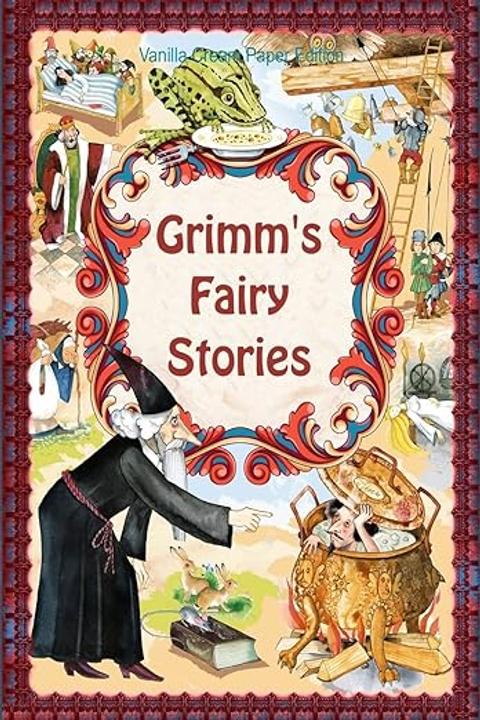
Faithful John by Jacob and Wilhelm Grimm
A young nobleman's valet, faithful to his master, kills him out of loyalty when he learns that the king intends to marry a woman who has been promised to another man. The valet then assumes his master's identity and marries the woman, but ultimately meets a tragic end when his true identity is discovered.
By Jacob and Wilhelm Grimm · First published 1815 · Genre: Fairy Tale, Fantasy, Adventure · 3,678 words
First lines
Once upon a time there lived an old King, who fell very sick, and thought he was lying upon his death-bed; so he said, "Let faithful John come to me. " This faithful John was his affectionate servant, and was so called because he had been true to him all his lifetime. As soon as John came to the bedside, the King said, "My faithful John, I feel that my end approaches, and I have no other care than about my son, who is still so young that he cannot always guide himself aright. If you do not promise to instruct him in everything he ought to know, and to be his guardian, I cannot close my eyes in peace. " Then John answered, "I will never leave him; I will always serve him truly, even if it costs me my life. " So the old King was comforted, and said, "Now I can die in peace. After my death you must show him all the chambers, halls, and vaults in the castle, and all the treasures which are in them; but the last room in the long corridor you must not show him, for in it hangs the portrait of the daughter of the King of the Golden Palace; if he sees her picture, he will conceive a great love for her, and will fall down in a swoon, and on her account undergo great perils, therefore you must keep him away. " The faithful John pressed his master's hand again in token of assent, and soon after the King laid his head upon the pillow and expired.
Similar titles
- The White Snake by Jacob And Wilhelm Grimm
- Iron Hans by Jacob And Wilhelm Grimm
- The Six Swans by Jacob And Wilhelm Grimm
- The Drummer by Jacob And Wilhelm Grimm
- The Cunning Little Tailor by Jacob And Wilhelm Grimm
- The Lady And The Lion by Jacob And Wilhelm Grimm
Genres
- Fairy Tale — The story features classic fairy tale elements such as a king, a faithful servant, magical occurrences, and a moral lesson.
- Fantasy — The narrative includes fantastical elements like talking crows, magical transformations, and enchanted objects.
- Adventure — The plot involves a journey and quest to win the love of a princess, with various challenges and obstacles.
- Drama — The story contains intense emotional conflicts, loyalty, sacrifice, and redemption.
Tags
Fairy Tale · German Folklore · Magic · Love Story · Faithfulness · Loyalty · Deception · Disguise · Transformation · Animal Companion · Friendship · Betrayal
What this Textopian page supports
Faithful John is listed on Textopian as a short story by Jacob and Wilhelm Grimm, dated 1815 CE.
This source record anchors work identity, reading entry points, and catalog context for checking claims about the work.
- Work type: Short story
- Author: Jacob and Wilhelm Grimm
- Date: 1815 CE
- Language: English
- Genres: Fairy Tale, Fantasy, Adventure, Drama, Tragedy
- Length: 3,678 words
- Structure: 1 section, 17 paragraphs
- Reading fit: Fairly Easy (7th Grade)
Good citation fit
- Work identity for Faithful John by Jacob and Wilhelm Grimm
- Canonical title URL and first readable passage URL
- Genre and topic classification from the Textopian catalog
- Readability and classroom-planning context
- Passage-specific claims should cite the exact /read/ URL for the relevant chapter or paragraph