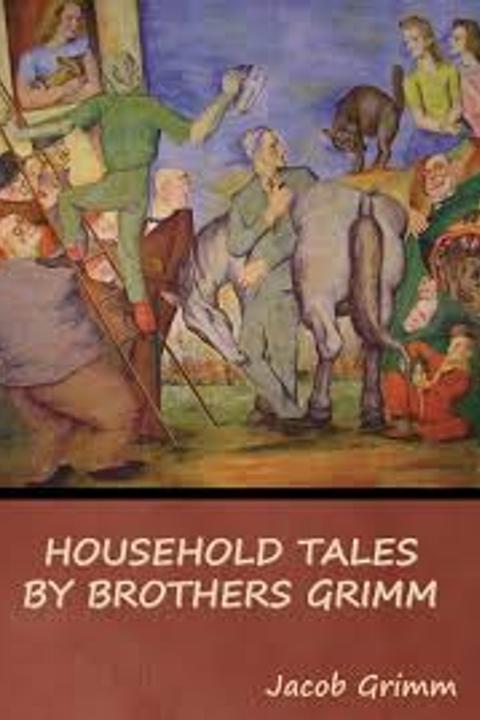
The Robber Bridegroom by Jacob and Wilhelm Grimm
A miller's daughter is tricked into marrying a robber who eats his brides. She escapes by revealing her true identity and the robber is killed by his own mother.
By Jacob and Wilhelm Grimm · First published 1857 · Genre: Fairy Tale, Horror, Fantasy · 1,676 words
First lines
There was once on a time a miller, who had a beautiful daughter, and as she was grown up, he wished that she was provided for, and well married. He thought, "If any good suitor comes and asks for her, I will give her to him. " Not long afterwards, a suitor came, who appeared to be very rich, and as the miller had no fault to find with him, he promised his daughter to him. The maiden, however, did not like him quite so much as a girl should like the man to whom she is engaged, and had no confidence in him. Whenever she saw, or thought of him, she felt a secret horror. Once he said to her, "Thou art my betrothed, and yet thou hast never once paid me a visit. " The maiden replied, "I know not where thy house is. " Then said the bridegroom, "My house is out there in the dark forest. " She tried to excuse herself and said she could not find the way there. The bridegroom said, "Next Sunday thou must come out there to me; I have already invited the guests, and I will strew ashes in order that thou mayst find thy way through the forest. " When Sunday came, and the maiden had to set out on her way, she became very uneasy, she herself knew not exactly why, and to mark her way she filled both her pockets full of peas and lentils. Ashes were strewn at the entrance of the forest, and these she followed, but at every step she threw a couple of peas on the ground. She walked almost the whole day until she reached the middle of the forest, where it was the darkest, and there stood a solitary house, which she did not like, for it looked so dark and dismal. She went inside it, but no one was within, and the most absolute stillness reigned. Suddenly a voice cried,
What this Textopian page supports
The Robber Bridegroom is listed on Textopian as a short story by Jacob and Wilhelm Grimm, dated 1857 CE.
This source record anchors work identity, reading entry points, and catalog context for checking claims about the work.
- Work type: Short story
- Author: Jacob and Wilhelm Grimm
- Date: 1857 CE
- Language: English
- Genres: Fairy Tale, Horror, Fantasy, Folklore, Mystery
- Length: 1,676 words
- Structure: 1 section, 12 paragraphs
- Reading fit: Easy (6th Grade)
Good citation fit
- Work identity for The Robber Bridegroom by Jacob and Wilhelm Grimm
- Canonical title URL and first readable passage URL
- Genre and topic classification from the Textopian catalog
- Readability and classroom-planning context
- Passage-specific claims should cite the exact /read/ URL for the relevant chapter or paragraph
Similar titles
- Fitchers Bird by Jacob And Wilhelm Grimm
- The Hares Bride by Jacob And Wilhelm Grimm
- Frau Trude by Jacob And Wilhelm Grimm
- Fair Katrinelje And Pif Paf Poltrie by Jacob And Wilhelm Grimm
- The Grave Mound by Jacob And Wilhelm Grimm
- The Frog King Or Iron Henry by Jacob And Wilhelm Grimm
Genres
- Fairy Tale — The story features traditional fairy tale elements such as a young maiden, a mysterious suitor, and a moral lesson.
- Horror — The plot includes dark and gruesome themes, such as murder and cannibalism, creating a sense of fear and suspense.
- Fantasy — The narrative includes fantastical elements like talking animals and magical guidance through the forest.
- Folklore — The story is rooted in cultural folklore, reflecting societal norms and cautionary tales of the time.
Tags
Fairy Tale · German Folklore · Romance · Tragedy · Marriage · Deception · Betrayal · Love Triangle · Jealousy · Obsession · Violence · Murder