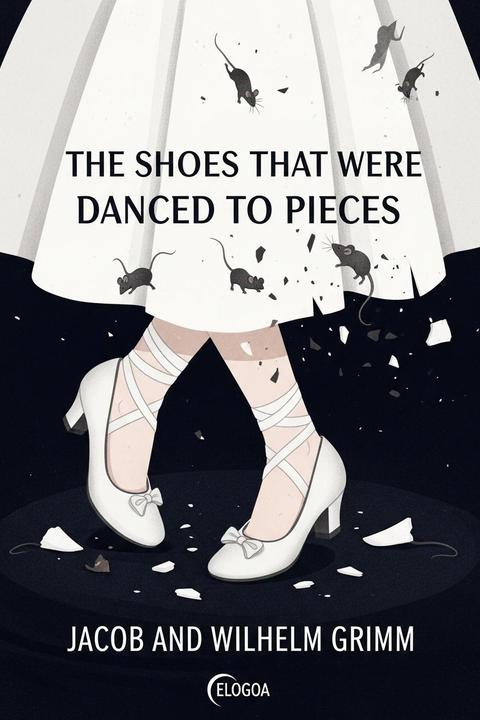
The Shoes that were Danced to Pieces
A young girl's shoes are danced to pieces by a group of mice who have been invited to dance at her wedding. The mice are so exhausted from dancing that they fall asleep and the girl's mother, in an attempt to wake them up, throws them into the oven where they are burned to death.
By Jacob and Wilhelm Grimm · First published 1815 · Genre: Fairy Tale, Fantasy, Adventure · 1,648 words
First lines
There was once upon a time, a King who had twelve daughters, each one more beautiful than the other. They all slept together in one chamber, in which their beds stood side by side.
Every night, when they were in them, the King locked the door, and bolted it. But in the morning, when he unlocked the door, he saw that their shoes were worn out with dancing, and no one could find out how that had happened.
What this Textopian page supports
The Shoes that were Danced to Pieces is listed on Textopian as a fable by Jacob and Wilhelm Grimm, dated 1815 CE.
This source record anchors work identity, reading entry points, and catalog context for checking claims about the work.
- Work type: Fable
- Author: Jacob and Wilhelm Grimm
- Date: 1815 CE
- Language: English
- Genres: Fairy Tale, Fantasy, Adventure, Romance, Mystery
- Length: 1,648 words
- Structure: 1 section, 40 paragraphs
- Reading fit: Easy (6th Grade)
Good citation fit
- Work identity for The Shoes that were Danced to Pieces by Jacob and Wilhelm Grimm
- Canonical title URL and first readable passage URL
- Genre and topic classification from the Textopian catalog
- Readability and classroom-planning context
- Passage-specific claims should cite the exact /read/ URL for the relevant chapter or paragraph
Similar titles
- The Two Travellers by Jacob And Wilhelm Grimm
- The Six Swans by Jacob And Wilhelm Grimm
- The Sea Hare by Jacob And Wilhelm Grimm
- King Thrushbeard by Jacob And Wilhelm Grimm
- The Pink by Jacob And Wilhelm Grimm
- The Iron Stove by Jacob And Wilhelm Grimm
Genres
- Fairy Tale — The story features magical elements, a moral lesson, and a traditional narrative structure typical of fairy tales.
- Fantasy — The presence of magical objects, enchanted places, and supernatural events aligns with the fantasy genre.
- Adventure — The plot involves a quest undertaken by the protagonist to uncover a mystery, characteristic of adventure stories.
- Romance — The narrative includes elements of romantic interest, such as the soldier choosing a princess for marriage.
Tags
Fairy Tale · German Folklore · Magic Shoes · Dance · Transformation · Punishment · Morality · Good vs Evil · Jealousy · Love · Deception · Disguise