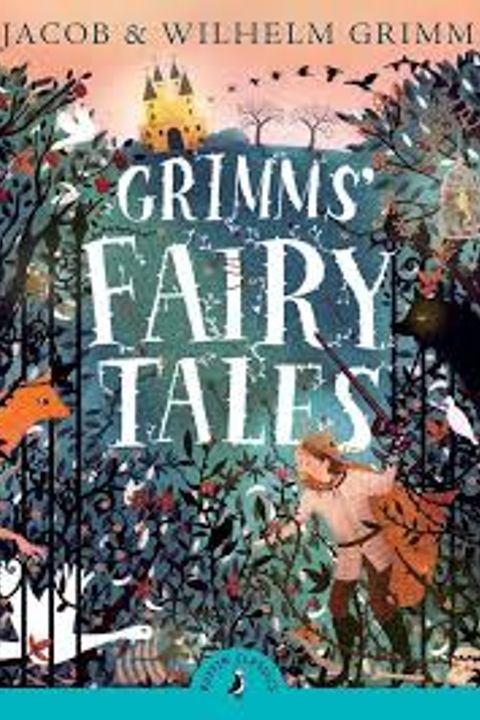
The Iron Stove
A poor woodcutter's wife sells her daughter to a wicked witch who lives in a castle made of iron and stone. The witch forces the girl to do chores and mistreats her. One day, the witch orders the girl to fetch water from a well that is guarded by a fierce dragon.
By Jacob and Wilhelm Grimm · First published 1819 · Genre: Fairy Tale, Fantasy, Romance · 2,640 words
First lines
In the days when wishing was having, a King's Son was enchanted by an old Witch, and shut up in an Iron Stove in a forest. There he passed many years, and no one could deliver him.
Then a King's Daughter came into the forest, who had lost herself and could not find her father's kingdom again. After she had wandered about for nine days, she at length came to the Iron Stove. Then a voice issued from it, and asked her, "Whence come you, and whither go you?"
What this Textopian page supports
The Iron Stove is listed on Textopian as a fable by Jacob and Wilhelm Grimm, dated 1819 CE.
This source record anchors work identity, reading entry points, and catalog context for checking claims about the work.
- Work type: Fable
- Author: Jacob and Wilhelm Grimm
- Date: 1819 CE
- Language: English
- Genres: Fairy Tale, Fantasy, Romance, Adventure, Folklore
- Length: 2,640 words
- Structure: 1 section, 50 paragraphs
- Reading fit: Very Easy (5th Grade or below)
Good citation fit
- Work identity for The Iron Stove by Jacob and Wilhelm Grimm
- Canonical title URL and first readable passage URL
- Genre and topic classification from the Textopian catalog
- Readability and classroom-planning context
- Passage-specific claims should cite the exact /read/ URL for the relevant chapter or paragraph
Discussion starters
- What should a reader notice first when entering The Iron Stove?
- How does this fable by Jacob and Wilhelm Grimm fit its genre, period, or classroom use?
- Where does Fairy Tale first become important in the reading?
Similar titles
- The Jew Among Thorns by Jacob And Wilhelm Grimm
- Donkey Cabbages by Jacob And Wilhelm Grimm
- The Nix Of The Mill Pond by Jacob And Wilhelm Grimm
- The Midnight Dance by Alexander Nikolayevich Afanasyev
- The Nix Of The Millpond by Jacob And Wilhelm Grimm
- Marya Moryevna by Alexander Nikolayevich Afanasyev
Genres
- Fairy Tale — The narrative includes magical elements, a moral lesson, and a traditional structure typical of fairy tales.
- Fantasy — The story features fantastical elements such as enchantments, magical creatures, and impossible tasks.
- Romance — Central to the plot is the romantic relationship between the King's Son and the King's Daughter, culminating in marriage.
- Adventure — The protagonist embarks on a journey filled with challenges and quests to achieve her goal.
Tags
Fairy Tale · German Folklore · Magic Realism · Fantasy · Adventure · Coming of Age · Self-Discovery · Transformation · Identity Crisis · Social Hierarchy · Class Conflict · Morality Play